
Real Money Pokies Australia App: What an Offshore Market Looks Like in 2026
There is no Australian-licensed real money pokies app. None. The Interactive Gambling Act 2001 makes it illegal for any operator to offer online pokies to a person in Australia, and no licence for that product exists — not federally, not in any state, not in any territory. Every pokies app an Australian player can actually download, sideload or bookmark is operated by an offshore company under a Curaçao or Malta licence, advertising in Australian dollars and accepting PayID deposits while sitting outside any Australian consumer-protection regime.

This page works through what that market looks like in 2026: which offshore operators Australian players actually use on mobile, how their bonuses compare once wagering and validity are taken into account, which progressive-jackpot pokies are available with documented return-to-player figures, and what the legal status and responsible-gambling infrastructure really mean for a player who decides to proceed. Every number on this page was checked against the Australian Communications and Media Authority’s enforcement publications, the BetStop register, the Australian Institute of Health and Welfare and the operators’ own published terms.
Current as of 16 October 2026 — verified against the ACMA register, the BetStop National Self-Exclusion Register and the operators’ published terms.
Table of Contents
- Real Money Pokies Apps in Australia: A Market Built Offshore
- Why Your 2026 Pokies App Is Probably Not an App at All
- Ranked: 10 Real Money Pokies Apps Australian Players Actually Use in 2026
- Why That 2026 Welcome Bonus Is Smaller Than the Number You See
- Test the Water for Free: Pokies Apps That Don’t Ask for a Deposit
- Dragon Link and Lightning Link: The Progressive Pokies Australians Actually Play
- No Australian Licence Exists: The Legal Status of Every Pokies App
- When the Spins Stop: Staying in Control on Real Money Pokies Apps
- How We Evaluated Every Real Money Pokies App
- Should You Play Real Money Pokies on an App in 2026?
- Frequently Asked Questions
Real Money Pokies Apps in Australia: A Market Built Offshore
“Real money” on an Australian pokies app means AUD-denominated deposits, real-stake spins and a withdrawal cycle that converts winnings back into a bank balance. The deposit is paid in via PayID, debit card or, on a handful of platforms, cryptocurrency. The spins use the same random-number generator logic as a land-based pokie in a Sydney pub. The withdrawal, if it is approved, returns to the same payment method in Australian dollars.
Three terms are worth keeping separate before going further. Real-money play is what this page covers: actual money at stake, with the chance of a real payout. Play-money demo mode is the free version every offshore casino offers alongside the paid version — same games, virtual credits, no withdrawal. Social casino apps sit in the official Apple and Google stores, use virtual currency and may award small prizes; they do not involve real-money wagering in the regulated sense. None of these three categories is licensed in Australia for the real-money version.
The Australian market has no choice but to be offshore because the product itself is banned. The Interactive Gambling Act 2001, strengthened by amendments in 2017, makes providing an online casino or online pokies service to anyone in Australia a civil offence. Online wagering on races and sporting events before they begin is licensed — at state level, concentrated through Licensing NT — but online pokies, online table games and in-play betting are not. The Act targets the provider, not the player, so individual Australian players are not prosecuted for using an offshore service. The lack of prosecution is not the same as legality on the supply side.
What “Real Money” Actually Means on an Australian Pokies App
A real-money pokies app is, in practice, one of two things on a phone screen. Either it is a progressive web app — a website bookmarked to the home screen that loads full-screen in Safari on iPhone or Chrome on Android — or it is an APK file downloaded directly from the operator’s website on Android, after the user has manually enabled installation from unknown sources. The App Store and Google Play both refuse to list real-money gambling apps for Australian users, which is why the “app” an Australian player ends up using is almost never a native download.
What the app offers once it loads is a real-money wagering product in Australian dollars. The player deposits via PayID, debit card, bank transfer or, on crypto-only platforms, by sending Bitcoin, Ethereum or a stablecoin. The games are the same titles as in any international online casino: pokies, table games, live dealer games. Pokies dominate the lobby. The withdrawal process is the part that separates the marketed product from the delivered product, and the part where offshore operators most often disappoint — the section on staying in control covers that gap.
The Pokies App Landscape for Australian Players in 2026
The size of the offshore market serving Australian players is suggested by the ACMA’s enforcement numbers, not by any list of legal operators — there is no such list. Since November 2019 the ACMA has had 1,788 illegal gambling and affiliate websites blocked by Australian ISPs. Over 230 illegal services have pulled out of the Australian market since 2017, when the amended IGA gave the regulator its teeth. In the last quarter of 2025 alone, the ACMA blocked 133 sites, investigated 38 providers for offering prohibited interactive gambling services and investigated another 26 for providing regulated services without a licence.
The brands an Australian player meets when searching for a “real money pokies app” are not a list of licensed operators. They are a sample of the offshore platforms targeting Australia with .com.au-style branding, AUD balances, and PayID or cryptocurrency deposits. The ACMA blocks domain after domain, and the operators launch mirror after mirror. The result is a market the regulator chases but does not close. The Cloud Wash review of the space put it plainly: “There is no Australian-licensed real money pokies app. None. The Australian Communications and Media Authority (ACMA) has blocked hundreds of offshore casino sites, but new mirrors appear weekly.”
Why Your 2026 Pokies App Is Probably Not an App at All
Almost every “real money pokies app” an Australian player encounters is a website dressed up as an app. Apple and Google both ban real-money gambling apps from their Australian app stores. The few exceptions that slip through are typically progressive web apps accessed via the browser, or on Android, APK files downloaded directly from the operator. Slotspeak’s review of the market noted the pattern: “Almost no AU-facing casino offers a native app, because Apple and Google both ban real-money gambling apps from their AU stores.”

The PWA model works because the browser itself handles installation. On iPhone, opening the casino site in Safari and tapping “Add to Home Screen” places an icon that opens the site full-screen, with no Safari address bar visible. On Android, Chrome’s “Add to Home Screen” or the equivalent menu option produces the same result. The icon looks identical to a native app icon. The experience, once loaded, is close enough to a native app that most players cannot tell the difference — though push notifications, deep linking and some biometric authentication features a real app would have are missing.
The trade-off the player accepts is between convenience and security. A native app from a regulated store passes through Apple’s or Google’s review process. A PWA bypasses that review entirely. An APK downloaded from an operator’s website is, by definition, software the user has chosen to install outside any app-store vetting. The casino still uses the same TLS-encrypted connection and the same browser security model, but the security guarantees are thinner. The convenience gain is real: no waiting for an App Store approval, no 30% revenue share pushing the operator toward the web anyway.
Installing Pokies Apps on Android: APK Downloads and Browser Play
Android gives the player two paths. The first is the PWA route — open the casino in Chrome, tap the menu, choose “Add to Home Screen,” and the bookmarked site behaves like an app from the home screen. No security prompt, no settings change, no file sitting in the Downloads folder. The second is the APK route — download the casino’s Android installer directly from the operator’s website, open the file and accept the security warning that asks for permission to install software from an unknown source.
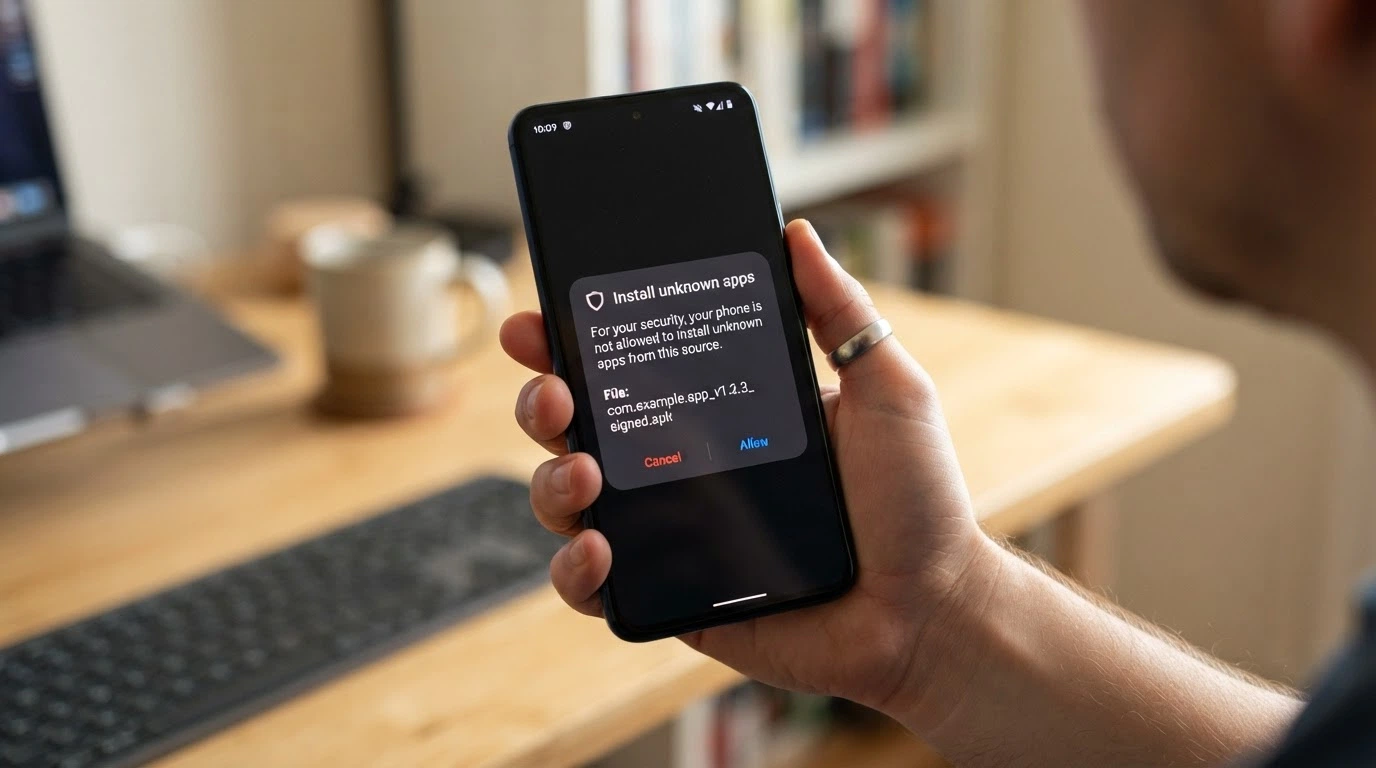
The APK route is the one operators prefer, because it lets them push updates without going through a store. It is also the one that asks the most of the user. Android’s unknown-sources prompt is there for a reason: a malicious APK can install alongside a legitimate one and harvest credentials, and there is no Google Play Protect review to catch it before the file lands on the device. A player choosing this path is choosing speed of update and access to the operator’s full feature set over the app-store security layer Google would otherwise provide.
The Chrome PWA path is the safer default. It runs in the same sandboxed browser environment as any other website. It accepts the same updates the moment the operator pushes them. It does not require a settings change or a security warning. The trade-off is that a PWA cannot run in the background, cannot use some device APIs a native app could, and is removed if the user clears browser data.
Playing Real Money Pokies on iPhone and iPad: Safari, No App Store Needed
iOS has no equivalent to the Android sideload path. Apple does not allow installation of apps from outside the App Store on iPhone or iPad, period. For real-money gambling, this means the PWA route is the only route. Safari supports “Add to Home Screen” and the resulting bookmark behaves, in most respects, like a native app: full-screen launch, custom icon, no visible browser chrome.
The installation is a one-time step per device. Open the casino site in Safari, tap the share icon, choose “Add to Home Screen,” name the bookmark if a custom name is wanted, tap Add. The icon appears alongside the native apps. Tapping it loads the casino full-screen. No App Store download, no Apple ID password, no permission prompts — and no path back to a regulated store if the operator turns out to be untrustworthy.
The limitation of the PWA route on iOS is what iOS itself withholds. Push notifications work in newer versions of Safari but are gated behind user permission. Background updates do not happen. Some biometric authentication flows are clumsier than on a native app. None of this stops the games from running or the deposits from clearing. It does mean that an iPhone user relying on a PWA is closer to a mobile website experience than to a polished native app, even when the home-screen icon looks the part.
Payment Methods on Australian Pokies Apps: PayID, Crypto and the Options
The payment methods an offshore pokies app offers tell the reader something useful before they even register. A licensed Australian wagering operator cannot accept credit cards or cryptocurrency for online betting — that prohibition took effect on 11 June 2024 under the Interactive Gambling Amendment (Credit and Other Measures) Act 2023. An app that accepts either is, by definition, not Australian-licensed, because the payment-method restriction binds only the licensed wagering market.
PayID and Osko are the dominant deposit route on AU-facing offshore platforms. PayID settles in seconds through the player’s bank app, and the operator’s bank receives the funds almost immediately. Bank transfer and BPAY sit behind PayID as the slower but universally available fallback. Debit cards work on most offshore platforms, though some decline Australian-issued cards on principle. Cryptocurrency is the entry route on a few platforms, and the only route on others — Stake accepts nothing else.
The credit-card and crypto ban is a useful signal because it cuts both ways. A licensed Australian bookmaker cannot take a credit card, so a player who wants to deposit by credit card has already ruled themselves out of the regulated market. A licensed bookmaker cannot take crypto, so a player who already holds Bitcoin and wants to deposit it is similarly committed to the offshore market. The two payment restrictions, designed for the licensed market, double as a litmus test for whether the platform a player is on has any connection to Australian regulation at all.
Stake is the clearest example of the crypto-only model. It takes no fiat currency at all — no PayID, no debit card, no bank transfer. An Australian player who wants to deposit on Stake must first acquire cryptocurrency, hold it in a wallet, then send it to the platform’s deposit address. The minimum qualifying deposit is A$100, which on most days is the smallest unit of Bitcoin or Ethereum the platform will accept. The friction is real, and it filters out players who are not already inside the crypto ecosystem.
Ranked: 10 Real Money Pokies Apps Australian Players Actually Use in 2026
The table below ranks ten offshore operators that Australian players can reach on mobile in 2026. The ranking reflects what each delivers on mobile: app quality, pokies library breadth, bonus value against the wagering burden, and licence standing. None of these operators holds an Australian licence. Every one operates under a Curaçao or, in one case, Malta licence. The Australian player’s access to any of them is technical, not legal — the ACMA blocks domains, the operators launch mirrors.
| Operator | Licence | Welcome Offer | Free Spins | Wagering | Bonus Validity |
|---|---|---|---|---|---|
| Rocket Play | Curaçao | 100% up to A$1,000 | 100 (Aztec Magic) | 40× bonus | 5 days |
| Royal Reels | Curaçao | A$10 no-deposit + 100% up to A$500 | Regular promos 10–200 | 30× bonus | — |
| Bizzo Casino | Curaçao | 100% up to A$2,000 | 200 | 45× bonus | 28 days |
| Skycrown | Curaçao (Hollycorn N.V.) | 100% up to €100 over 3 deposits | 100 | 40× bonus | 30 days |
| WinSpirit | Malta Gaming Authority | 100% up to A$500 | 50 | 30× bonus / 20× FS | 30 days |
| FairGO | Curaçao | — | — | 30× FS winnings | — |
| Stake | Curaçao | 200% up to A$2,000 (crypto) | None | 40× deposit + bonus | — |
| Scream Casino | Curaçao | — | — | — | — |
| Rainbet | Curaçao | Rakeback (ongoing) | None | 10× rakeback | Ongoing |
| Rocket Casino | Curaçao | — | — | — | — |
The headline numbers tell only part of the story. A 100% up to A$1,000 bonus at 40× wagering and a 5-day validity window demands a volume of play that no casual session can produce — the section on bonus arithmetic works through that calculation in concrete terms. A 200% up to A$2,000 crypto bonus at 40× wagering on deposit plus bonus means the player must turn over six times the bonus figure in the same currency. The wagering multiple, the validity window and the max-cashout cap shrink the headline figure by an order of magnitude before any withdrawal is attempted.
Rocket Play
Rocket Play runs on a Curaçao licence and leads the comparison on the strength of its bonus documentation — every key term has a published figure. The welcome package is 100% up to A$1,000 plus 100 free spins on Aztec Magic by BGaming, delivered as 20 spins immediately then 20 per day for four days. The wagering requirement is 40× on the bonus amount. The bonus validity is five days from issue. The free-spin winnings are capped at A$300, and the deposit bonus at A$5,000. The maximum bet while wagering is A$7.50.
The 5-day window is the term that makes the rest of the package harder than it looks. A$1,000 in bonus at 40× wagering means A$40,000 in turnover must be completed before withdrawal. At A$1 per spin and roughly five seconds per spin, that is about 55.6 hours of continuous play. Five days is 120 hours, so the arithmetic fits — but it requires a player who has nothing else to do for a working week and is willing to grind through 40,000 spins at one cent per spin above the actual stake. The cap on free-spin winnings at A$300 is the other limit. Even if the 100 spins hit their ceiling, only A$300 of that is withdrawable, with the same 40× wagering applied.
Rocket Play is the operator to choose if the player values clear terms over headline size. The numbers are documented, the wagering is the standard 40× for Curaçao-licensed AU-facing platforms, and the provider mix includes BGaming, Pragmatic Play and Evolution Gaming. The 5-day window is the structural reason the bonus is hard to clear, and any player who treats it as a slow-play offer is mistaken.
Royal Reels
Royal Reels is the only featured operator with a genuinely deposit-free welcome: A$10 in bonus cash credited on registration and phone verification, before any deposit. On top of that, a 100% first-deposit match up to A$500 at 30× wagering — the joint-lowest wagering multiple in the featured set alongside WinSpirit and FairGO. The library runs to 2,000-plus games from 30-plus providers, including Pragmatic Play, Evolution Gaming, Yggdrasil and Hacksaw Gaming. Free-spin promotions run regularly in the 10–200 spin range.
The A$10 no-deposit bonus is the differentiator. It is small in absolute terms and is almost certainly subject to its own wagering requirement (research did not confirm the figure separately), but it lets a player test the platform, the games and the withdrawal flow without committing funds. The phone-verification step is what distinguishes it from a pure sign-up bonus — it is a friction the operator has accepted in exchange for the deposit-free offer.
The 100% match up to A$500 at 30× wagering is the more substantial offer. A$500 at 30× is A$15,000 in turnover — a third of Rocket Play’s A$40,000. At A$1 per spin and five-second intervals, that is about 20.8 hours of play. The validity window is a term a player should verify on the operator’s current terms page before claiming. Royal Reels is the right pick for a player who values the no-deposit entry route and the lower wagering multiple over a larger headline figure.
Bizzo Casino
Bizzo offers the largest headline number in the set: 100% up to A$2,000 plus 200 free spins, with 45× wagering and a 28-day validity window. The library runs to 3,000-plus pokies. The Curaçao licence sits behind the standard offshore structure. The 200 free spins are the largest free-spin bundle on the comparison.
The 45× wagering is the term that makes the headline small in practice. A$2,000 in bonus at 45× is A$90,000 in turnover. At A$1 per spin and five-second intervals, that is 125 hours of play — more than five full days of continuous spinning. The 28-day window is generous enough to fit the volume, but only for a player willing to grind through it. The 200 free spins may come with their own cap on winnings, which is another term a player should check before claiming.
Bizzo is the right pick for a player who wants the largest possible bonus balance and is willing to commit to the wagering volume. The 45× multiple is at the steep end of the AU-facing offshore range and a step above the 40× Rocket Play and Skycrown demand. For a casual session, the same A$1,000 at Rocket Play’s 40× with 5-day validity is a more honest fit — the arithmetic works either way, but the player’s time commitment differs by a factor of two.
Skycrown
Skycrown runs on a Curaçao licence through the Hollycorn N.V. group and structures its welcome package across three deposits rather than one: 100% up to €100 plus 100 free spins, with 40× wagering and 30-day validity. The headline figure in euros converts to a smaller AUD value than the Australian-dollar-denominated bonuses from Rocket Play, Royal Reels and WinSpirit. The game library runs to 300-plus titles, with Evolution Gaming and Pragmatic Play Live anchoring the live-dealer side.
The three-deposit structure is the distinguishing feature. A player who deposits only once captures the first 100% match but leaves the remaining two instalments unclaimed. A player who deposits three times extracts more value, but commits more money. The €100 ceiling per deposit means the maximum extractable bonus is €300 across the three deposits — a smaller total than Bizzo’s A$2,000 or Rocket Play’s A$1,000, even at favourable exchange rates.
Skycrown is the right pick for a player who prefers spreading deposits across multiple sessions and values the 30-day validity window. The 40× wagering is in line with Rocket Play, and the 30-day window makes the volume more achievable for a player who plays in shorter bursts across a month rather than a concentrated five-day block.
WinSpirit
WinSpirit is the only MGA-licensed operator in the featured set — Malta Gaming Authority rather than Curaçao. The welcome package is 100% up to A$500 plus 50 free spins, with split wagering: 30× on the match bonus, 20× on free-spin winnings. The 30-day validity is in line with Skycrown’s. The licence difference is the meaningful one.
The Malta licence imposes a different set of compliance obligations than Curaçao. Dispute resolution routes through the MGA rather than the Curaçao Gaming Control Board. Segregated player funds and responsible-gambling tooling are typically more developed on MGA-licensed platforms than on Curaçao-licensed ones. None of this brings WinSpirit inside Australian jurisdiction — the platform still has no Australian licence and the player still has no Australian consumer-law recourse. It is a stronger offshore framework, not a regulated Australian one.
The split wagering is the second distinguishing feature. A player clearing the A$500 match bonus turns over A$15,000 at 30× — the same arithmetic as Royal Reels. The 50 free spins turn over their winnings at 20×, a softer requirement that reduces the grind on the spin side. WinSpirit is the right pick for a player who values the MGA licence and the softer free-spin wagering, and who can live with a smaller A$500 ceiling on the match bonus.
FairGO
FairGO runs on a Curaçao licence and is built around RealTime Gaming (RTG) software rather than the BGaming / Pragmatic Play stack that dominates the rest of the set. The headline number is the 30× wagering on free-spin winnings — the joint-lowest in the featured set, alongside WinSpirit’s bonus-side 30×. The welcome bonus amount and validity are terms a player should verify on the operator’s current page before claiming.
FairGO is a useful contrast in the set because it shows what a smaller, RTG-focused platform looks like on mobile. RTG’s pokes catalogue is narrower than BGaming’s or Pragmatic Play’s, but the games it ships are pokies-first — no live-dealer suite, no table-game depth. The low wagering multiple is the headline, and the trade-off is a smaller, more focused library.
Stake
Stake is the clearest outlier in the comparison. It is crypto-only — no fiat currency deposits of any kind. The welcome bonus is 200% up to A$2,000 in cryptocurrency, with 40× wagering on the deposit plus the bonus, and a minimum qualifying deposit of A$100. There are no free spins in the welcome offer. The Curaçao licence is the only licence Stake holds, and it holds no Australian licence.
The crypto-only requirement is the filter. A player who does not already hold cryptocurrency cannot deposit. A player who does must convert AUD to crypto through an exchange, then send the crypto to the platform’s deposit address. The 40× on deposit plus bonus is steeper than Rocket Play’s 40× on bonus alone, because the turnover base is larger: a A$1,000 deposit matched at 200% gives a A$3,000 playable balance, and 40× on that base is A$120,000 in turnover. The minimum deposit of A$100 is the highest entry barrier in the set.
The 200% match is the largest percentage match on the comparison. For a player who already holds crypto and is comfortable with the wallet workflow, it is a strong offer. For everyone else, the friction of acquiring and sending cryptocurrency is the cost. Stake is the right pick for a crypto-native player. For a player making their first offshore deposit, the fiat-friendly operators are a lower-friction starting point.
Rainbet
Rainbet runs on a fundamentally different model. There is no match bonus. The platform runs a rakeback system that returns a percentage of the house edge on every bet, plus a chat-based “Rain” feature that periodically distributes small amounts of cryptocurrency to active participants in the chat. The wagering requirement on rakeback is 10× — the lowest in the featured set by a wide margin, and a fraction of the 40×–45× range that dominates the match-bonus operators.
The rakeback model flips the bonus structure on its head. A match bonus pays the player once, then demands turnover before withdrawal. A rakeback returns value continuously, with a small wagering multiplier attached to the returned amount. For a high-volume player, the cumulative rakeback exceeds what a one-time match bonus would return. For a casual player, the per-bet return is small and the chat-Rain drops are smaller still.
Rainbet is the right pick for a player who plays frequently and values ongoing returns over a one-time headline figure. It is also crypto-focused, so the same fiat-versus-crypto filter applies as for Stake.
Scream Casino
Scream Casino appears in the AU-facing offshore listings but returned limited verified bonus and provider data this review. The Curaçao licence is confirmed through the operator’s own site; The welcome offer details and game provider mix should be checked directly on the operator’s terms page before depositing. A player considering Scream Casino should confirm the current bonus terms, the wagering requirement, the max cashout and the validity window directly on the operator’s terms page before depositing. The general structure — Curaçao-licensed, offshore, no Australian licence — matches the rest of the featured set.
Rocket Casino
Rocket Casino is a separate Curaçao-licensed brand from Rocket Play, despite the similar name. The licence is confirmed; the bonus and provider details should be checked on the operator’s current terms page directly before depositing. As with Scream Casino, the safe move is to check the operator’s current terms page directly for the welcome offer, wagering requirement, validity and max cashout before depositing. The shared name with Rocket Play is the one trap to avoid — they are different operators on different platforms, and the bonus terms on one do not transfer to the other.
Why That 2026 Welcome Bonus Is Smaller Than the Number You See
A 100% up to A$1,000 bonus sounds like a thousand dollars of house money. The wagering requirement, validity window and max-cashout cap are what turn it into a fraction of that. The arithmetic is mechanical and worth doing before claiming any bonus in this set.
Rocket Play’s offer is the clearest worked example. A player deposits A$1,000 and receives a A$1,000 bonus. The wagering requirement is 40× on the bonus amount. Required turnover is A$1,000 × 40 = A$40,000. At a stake of A$1 per spin, that is 40,000 spins. At five seconds per spin, that is 200,000 seconds — about 55.6 hours of continuous play. The bonus validity is 5 days, which is 120 hours. The arithmetic fits the window, but only if the player treats it as a full-time commitment.
The wagering burden on the wider market runs from 30× to 50× the bonus amount. Pokies contribute 100% toward wagering — every dollar spun counts in full. Table games contribute 10% or less, so a player who tries to clear the bonus at blackjack is moving ten times slower than at the pokies. The 100% pokies contribution is what makes the wagering mechanically clearable; the contribution rate on table games is what makes it punitive for anyone who switches games.
The expected cost of clearing the bonus is the second calculation, and it is the one operators do not publish. At an average RTP of 96% across the pokies library, A$40,000 in turnover produces an expected loss of A$40,000 × 4% = A$1,600. The bonus paid was A$1,000. The player is statistically A$600 behind before the bonus converts to withdrawable cash, even after a perfect clear of the wagering requirement. The expected loss is an average over many spins, not a guarantee — any individual session can finish ahead — but the long-run cost is what the wagering requirement actually prices.
No-Deposit Bonuses: Free Cash to Start Playing
Royal Reels is the only featured operator with a genuine no-deposit bonus: A$10 credited on registration and phone verification. Across the wider AU-facing market, no-deposit offers typically run from A$10 free cash to 20 free spins, with 40× wagering on winnings and a max cashout of around A$100. Slots Gallery’s 20 free spins on Zeus the Thunderer are a benchmark example — 30× wagering on winnings, A$150 max cashout, A$5 max bet, 3 days to clear.
The no-deposit bonus is rarely a route to withdrawable cash. A$10 in free cash at 40× wagering is A$400 in required turnover — at A$1 per spin, 400 spins, about 33 minutes of play. The RTP cost on those 400 spins is A$16 in expected loss. The player is statistically A$6 behind on a bonus that started as A$10, and only A$100 of any winnings is withdrawable. The offer is real money in the sense that real AUD is on the table, but the structure is closer to a free trial than to a profit opportunity.
Sign-Up Match Bonuses: How the Numbers Compare
Three offers side by side show what the wagering multiple and validity window do to the headline figure. Rocket Play offers A$1,000 at 40× with a 5-day window. Bizzo offers A$2,000 at 45× with a 28-day window. WinSpirit offers A$500 at 30× with a 30-day window. The required turnover runs from A$15,000 (WinSpirit) through A$40,000 (Rocket Play) to A$90,000 (Bizzo). The expected loss at 96% RTP runs from A$600 to A$1,200 to A$3,600.
The pattern is that a larger headline number with a higher wagering multiple and longer window can be worth less to the player than a smaller headline with a lower multiple. WinSpirit’s A$500 at 30× is the cheapest of the three to clear, both in time and in expected loss. Bizzo’s A$2,000 at 45× is the most expensive in both, despite the longer window. Rocket Play sits between them, with the shortest window making the volume mechanically tight. A player who values speed of clearance picks WinSpirit. A player who values bonus balance and is willing to grind picks Bizzo. A player who wants the most documented terms picks Rocket Play.
Test the Water for Free: Pokies Apps That Don’t Ask for a Deposit
Every offshore pokies app in the featured set offers a demo mode. The same PWA that hosts real-money play also hosts play-money demo mode, toggled inside the game lobby. Demo mode is useful for two reasons: it lets a player learn a game’s mechanics before committing real money, and it lets a player compare RTPs across titles without funding an account. It does not teach the psychological pressure of real-money play, which is the variable the demo cannot reproduce.
Free-to-play pokies apps sit in the official Apple and Google stores. They award virtual currency, run on virtual stakes and offer small prizes through promotional draws rather than through real-money wagering. Social casino apps are the third category — virtual currency, leaderboards, no real-money stake. None of these is a real-money pokies app in the sense this page covers, and none is licensed in Australia for real-money play because no such licence exists.
The distinction between demo mode and a no-deposit bonus is worth holding clearly. Demo mode is play-money — no deposit, no withdrawal, no real stake. A no-deposit bonus is real-money — a small cash credit (typically A$10 or 20 free spins) subject to wagering and a max cashout, with the winnings withdrawable up to the cap. The two are accessed through the same platform but are different products.
Free Pokies Apps for Android and iPhone: What Is Actually Available
The PWA route delivers identical demo-mode experience on Android and iPhone. Chrome on Android and Safari on iPhone both support the same HTML5 pokies games, both render the same animations, both apply the same sound. The difference between the two is at the platform layer, not the game layer — push notifications, biometrics and background updates work differently on each, but the pokies themselves are indistinguishable.
A handful of dedicated free-to-play pokies apps sit in Google Play and the App Store. They do not involve real-money wagering, which is why Apple and Google carry them. They use virtual currency, offer in-app purchases for more virtual currency, and run promotional prize draws for real-world prizes (a tablet, a holiday) rather than cash withdrawals. They are a different product from the real-money offshore apps this page covers, and a player looking for real-money wagering will not find it there.
Dragon Link and Lightning Link: The Progressive Pokies Australians Actually Play
Dragon Link and Lightning Link are the two Aristocrat progressive-jackpot series that dominate Australian pokie interest. Both are land-based titles originally — Dragon Link launched in pubs and clubs, Lightning Link in 2015 — and both have been ported to offshore online casinos. The online versions carry a structural advantage: the RTP runs 0.3–0.8% higher than the land-based versions because the online operator does not pay the venue commission. The same game on the same phone is a marginally better bet than the same game in a Sydney pub.
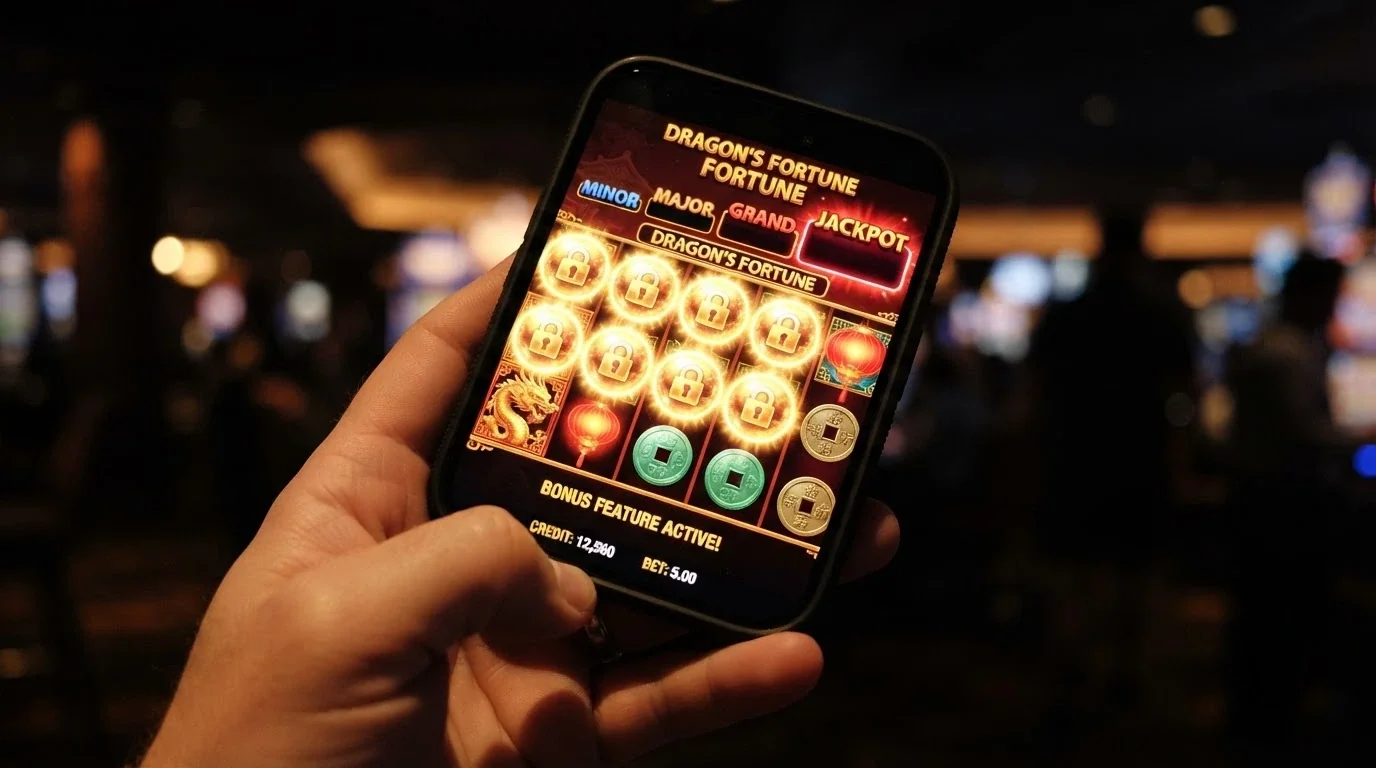
Dragon Link uses the Hold & Spin mechanic: land six or more orb symbols anywhere on the reels to trigger a re-spin round, with each new orb resetting the spin counter. The four jackpot tiers — Mini, Minor, Major, Grand — sit above the reels, and the Grand jackpot is what the game’s marketing leads with. The max win is 10,000× the bet for most titles; Happy & Prosperous extends that to 12,500×. Online RTPs cluster around 95.95%, with Golden Century at 96.06% the highest of the documented set.
Lightning Link operates on a 5-reel, 50-payline structure and behaves differently on RTP. Rather than a single RTP per title, Lightning Link’s return scales with the bet level: 90% at 1 cent per line, 94% at 10 cents, 95.5% at A$1, 96%+ at A$2. The same machine at minimum lines returns six percentage points less than at maximum lines. A low-stakes player on Lightning Link faces a structurally worse game than a high-stakes player on the same title.
Dragon Link on Mobile: Every Title, Its RTP and Where to Find It
The table below covers the five Dragon Link titles with documented online RTPs. Every title in the set sits in the 95.95%–96.06% RTP range — a tight cluster, with Golden Century the marginal leader. Three of the five are medium-high volatility; Happy & Prosperous is high volatility and carries the largest max win at 12,500× bet. Panda Magic’s volatility was not confirmed this review.
| Slot Title | RTP | Volatility | Max Win | Provider |
|---|---|---|---|---|
| Autumn Moon | 95.95% | Medium-High | 10,000× bet | Aristocrat |
| Golden Century | 96.06% | Medium-High | 10,000× bet | Aristocrat |
| Happy & Prosperous | 95.95% | High | 12,500× bet | Aristocrat |
| Panda Magic | 95.95% | — | 10,000× bet | Aristocrat |
| Peace & Long Life | 95.95% | Medium-High | 10,000× bet | Aristocrat |
Dragon Link titles are available on offshore platforms carrying Aristocrat content. The featured set does not exhaust the list of operators that host them — many Curaçao-licensed platforms carry the range. A player looking for Dragon Link on mobile should check the operator’s pokies lobby for Aristocrat as a provider filter, then confirm the title is available in their jurisdiction (some operators geo-restrict Aristocrat content).
Lightning Link: Why the Bet Level Changes the RTP
Lightning Link’s RTP structure is the unusual feature. A 1-cent-per-line player faces a 90% return — 6 percentage points worse than the same machine at A$2 per line. The same title, the same reels, the same random-number generator, but a different return depending on how the player bets. Volatility also varies by title: Moon Race and Heart Throb are medium; High Stakes, Magic Pearl, Sahara Gold and Happy Lantern are medium-high; Best Bet is high.
The practical implication is that the player who bets minimum lines on Lightning Link is paying a structural premium for the privilege of small-stake play. A A$1-per-line player at 95.5% RTP and a 1-cent-per-line player at 90% RTP are playing two different games on the same screen. The headline RTP range of 94%–97% hides a six-point spread that the bet-level choice determines. A player who values return over stake size should bet at the upper end of the available range. A player who wants the longest possible session at minimum cost accepts the worse return as the trade-off.
No Australian Licence Exists: The Legal Status of Every Pokies App
The Interactive Gambling Act 2001 makes it a civil offence for any provider to offer online casino games, online pokies or in-play sports betting to a person physically in Australia. The Act was tightened by amendments in 2017, which closed the loopholes offshore operators had previously exploited and gave the ACMA its blocking and investigation powers. Online casino games and online pokies are prohibited interactive gambling services — there is no licence for them anywhere in the country. What is licensed, at state and territory level, is wagering on races and sporting events placed before the event begins, plus lotteries and keno.
The individual player is not prosecuted under the IGA. The Act targets the provider, not the person using the service. This is the fact that distinguishes the Australian situation from jurisdictions where online gambling is illegal for the player too. The ACMA’s enforcement is directed at the operators, not at Australian residents who deposit and play. But the absence of prosecution is not the same as a regulated market. An Australian player on an offshore casino has no Australian consumer protection, no recourse to an Australian complaints body, and no guarantee the operator will pay out a withdrawal — and the site can be blocked at any time with the player’s balance sitting on it.
The ACMA’s own framing is direct. “Australians who use illegal gambling services risk losing their money.” The risk is not theoretical — it is the consequence of an unlicensed product sold by an offshore company with no obligation to an Australian regulator.
The Interactive Gambling Act: What It Actually Prohibits
The IGA prohibits the provision of online casino games, online pokies and in-play sports betting to people in Australia. The prohibition binds the provider, not the player. What the IGA does not prohibit: wagering on horse races, harness races, greyhound races and sporting events placed before the event begins; lotteries; keno. These are licensed at state and territory level, with the Northern Territory Racing and Wagering Commission (through Licensing NT) acting as the de facto national licensor for online wagering. The major online bookmakers — Sportsbet, bet365, Ladbrokes and around 50 others — hold NT licences.
The 2017 amendments extended the prohibition to online in-play betting (where previously only phone-based in-play was covered), clarified the “based in Australia” test for determining which providers the Act binds, and gave the ACMA its blocking, infringement-notice and civil-penalty powers. The amendments did not create a licensing pathway for online pokies — the prohibition is total, not partial. The minimum age for all commercial gambling in Australia is 18, and offshore operators enforce age verification through their own licence conditions, typically 18 for Curaçao and MGA licences.
ACMA Enforcement: 1,788 Sites Blocked and Counting
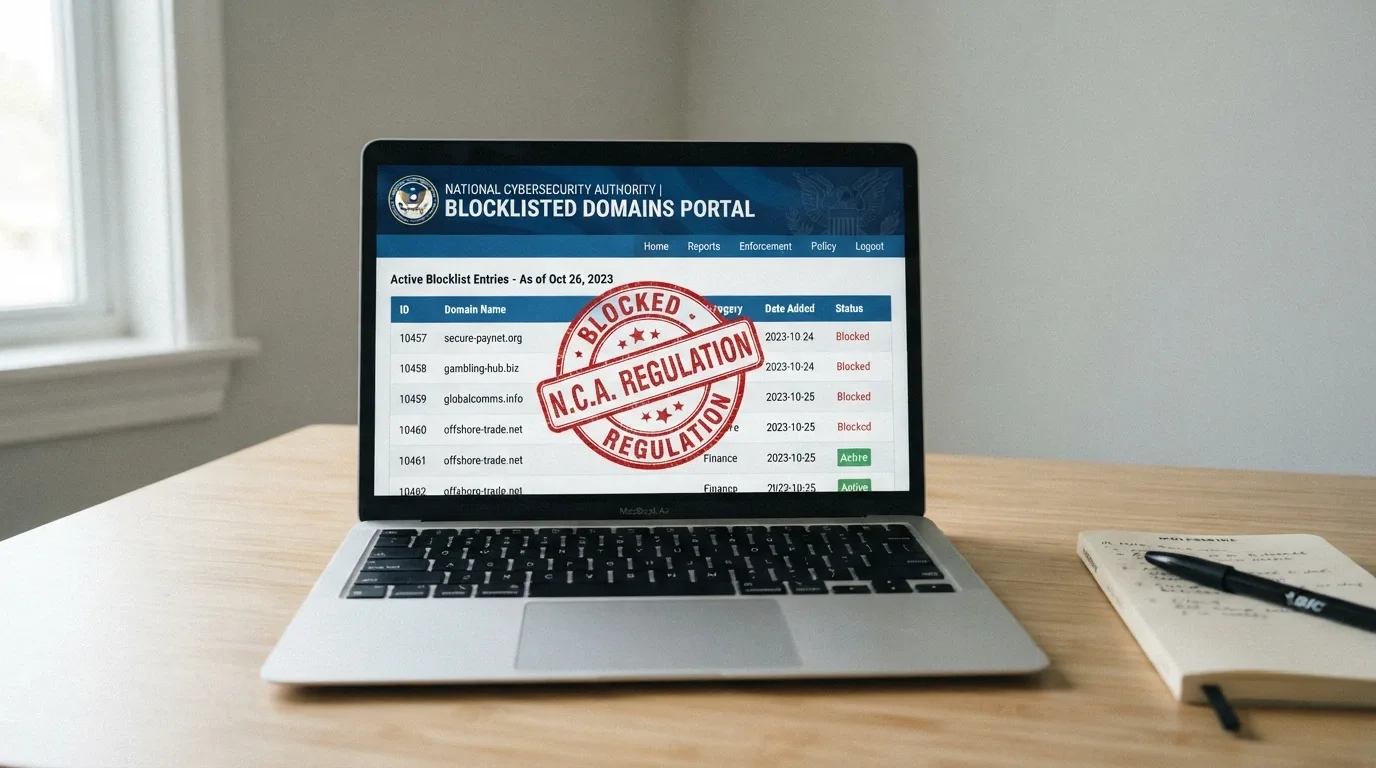
The ACMA has been blocking illegal gambling sites since November 2019. The cumulative count is 1,788 illegal gambling and affiliate websites blocked by Australian ISPs. Over 230 illegal services have pulled out of the Australian market since 2017. In the fourth quarter of 2025 alone, the ACMA investigated 38 providers for offering a prohibited interactive gambling service, investigated 26 more for providing a regulated service without a licence, and blocked 133 illegal gambling websites.
The enforcement extends to licensed operators too. On 16 January 2026, the ACMA issued 8 infringement notices to Tabcorp Holdings Limited, each for A$19,800, for providing a prohibited in-play betting service — a licensed operator breaching the terms of its own licence. The civil penalty scale for prohibited services is steeper: up to A$2,475,000 per day for an individual and up to A$12,375,000 per day for a corporation. The numbers are designed to make the economics of providing an illegal service to Australian customers untenable.
The whack-a-mole reality is the limitation. Blocking a domain does not stop the operator launching a mirror at a new address. The ACMA blocks the new address, and the operator launches another mirror. The blocking list grows; the underlying market does not shrink proportionally. The 230 services that have withdrawn since 2017 represent the cases where blocking, civil penalties and banking pressure made the Australian market unprofitable enough to leave — not the total count of services that ever targeted Australia.
The 2026 Reform: What Changes on 1 January 2027
The Interactive Gambling Amendment (Gambling Reform) Bill 2026 passed Parliament on 19 August 2026. Its measures commence on 1 January 2027. Both facts matter: the reform is law, not a proposal, but it is not yet in force. The changes it introduces are federal restrictions on the licensed wagering market — they do not legalise online pokies, which remain prohibited.
The advertising restrictions are the most visible change. Wagering advertising on television is capped at three ads per hour between 5am and 8:30pm. Wagering advertising during live sporting events is banned from 15 minutes before the event until 5 minutes after it ends, in the same 5am–8:30pm window. Athletes, celebrities and influencers are banned from promoting wagering products. These are federal rules binding on the licensed market; they do not affect what an offshore casino can advertise on its own platform.
The inducement restrictions sit alongside the advertising rules. Direct marketing of inducements — bonus offers, free bets, “deposit A$50 get A$50” style promotions — is prohibited for 14 days after a customer signs up with a licensed wagering operator, for three months after a person deregisters from BetStop, and indefinitely for customers identified as at risk of gambling-related harm. The ban is on licensed operators’ marketing practices; offshore platforms are not bound by it.
The reform also bans online keno “pocket pokies” and foreign-matched lotteries — products that existed in a grey area between licensed lotteries and prohibited casino-style games. From 1 January 2027, banks and payment providers gain express authority to block transactions to illegal gambling operators. The credit-card and crypto ban is already in force (since 11 June 2024); the new power extends that logic to the transaction itself, not just the payment method. A bank can decline to process a payment to an unlicensed operator, even if the payment method is otherwise legal.
The reform does not legalise online pokies. The Interactive Gambling Act’s prohibition on providing online casino and online pokie services to Australians remains in force. What the reform does is tighten the licensed wagering market’s advertising and inducement practices, and give banks the tool to choke payment routes to illegal operators. The market the player is shopping in — offshore pokies apps — is the market the reform is partly designed to make harder to reach, not the market the reform opens up.
When the Spins Stop: Staying in Control on Real Money Pokies Apps
Australia has a more developed responsible-gambling infrastructure than most jurisdictions. BetStop, the National Self-Exclusion Register, went live on 21 August 2023. The National Gambling Helpline is free, confidential and staffed 24/7. Gambling Help Online offers chat and counselling at gamblinghelponline.org.au. The Australian Institute of Health and Welfare publishes prevalence data: roughly 2.1% of Australian adults — about 430,000 people — experience problem gambling, with high-risk gambling at 1.8% in 2022.

None of this infrastructure reaches an offshore pokies app. BetStop binds Australian-licensed wagering services only. The helpline and Gambling Help Online are available to anyone in Australia, regardless of where they play. But the deposit limits, time-out tools and self-exclusion mechanisms that licensed operators must offer are not enforceable on an offshore platform that has no Australian licence obligation. The player who wants to limit their play on an offshore app is relying on the offshore operator’s own responsible-gambling tooling, which may exist, may be robust, and may be ignored by the operator without consequence.
BetStop: Australia’s Self-Exclusion Register and Its Offshore Blind Spot
BetStop is built for simplicity. One registration excludes a person from every Australian-licensed online and phone wagering service in a single step. The minimum registration period is three months; the maximum is lifetime. As at 31 July 2026, BetStop had 67,480 registrations in its three years of operation. Of those, 41,290 exclusions were still active — more than 60% of everyone who ever registered. 78% of registrants were under 40, and 38% chose lifetime exclusion.
The offshore blind spot is the critical limitation. BetStop does not apply to online casino games or other gambling services illegally provided in Australia. An offshore pokies app is not connected to the register, has no obligation to check it, and will keep taking deposits from a self-excluded Australian player. The exclusion binds the licensed market; the offshore market sits outside it. A player who has registered with BetStop and then deposits on an offshore casino has not excluded themselves from that casino — they have only excluded themselves from the licensed operators they would already be excluded from.
The 67,480 registrations and the 41,290 active exclusions tell a separate story about the licensed market. Most registrants are still excluding; a substantial minority chose permanent exclusion; the under-40 skew suggests the population registering is younger than the broader gambling population. None of this changes the offshore blind spot, but it tells the player what the licensed market’s self-exclusion tool actually delivers for those who use it within the system it covers.
Deposit Limits, Time-Outs and Getting Help
Licensed Australian wagering operators must offer customer-set deposit limits under state and territory conditions that differ between jurisdictions. A player can set a daily, weekly or monthly deposit ceiling, and the licensed operator must enforce it. Time-out tools and reality-check features — periodic pop-ups showing time and money spent — sit alongside the deposit limits. The combination is what the licensed market is required to provide, and what the offshore market is not required to provide.
On an offshore pokies app, the player is dependent on the operator’s own responsible-gambling module. Some offshore platforms offer deposit limits, time-outs and self-exclusion; some offer them but make them hard to find; some do not offer them at all. There is no Australian regulator to complain to if the tools fail or are absent. The player has the same self-knowledge and the same will to limit their play, but a thinner set of enforced tools to act on it.
The help resources the player can use regardless of where they play are the National Gambling Helpline on 1800 858 858 — free, confidential, staffed 24 hours a day, 7 days a week — and Gambling Help Online at gamblinghelponline.org.au, which provides online chat and counselling. Both services are Australian-government-funded and available to any Australian resident. The decision to use them is a personal one; the services exist independently of where the gambling takes place.
How We Evaluated Every Real Money Pokies App
The comparison table in this page is built on three sources. The first is the ACMA’s own enforcement publications — the blocking list, the quarterly enforcement reports, and the register of licensed wagering services. The second is the operators’ own published terms: bonus pages, wagering requirements, validity windows, max-cashout caps, licence disclosures. The third is independent review sources that have tested the platforms on specific devices and deposited real money. Where research returned a verified figure, the page carries it.
The ranking criteria are mobile-app quality (PWA performance, installation path, device compatibility on Android Chrome and iPhone Safari), pokies library breadth (number of titles, provider mix, presence of Aristocrat content for Dragon Link and Lightning Link access), and bonus value (welcome offer size measured against the wagering burden and the validity window). No weighting or percentage scoring is applied — the ranking is qualitative, based on the dimensions stated. Two operators can score equally on one dimension and rank differently on another; the table reflects the editorial judgment of which dimension matters most for the topic of this page.
There is no Australian register of online casino operators because no such licence exists. The ACMA’s register covers licensed wagering services only. The licence details on the comparison table come from operator disclosures and, where possible, regulator databases (the Malta Gaming Authority’s licensee register for WinSpirit, the Curaçao Gaming Control Board’s published licence list for the Curaçao operators). Licence details that could not be verified through these routes are flagged in the operator write-ups.
Should You Play Real Money Pokies on an App in 2026?
The page has set out the market. The market is offshore, unlicensed in Australia, and structured around bonuses whose headline figures shrink by an order of magnitude once wagering and validity are accounted for. The legal status is unambiguous: the product is prohibited on the supply side, the ACMA has blocked 1,788 domains and counting, and the individual player carries every risk because no Australian consumer-protection regime applies. The progressive pokies — Dragon Link and Lightning Link — are documented with per-title RTP and volatility data, and the online versions return 0.3–0.8% more than the pub versions. The responsible-gambling infrastructure (BetStop, the helpline, Gambling Help Online) is robust for the licensed market and does not reach the offshore apps.

The arithmetic the page has run through gives a player the cost of clearing a bonus as a statistical estimate. Rocket Play’s A$1,000 bonus at 40× wagering in a 5-day window requires about 55.6 hours of continuous play at A$1 per spin, with an expected loss of A$1,600 at 96% RTP. The expected loss is an average, not a guarantee — any individual session can finish ahead. The long-run cost is what the wagering requirement prices.
From 1 January 2027, banks gain express authority to block transactions to illegal gambling operators. The deposit routes that work today — PayID, debit card, BPAY — may not all work tomorrow. The reform does not legalise online pokies. It tightens the licensed market’s advertising and inducement practices, and gives banks the tool to make offshore deposits harder to complete. A player who proceeds today should be aware that the deposit route may change.
The decision is the reader’s. The information the page has presented — the ACMA’s enforcement numbers, the bonus arithmetic, the missing BetStop coverage, the responsible-gambling prevalence data, the absence of Australian consumer protection — is the basis on which to make it. A player who proceeds should verify the licence directly on the regulator’s website, confirm the current bonus terms before depositing, set a deposit limit they can afford to lose entirely, and keep the help-line number — 1800 858 858 — where it can be dialled without thinking. The 430,000 Australian adults experiencing problem gambling are not a different population from the rest. They are the players who did not set a limit that held.
Frequently Asked Questions
What payment methods can I use on Australian pokies apps?
PayID and Osko are the most common AU-facing deposit routes, settling in seconds through the player’s bank app. Debit cards, bank transfers and BPAY are widely available fallbacks. Cryptocurrency is the only deposit option on Stake and Rainbet, and an option on most other offshore platforms. Credit cards and crypto have been banned as payment for online wagering in Australia since 11 June 2024 — so a platform accepting either is, by definition, not Australian-licensed.
What wagering requirements do Australian pokies app bonuses typically have?
The typical range is 30× to 50× the bonus amount. Pokies contribute 100% toward wagering; table games contribute 10% or less, which means switching games slows the clearance dramatically. No-deposit bonuses usually carry 40× wagering on winnings with an A$100 max cashout. The wagering requirement, the validity window and the max-cashout cap together shrink the headline bonus figure well before withdrawal.
Do I have to pay tax on pokies winnings in Australia?
No. Betting and gambling winnings are not assessable income under section 6-5 of the ITAA 1997. Gambling losses are not deductible under section 8-1 — unless the person is carrying on a business of betting or gambling, per ATO ruling IT 2655. A casual player keeps what they win and absorbs what they lose, with no ATO reporting obligation either way.
How do I know if a pokies app is safe to use in Australia?
No app is licensed in Australia for online pokies, because no such licence exists. An app claiming to be Australian-licensed is misleading. The closest a player gets to a verification step is to check the licence number on the regulator’s website — the Malta Gaming Authority’s register for MGA-licensed operators, the Curaçao Gaming Control Board’s published list for Curaçao operators. A platform accepting credit cards or crypto is, by definition, not Australian-licensed. The ACMA blocking list is the other signal: a domain on the list is a domain the regulator has acted against. None of these checks gives the player Australian consumer protection if a withdrawal is refused.
What is the minimum age to play real money pokies apps in Australia?
Eighteen. The minimum age for all commercial gambling in Australia is 18, set by state and territory law and enforced through the licensing conditions that bind licensed operators. Offshore operators enforce age verification through their own licence conditions — Curaçao and MGA both set 18 as the minimum. An offshore platform that does not verify age is an offshore platform that is not meeting the standard its own regulator requires.
Why do some pokies apps use Australian branding and AUD if they are not licensed here?
Because they are marketing to Australian players. An offshore operator can register a .com.au-style domain, accept AUD balances, offer PayID deposits and display Australian-themed pokies — none of that requires an Australian licence. The branding is a customer-acquisition tool, not evidence of regulatory standing. The test is the licence itself: where is it issued, and is the licence number verifiable on the regulator’s website. AUD support and PayID deposits are signals that the operator wants Australian customers; they are not signals that the operator is authorised to take their money.