
Offshore Casinos for Australian Players: What the 2026 Shortlist Actually Pays
 Available in AU
The phrase “international casino” gets thrown around in Australian affiliate lists as if it meant something tidy. It does not. It means an offshore operator — typically Curaçao- or Malta-licensed — that has decided to take Australian customers, accept AUD or a stablecoin equivalent, and route marketing at the Australian market. The Australian Communications and Media Authority is the regulator that decides what is legal here, and ACMA’s view is blunt: providing online casinos and pokies to people physically in Australia is illegal under the Interactive Gambling Act 2001. “Providing,” not “playing.” The operator that takes your deposit is the one breaking Australian law, not you. That distinction is the spine of this page, because every bonus number, every PayID withdrawal time, every “AUD welcome offer” headline you see is sitting on top of it.

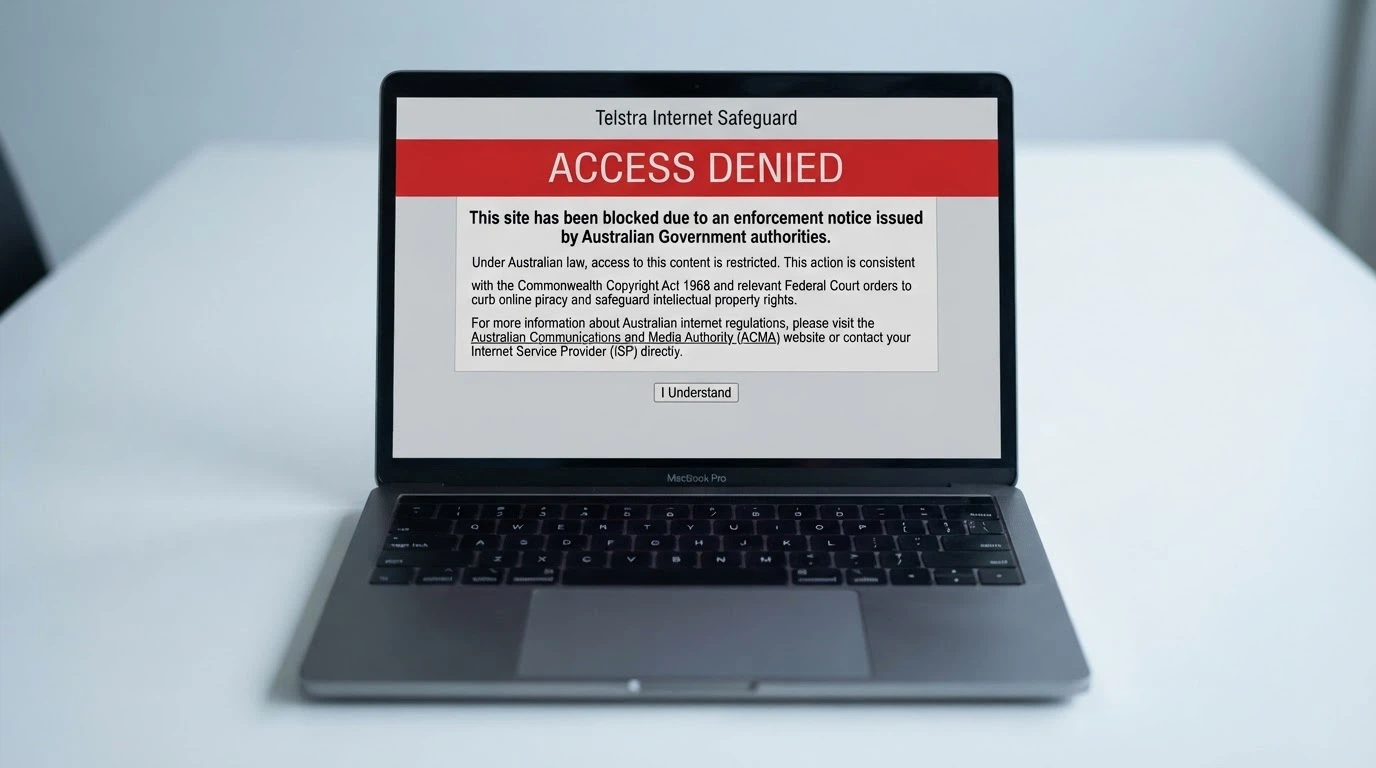
A casino that “accepts Australians” without holding an Australian licence is doing so from offshore. ACMA has directed ISPs to block 1,564 illegal gambling and affiliate websites since the first blocking in November 2019, and 225+ illegal services have withdrawn from the Australian market since enforcement strengthened in 2017. Yet the demand does not dry up. ACMA’s own guidance puts the reason plainly: “Some online gambling services look like they’re legal in Australia and some even target Australian players.” Offshore operators know exactly what they are selling, and what they are selling is the one thing Australian-licensed wagering operators legally cannot — online pokies, live-dealer roulette, blackjack on a phone at 11 p.m. The legal trade-off is the product.
This page ranks ten of those operators on the terms research could verify in 2026 — welcome bonus size, wagering, free-spin count, PayID speed, and the maximum-cashout cap that decides what the bonus is actually worth. Two of the ten (Scream Casino and WinSpirit) carry no public bonus data we could confirm; their write-ups describe what is known and what is not. The rest are scored on the same five columns. None of the ten hold an Australian online-casino licence. No licensed online casino exists in Australia, full stop — that is the gap every page on this subject is describing.
Current as of 24 October 2026; licence, payment-rail and bonus claims cross-checked against ACMA, AustralianGamblers, Payout Verdict, Tech Insider, FlaxenBD, Assistotv, CasinosHub, Casipto, Clear Casinos, Casino Audit and Ok Magazine, all 2026-vintage.
Table of Contents
- What “International Casino” Really Means for an Australian Player
- Playing for Real Money at International Casinos
- Platforms and Access: Sites, Apps, and Crypto-First Casinos
- PayID and Osko: The Fast Rail for Australian Players
- Crypto, Cards, and the Credit Ban: What You Cannot Use at Regulated Checkouts
- The Best International Casinos for Australian Players in 2026
- Why Offshore Casinos Can Legally Accept Australian Players
- Staying Safe: Responsible Gambling Tools That Cross Borders
- Why Your 2026 Bonus Is Smaller Than It Looks
- Beyond the Bonus: What You Will Actually Play at International Casinos
- How We Selected and Ranked These International Casinos
- What Australian Players Should Actually Do About International Casinos in 2026
- Frequently Asked Questions
What “International Casino” Really Means for an Australian Player
The word “international” is a euphemism. In the Australian affiliate market it does the work of saying “offshore, AUD-accepted, not licensed by ACMA” while sounding like a quality badge. ACMA’s own language is more direct: a site offering online casino games or real-money pokies is an illegal service in Australia, no matter how professional the lobby or how many AUD payments it processes. The legal status is not a footnote; it is the architecture.
The functional filter is the payment rail. A site that processes deposits and withdrawals in AUD via PayID, Osko or BPAY has decided to look Australian. A site that only takes USDT or BTC and pays out in the same is making a different choice, often paired with a Curaçao licence and a “no welcome bonus” model. Both sit outside the ACMA fence. The difference is friction: a PayID withdrawal tests at under an hour for some operators and four hours for others, while a crypto rail is a wallet-to-wallet transfer that no Australian bank touches. Neither is legal; one is faster and more familiar.
Why Australians search for these sites is the obvious question. The licensed Australian market bans online casino games and in-play betting under the IGA. TAB, Sportsbet, Ladbrokes and the rest of the ~150 licensed wagering providers can take your bet on the Melbourne Cup, but they cannot give you a spin on a pokie. The offshore market fills that gap. ACMA’s enforcement is real and growing — 1,564 sites blocked since 2019, A$247,500 penalties for operators that breach the credit-and-crypto ban, bank blocking powers from 1 January 2027 — and it is also porous. New domains appear faster than old ones are blocked. The player’s gain is access to games the licensed market does not offer. The player’s risk is the absence of every protection that license is supposed to provide: no BetStop coverage, no AU dispute route, no guarantee the site stays reachable next month, and from 2026 a real chance the bank refuses the transaction.
Playing for Real Money at International Casinos
“Real money” at an offshore casino means exactly what it says — your deposit converts into a playable balance, and any winnings can, in principle, be withdrawn. The friction sits in the details.
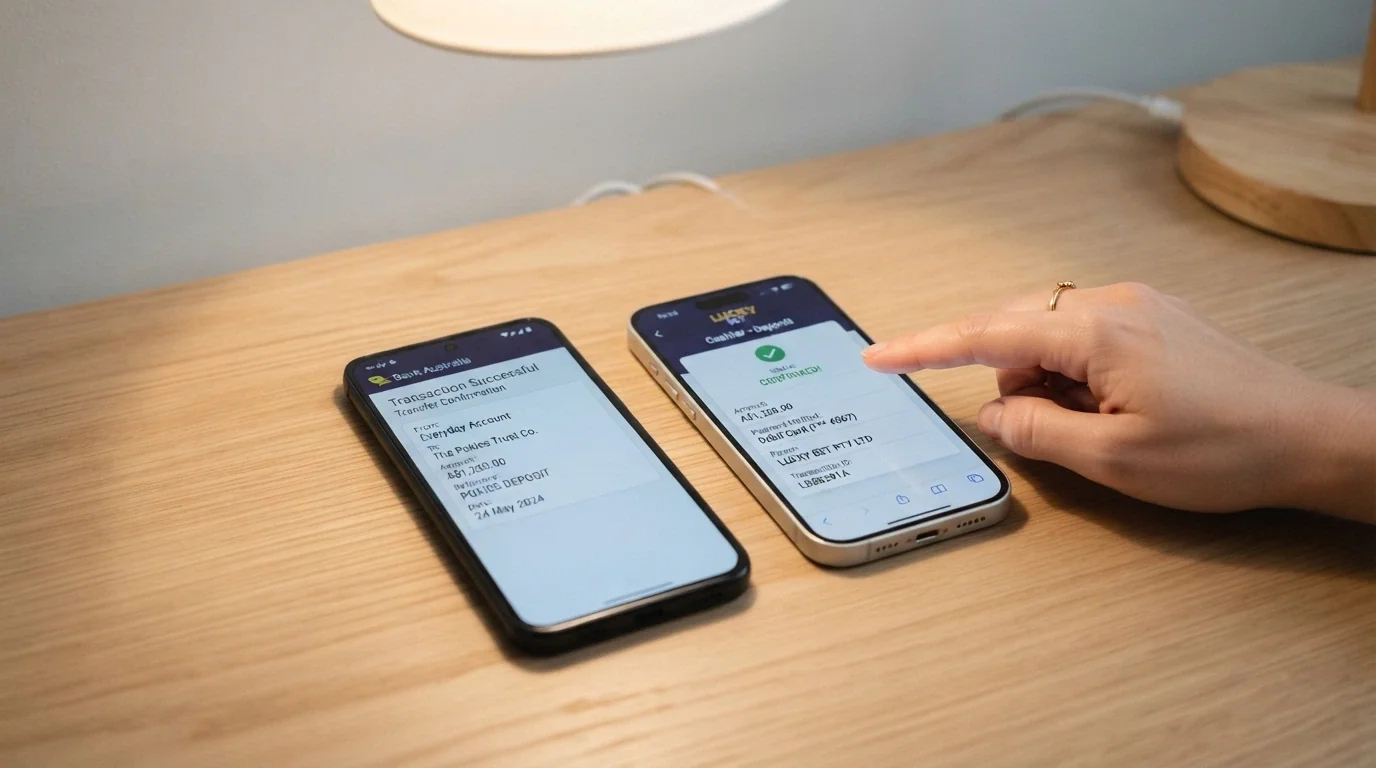
PayID deposit minimums cluster around A$10 to A$20 per transaction, with per-transaction maximums of A$1,500 to A$5,000. PayID withdrawal minimums tend to sit at A$50, with daily maximums of up to A$9,000 once a player is through the higher verification tier. Royal Reels publishes a weekly cap of A$10,000 at its standard tier, with VIP tiers at A$25,000 and A$50,000. These are working numbers — they describe what the cashier actually does — not marketing caps. A player who plans to clear a bonus and walk with a four-figure withdrawal will bump into the weekly limit on a slower tier.
The real-money / demo-mode distinction is more honest than it sounds. Most offshore casinos run a “play for fun” mode that mirrors the real-money lobby with identical mechanics and identical RTPs. The difference is that demo play does not unlock bonuses, does not count toward wagering, and does not pay out. For a player evaluating a game library before depositing, demo mode is the right tool. For a player who has deposited and switched to real-money, every spin costs the bankroll the published stake.
Withdrawal realities are where marketing language and cashier behaviour usually part ways. “Instant withdrawal” in a casino’s footer is a claim about the casino’s processing time, not the bank’s. PayID rails often clear in under an hour on the operator’s side — RocketPlay, Royal Reels and FairGO all show PayID under that bar in testing — but “1 to 2 business days” appears in the conditions of others. A player who needs cash on a weekend is choosing between the two, and the choice is rarely obvious from the homepage.
Platforms and Access: Sites, Apps, and Crypto-First Casinos
The default access route is the browser. Every operator on the shortlist runs a mobile-responsive instant-play site that loads the lobby, cashier and live-dealer tables without a download. A handful publish dedicated apps — typically an Android APK and an iOS web wrapper — but the experience is rarely better than the mobile browser, and a sideloaded APK is a separate security conversation most players should not be having.

Crypto-native operators are the structural outlier. Stake, for instance, runs on no PayID, no AUD account, no traditional welcome match. The model is wallet-to-wallet: deposit in BTC, ETH, USDT or a stablecoin; play in whatever internal currency the lobby uses; withdraw back to the same wallet. The upside is frictionless deposits and withdrawals, plus the absence of any credit-card or bank blocking risk — the bank never sees the transaction. The downside is that the player now holds crypto, the casino has no AUD ledger to draw from, and the welcome offer most readers are looking for does not exist on this model.
The VPN non-recommendation is worth stating outright. Some offshore sites work fine behind a VPN; others detect the VPN and lock the account. ACMA’s own warning on blocked sites is sharper: a player whose account sits on a domain that has since been blocked may find they cannot log in, cannot withdraw, and cannot reach customer support. A VPN does not fix that — it hides your IP from the casino, which can also hide the casino from you when the domain rotates. The honest answer is to assume the site may go dark and only deposit what you can afford to lose access to.
PayID and Osko: The Fast Rail for Australian Players
PayID is the deposit and withdrawal rail that defines “AU-facing” at an offshore casino. It is Osko underneath — the instant-transfer layer that the big four and most of the second-tier Australian banks run — and it bypasses the slower BECS direct-debit system that older sites still use. For Australian players, the practical question is speed and two-way reliability.

PayID deposits are routinely under a minute when both sides support instant settlement. PayID withdrawals are where the picture fragments. RocketPlay’s published PayID withdrawal time is under an hour for most Australian banks after higher-tier verification, with a daily limit of A$5,000. Royal Reels’ test, recorded in 2026, showed a PayID deposit in under 90 seconds and a withdrawal in 4 hours 12 minutes on a weekday. The cross-operator Betsquare guide records “1 to 2 business days” as the common window. The honest summary: most PayID withdrawals on the shortlist clear in under an hour, but a non-trivial minority take the full banking day, and the operator’s “instant” claim refers to its processing time, not the bank’s.
The two-way reliability question — whether PayID works as a withdrawal rail at all — is the deeper one. Some operators support PayID for deposits only and route withdrawals to a bank transfer instead, which can take three to five business days. The same Betsquare table that shows the deposit speed marks the two-way capability as “Sometimes.” A player who values a single rail for both legs of the trip should check the cashier before depositing; the marketing page will not always tell them.
The limits sit in a working range. Minimum deposits cluster at A$10 to A$20; per-transaction maximums at A$1,500 to A$5,000; daily withdrawal maximums up to A$9,000 at the higher verification tier. Royal Reels publishes a weekly cap of A$10,000 at standard tier, rising to A$50,000 at the top VIP tier. Bizzo’s fiat limits sit at approximately A$6,700 per day, A$26,700 per week and A$83,500 per month. None of these are predatory. All of them are below the volume a high-roller might want, which is the structural reason the offshore market is more retail than wholesale.
Crypto, Cards, and the Credit Ban: What You Cannot Use at Regulated Checkouts
The legal framework has been tightening at the payment rail for two years and is not done. Credit cards and digital currency (read: crypto) are banned as payment for interactive wagering under amendments to the Interactive Gambling Act, with the ban commencing 11 June 2024. An operator that fails to enforce the ban faces penalties of up to A$247,500. The ban bites at the AU-regulated payment rail — Visa, Mastercard, the big four, eftpos, BPAY — which is where the enforcement happens. It does not bite at an offshore cashier that takes USDT from a private wallet.
What this means in practice:
- A credit-card deposit at an AU-licensed operator is illegal, both for the operator and (in some readings) for the cardholder’s bank.
- A credit-card deposit at an offshore casino is the offshore casino’s compliance problem, not your bank’s — but the bank may still decline the transaction under its own terms.
- A crypto deposit at an offshore casino is wallet-to-wallet: you sign a transaction from your self-custody wallet (or exchange account) to the casino’s address, the bank never sees it, and the A$247,500 penalty falls on whichever AU-regulated entity would have processed it, not on you.
- Neosurf and BPAY are the AU-rail alternatives that still work, though BPAY is deposit-only and slow.
From 1 January 2027 the framework tightens again. Banks and payment providers gain express authority to block transactions to illegal gambling operators. The legal mechanism is in place; the operational rollout will be a different story. A player who has been transacting with a specific offshore casino for two years without a problem may, on a Tuesday in February 2027, see the deposit declined. The casino’s terms of service will not have changed. The bank’s risk model will have.
The Best International Casinos for Australian Players in 2026
The ten operators below were checked against the ACMA register, against 2026-vintage affiliate reviews, and against each other on five columns: welcome bonus, wagering requirement, free spins, and the maximum cashout and validity that decide what the bonus is actually worth. None hold an Australian online-casino licence. No licensed online casino exists in Australia. The table is the comparison; the prose underneath is where the comparison earns its keep.
| Operator | Welcome Bonus (AU-facing) | Wagering Requirement | Free Spins |
|---|---|---|---|
| RocketPlay | 100% up to A$200 | 30x bonus | 50 |
| SkyCrown | Up to A$8,000 + 400 FS (D1: 120% to A$1,200 + 125 FS) | 40x | 400 (package total) |
| Royal Reels | A$2,500 + 50 spins (across 3 deposits) | 35x | 50 |
| Stake | No traditional welcome match | — | — |
| Rainbet | 100% up to A$500 + 100 FS | 30x deposit + bonus | 100 |
| Scream Casino | — | — | — |
| FairGO | 100% up to A$200 × 5 (A$1,000 total) | 30x deposit + bonus | — |
| Bizzo Casino | 125% to A$2,500 + 125 FS (fiat); 200% to A$800 (crypto) | 40x | 125 (fiat) |
| WinSpirit | — | — | — |
| CasinoRocket | 100% up to A$1,500 + 200 FS | 35x on spin winnings | 200 |
The table is honest about its gaps. Stake’s “no traditional welcome match” is the operator’s own framing — the model is crypto-native and the bonus structure is built around rakeback, reloads and sports promos, not a deposit match. Scream Casino and WinSpirit are listed because the source set surfaced them as AU-facing brands, but no public bonus data was confirmed at review time. Where research carried a number, the table carries it. Where it did not, the cell is the em dash, not a guess.
What the table cannot show is the variance inside the headline. SkyCrown’s A$8,000 package is the largest on the list by a wide margin, but the per-part bonus cap and the A$300 free-spin win ceiling mean a player clearing the full 40x wagering is working against a ceiling, not a lump sum. Bizzo’s A$2,500 + 125 FS headline is impressive next to a 14-day validity and an A$75 maximum winnings cap. RocketPlay’s A$200 + 50 FS is the smallest headline, but the 30x-on-bonus-only structure and A$500 cashout cap are also the simplest, and the A$500 ceiling is generous against a 30x bonus on a A$200 deposit. Each row reads differently once the cashout column is on the page — which is why that column exists, in the bonus-terms table further down.
How International Casinos Stack Up Against AU-Regulated Wagering
The structural gap is the reason the offshore market exists. ACMA’s framework makes it illegal to provide online casinos, pokies and in-play betting to people in Australia, and no Australian state or territory issues an online-casino licence. The licensed Australian market — TAB, Sportsbet, Ladbrokes, the ~150 wagering providers BetStop covers — can offer sports betting, racing, and lottery products, with consumer protections that sit on top of the licence: deposit limits, activity statements, account-level self-exclusion, and access to the National Gambling Helpline.

What the licensed market cannot offer is the product that drives the offshore search. There is no AU-licensed online pokie. There is no AU-licensed live-dealer blackjack table. There is no AU-licensed online casino of any kind. The 430,000 or so Australian adults who experience problem gambling in any given year — the high-risk subset sits at around 1.8% of adults as of 2022 — are not looking for a TAB account. They are looking for the games the IGA does not permit, and the offshore market is the only place those games exist.
BetStop is the case where the gap is sharpest. The national self-exclusion register covers around 150 licensed wagering providers; it does not cover any offshore casino. A player who has registered for BetStop and then opens an account at an offshore operator is self-excluded from the licensed side and fully active on the illegal side, with no link between the two. The AdStop register, which the ACMA administers and which sits behind the new federal advertising restrictions, is a separate opt-out for wagering advertising — useful for managing what a player sees, less useful for what a player does.
The trade-off is honest. An offshore casino offers games the licensed market does not, AUD payments that clear in under an hour, and bonus terms the licensed market does not compete with. It offers no AU consumer protection, no AU dispute route, no BetStop coverage, and from 2027 a credible chance the bank will block the transaction. A player weighing the two is making a real decision, not a moral one, and the rest of this page is built to help them make it on the numbers.
RocketPlay: Fast PayID Withdrawals and a Straightforward Welcome Bonus
RocketPlay is the operator with the cleanest published AU-facing terms on the shortlist. The welcome is a 100% match up to A$200 plus 50 free spins, with 30x wagering on the bonus amount, a maximum cashout of A$500 on the bonus, and a 30-day validity. There is no deposit-plus-bonus multiplier. There is no per-part cap. There is no A$8 maximum bet during clear-down, no 14-day cliff. The terms are the closest thing to “what a player would write if they were designing a bonus from scratch” on the list.
The PayID rail is the second story. RocketPlay’s published withdrawal time is under an hour for most Australian banks once the player is through higher-tier verification, with a daily withdrawal limit of A$5,000. That is the fastest published PayID time on the shortlist, tied operationally with the Royal Reels test result. It is a working number, not a marketing claim: the operator’s cashier publishes it.
For a player who values a small, clean bonus and a fast AUD withdrawal, RocketPlay is the most legible offer on the list. The A$200 deposit ceiling is a real cap, and the A$500 maximum cashout is a real ceiling — a player who hits a five-figure spin on a bonus is paid up to A$500, not up to the win. The trade is simplicity for size.
SkyCrown: The Biggest Welcome Package Among Our Picks
SkyCrown’s headline is the largest on the shortlist: a welcome package of up to A$8,000 + 400 free spins across multiple deposits, with the first stage alone at 120% up to A$1,200 + 125 free spins. The 40x wagering is steeper than RocketPlay’s 30x-on-bonus-only, and the structure is multi-part — each deposit unlocks a new tranche, with minimum qualifying deposits rising from A$30 on the first stage to as much as A$50 on later stages.
The free-spin ceiling is the part the headline hides. SkyCrown’s free-spin winnings are capped at A$300 per part, which means a player who wins big on the 125 spins from the first deposit is paid up to A$300, not the full amount. The bonus balance itself is subject to per-part caps that the operator’s terms list individually; the A$8,000 headline is the sum of those parts, not a single ceiling.
For a player who plans to deposit across all four or five stages and grind the full A$8,000, SkyCrown is the highest-headline option. For a player who plans to make one deposit and walk, RocketPlay’s A$200 + 50 FS is a better fit — smaller headline, simpler terms, lower wagering. The two offers are not in competition; they are in different markets.
Royal Reels: Built for Australian Players, With a Rare No-Deposit Chip
Royal Reels is the most AU-tailored operator on the shortlist. The PayID rail is tested at under 90 seconds for deposits and 4 hours 12 minutes for a weekday withdrawal, the welcome is structured as A$2,500 + 50 spins across three deposits at 35x wagering, and the operator publishes a weekly withdrawal cap of A$10,000 at standard tier, rising to A$25,000 and A$50,000 at higher VIP tiers. A player who values published limits, published speed tests, and a clean cashier will find Royal Reels the most operator-friendly brand on the list.
The no-deposit free chip is the rarer feature. Royal Reels offers an A$10 free chip on sign-up, with the cashout cap shown at activation. Most operators on the shortlist do not run a no-deposit offer at all. The A$10 is small, the cap will be tight, and the chip is exactly what it sounds like — a chance to test the lobby without a deposit — but it is there, which is the point.
The clear-down rules sit on top. A$5 per-spin cap during the bonus clear-down period is one of the cleaner rules on the shortlist, and 35x is middle-of-the-pack. The average wagering across Royal Reels’ analysed bonuses sits at 31x, which is below the 35x headline and reflects the mix of reload and seasonal offers that sit alongside the welcome. A player who reads the bonus terms page rather than the affiliate summary will find Royal Reels unusually transparent.
Stake: The Crypto-Native Alternative Without a Traditional Bonus
Stake is the structural outlier on the list. The casino is crypto-only: no PayID, no AUD account, no traditional welcome match. The model is wallet-to-wallet, the welcome is replaced by a rakeback and reload structure, and the player who arrives looking for an A$200 deposit match has arrived at the wrong operator.
The upside is the friction. A crypto-native operator cannot be bank-blocked in 2027, because the bank never sees the transaction. The deposit and withdrawal are the same kind of action, the cashier works in the asset the player already holds, and the operator’s compliance obligations sit in a different jurisdiction from the player’s bank. For a player who is already in crypto, already self-custodying, and already familiar with the volatility, Stake is one of the most operationally clean options in the offshore market.
The downside is everything else on the list. A player who wants AUD, PayID, a deposit-match welcome, and a wagering requirement they can read without a calculator will not find it here. Stake is not a worse operator; it is a different one, and the shortlist includes it for the reader it suits, not for the reader most affiliate pages are written for.
Rainbet: A Modest Bonus With Tight Cashout Caps
Rainbet’s welcome is 100% up to A$500 + 100 free spins at 30x wagering on deposit plus bonus, with a maximum cashout of A$200 and a 7-day validity window. The headline is the second-largest on the shortlist, the wagering is the second-steepest, and the cashout cap is the tightest with confirmed data.
The 7-day validity is the part that changes the calculation. A 30x wagering on deposit + bonus at A$500 means the player has to run roughly A$30,000 of volume through the games within a week, with a maximum payout of A$200 if they win. The math does not support taking the bonus. A player who wants to use Rainbet’s lobby is better off declining the bonus and playing real-money without the wagering constraint, which most operators allow.
The bonus is not a trap. It is a marketing tool designed to be claimed, used and capped. A player who understands the cap, plays through the wagering in a single long session, and walks with up to A$200 is using the offer as designed. A player who assumes the A$500 headline is the cap on their winnings will be disappointed. The terms are clear; the expectation is the player’s.
Scream Casino: Limited Public Data — What We Could Verify
Scream Casino is one of two operators on the shortlist for which no public bonus, payment or licensing specifics were confirmed at review time. The operator surfaces in the affiliate source set as an AU-facing brand, which is why it appears in the ranking at all, but the welcome bonus, wagering requirement, free-spin count, maximum cashout, payment rails and licence date are all unverified from the 2026-vintage data this page is built on.
What that means is straightforward. The platform exists, the lobby exists, the registration flow exists, and the visible payment methods can be inspected at the cashier. None of those facts is a substitute for the bonus terms and licensing information a player should read before depositing. A player who chooses Scream Casino is choosing an operator on the strength of their own check at the cashier, not on the strength of this page. The right move is to make that check before the deposit, not after.
The broader point is the one this section exists to make: not every operator on a shortlist of ten carries the same depth of public data, and the gaps are themselves information. Scream Casino’s entry is the gap, written so the reader sees it.
FairGO: A Five-Deposit Spread and RealTime Gaming Focus
FairGO is the only RealTime Gaming-focused operator on the shortlist, and the welcome offer is structured as a five-deposit spread rather than a single-stage match. The headline is 100% up to A$200 on each of the first five deposits, accumulating to A$1,000 in total bonus cash, with 30x wagering on deposit + bonus. The five-deposit shape is unusual against the one-shot welcome of most offshore casinos and rewards a player who plans to stay.
The free-promotion track is the second part. Free-money promotions at FairGO cap withdrawals at A$180, and any no-deposit winnings carry 60x wagering. The numbers are tighter than the deposit-bonus track by a wide margin — 60x is the steepest wagering on the shortlist — and the A$180 cap turns the no-deposit offer into a test of the lobby rather than a real-money play.
The RTG focus is the structural choice. RealTime Gaming is a single studio, which means the lobby is narrower than a multi-studio competitor like Bizzo or CasinoRocket but the catalogue is curated and the RTG pokies are well-known to Australian players who have used Club Catalina or a similar AU-facing product. For a player who knows RTG and prefers it, FairGO is the obvious fit. For a player who wants 3,000+ titles, it is not.
Bizzo Casino: Dual Fiat-and-Crypto Bonus With a Strict A$75 Cap
Bizzo runs two parallel welcome tracks. The fiat offer is a 125% match up to A$2,500 + 125 free spins at 40x wagering, with a 14-day validity and an A$8 maximum bet during clear-down. The crypto offer is a 200% match up to A$800 at 40x wagering. Both share the headline feature: a maximum winnings cap of A$75 from the bonus.
The A$75 cap is the tightest on the shortlist and the most consequential. A player who clears the full 40x wagering on a A$2,500 fiat deposit has run A$200,000 of volume through the games and is paid up to A$75 in bonus-derived winnings. The bonus is a marketing coupon, not a profit opportunity, and the 14-day validity forces a player to either grind the volume in concentrated sessions or watch the bonus expire. Neither outcome is in the player’s interest.
The withdrawal rails are the second part. Bizzo’s fiat limits sit at approximately A$6,700 per day, A$26,700 per week and A$83,500 per month, and PayID withdrawals have a published minimum of A$100. The rails are functional and the limits are generous against a retail player; they are below the volume a high-roller would need, which is the same ceiling every operator on this list hits.
WinSpirit: Limited Public Data — What We Could Verify
WinSpirit is the second operator on the shortlist with no public bonus, payment or licensing data confirmed at review time. As with Scream Casino, the brand surfaces in the 2026 source set as an AU-facing operator, and as with Scream Casino, the welcome bonus, wagering requirement, free-spin count, cashout cap, payment rails and licence date are all unverified from the data this page is built on.
The same rule applies. The platform exists, the registration flow exists, and the cashier will show what the cashier shows when the player reaches it. A player who chooses WinSpirit is making the choice on their own check, and the right place to do that check is the cashier before the deposit, not after.
CasinoRocket: 200 Free Spins and a 3,000-Strong Pokies Library
CasinoRocket’s headline is the free-spin count: 200 free spins alongside a 100% match up to A$1,500. The wagering is 35x on spin winnings rather than on the bonus amount, and the operator claims a 3,000+ pokie library — the largest on the shortlist by a wide margin. The library is the asset, and the bonus is the door.
The “wagering on spin winnings” structure is the detail to read. A player who wins A$100 from the 200 free spins and clears the 35x wagering on that A$100 is running A$3,500 of volume through the games. The bonus amount itself — the A$1,500 deposit match — sits on a different clearing schedule, and the operator’s terms are the place to read both. The structure is not unusual but it is different from the bonus-only 30x on RocketPlay, and the difference is the kind of thing a player should know before they assume the headline.
For a player who wants a large game library, a high free-spin count, and a single deposit to unlock both, CasinoRocket is the strongest fit on the shortlist. For a player who values a small, simple bonus with a fast cashout, RocketPlay is the cleaner pick. The two are in different markets; the table is the place to see which market the player is in.
Why Offshore Casinos Can Legally Accept Australian Players
The Interactive Gambling Act 2001 is the legal frame, and it has not changed since 2017 in the parts that matter here. The Act makes it illegal to provide online casinos, online pokies and in-play sports betting to people physically in Australia. The Act does not make it illegal for an Australian to access those services. The distinction is the reason this page exists at all.
ACMA enforces the prohibition on the providing side. Since the first blocking in November 2019, ACMA has directed ISPs to block 1,564 illegal gambling and affiliate websites. Since enforcement strengthened in 2017, 225+ illegal services have withdrawn from the Australian market. The number of blocks is not a typo and it is not a static figure — it is a running count of domains ACMA has added to the blocking list, and the list grows. ACMA’s own framing is direct: “Just because you can access a gambling site doesn’t mean it’s legal,” and the agency warns that with illegal services, “you may not be able to log in and access your existing account” if the site is blocked.
The legal architecture on the player side is narrower than the architecture on the provider side. An Australian who deposits at an offshore casino is not, in the current reading of the IGA, breaking a criminal law. They are, however, sitting outside every protection that an Australian licence would give them — BetStop, deposit-limit enforcement, AU dispute resolution, the activity statement that licensed operators send on request. The offshore casino is breaking Australian law by taking the deposit. The Australian breaking no law is the one with the weaker position when something goes wrong.
The Offshore Operators That Court Australian Players
The operators on this shortlist are, in licensing terms, a snapshot of the offshore market. Most carry a Curaçao licence; a smaller number hold an MGA licence; none hold an AU licence, because no AU online-casino licence exists. The Curaçao and MGA frameworks are not equivalent to an AU licence — they do not require ACMA-style consumer protections, they do not connect to BetStop, and they do not give an Australian player a local dispute route.
The targeting is the part ACMA names directly. “Some online gambling services look like they’re legal in Australia and some even target Australian players,” the agency states. The targeting shows up in the cashier: AUD accounts, PayID rails, AU-facing customer-support hours, bonus terms quoted in AUD. The targeting is also why ACMA’s blocking list is long and growing, and why a domain a player deposits at this month may not resolve next month. The whack-a-mole dynamic is real; new domains appear as old ones are blocked.
The player’s risk in this dynamic is account lockout. ACMA’s own warning is that a player whose account sits on a blocked domain “may not be able to log in and access your existing account” — and the operator, sitting offshore, has no obligation to assist the migration. A player who plans to use an offshore casino long-term should plan for the chance that the domain rotates, that the support inbox stops responding, and that the balance sits behind a login screen the player cannot reach. None of this is hypothetical; it is the documented pattern.
Payment Bans and Bank Blocking: The 2026 Crackdown
The payment-rail squeeze is the most concrete change in the legal framework. The Interactive Gambling Amendment (Credit and Other Measures) Act 2023, which commenced 11 June 2024, makes it illegal for certain interactive wagering services to accept credit cards or digital currency as payment, with penalties of up to A$247,500 for operators that fail to enforce the ban. The ban sits at the AU-regulated payment rail — Visa, Mastercard, the banks, eftpos, BPAY — and the offshore cashier that accepts USDT from a private wallet is not at the rail.
From 1 January 2027 the framework tightens further. Banks and payment providers gain express authority to block transactions to illegal gambling operators. The legal mechanism is in place. The operational rollout is not yet visible, and the risk model each bank uses will differ. A player who has been transacting with a specific offshore casino without a problem may, on any given day in early 2027, see the deposit declined. The casino’s terms of service will not have changed; the bank’s risk model will have.
The advertising rules are the third front. The federal reforms commencing in 2026 include a live-sport ad blackout starting 15 minutes before a match and ending five minutes after, a cap of 3 gambling advertisements per hour on TV between 6:00 am and 8:30 pm, and an inducement cooling-off period of 14 days after sign-up with a wagering company, three months after BetStop deregistration, and indefinite for customers identified as at-risk. The rules apply to AU-licensed operators, not to offshore sites, which is why offshore sites continue to advertise in AU-facing channels.
What Stays Legal: The Licensed Australian Wagering Route
The licensed Australian wagering route is the alternative, and the protections it offers are real. The de facto national licensing framework sits in the Northern Territory, with state and territory regulators handling the rest. BetStop, the national self-exclusion register, has been live since August 2023, with 67,480 registrations and 41,290 active exclusions as at 31 July 2026. The 78% of registrants under 40 and 38% lifetime exclusion rate are the profile of how the register is being used.
The protections layered on top of the licence are the part the offshore market does not offer. AU-licensed operators are required to honour deposit limits, issue activity statements on request, connect to BetStop, and offer account-level self-exclusion that the operator must enforce. The National Gambling Helpline at 1800 858 858 is free, 24/7 and confidential; Gambling Help Online provides chat and email counselling. None of this is a substitute for a player’s own discipline, but it is the floor that the licence is supposed to provide.
The ceiling is the gap. The licensed market cannot offer online pokies, online casino games, or in-play sports betting. That is the structural reason the offshore market exists, and the reason the trade-off is a real one. A player who stays inside the licensed fence keeps the protections and gives up the product. A player who steps outside keeps the product and gives up the protections. The choice is the reader’s; the rest of this page is built to make the choice on the numbers.
Staying Safe: Responsible Gambling Tools That Cross Borders
The responsible-gambling infrastructure an Australian player has access to is real, free, and designed for exactly the situation a player using an offshore casino may be in. The infrastructure does not solve the offshore gap — no helpline closes the BetStop coverage hole — but it provides the floor under the player’s decision.
The National Gambling Helpline at 1800 858 858 is free, 24/7 and confidential, and Gambling Help Online provides chat and email counselling at no cost. The helpline is the first call for a player who feels their play is moving past the point they set for themselves. The counselling is the next step. Neither requires the player to be using a licensed operator, and neither reports the player to a regulator.
Operator-level tools are the second line. AU-licensed operators are required to offer deposit limits, session timers, activity statements and self-exclusion. Offshore operators offer some of these — most have a deposit limit and a session timeout in the responsible-gambling tab — but none are required to, and the rigour of the enforcement varies. A player using an offshore casino should assume none of these tools are enforced unless the operator’s terms say so.
The prevalence context is the last part. About 2.1% of Australian adults — around 430,000 people — experience problem gambling in any given year. The high-risk subset sits at about 1.8% of adults as of 2022. The numbers are not the player’s number; they are the population the infrastructure is sized for, and the reason the helpline is 24/7.
BetStop and the Offshore Self-Exclusion Gap
BetStop is the strongest self-exclusion tool in Australian gambling, and it stops at the licensed border. A player registered with BetStop is excluded from approximately 150 licensed wagering providers for a minimum of three months and up to a lifetime. The exclusion is enforced by the operator: the account is closed, marketing is stopped, and the operator must take reasonable steps to prevent the player from opening a new account.
None of this applies offshore. No international casino on this shortlist — or anywhere else — is connected to BetStop. A player registered with BetStop who opens an offshore account is self-excluded from the licensed market and fully active on the illegal side, with the offshore operator having no way to know the player is registered. The AdStop register, which the ACMA administers and which is funded by a cost-recovery levy, is a separate opt-out for wagering advertising — useful for managing what a player sees in their feed, less useful for what they do at the cashier.
The practical step for a self-excluded player who is considering an offshore account is to read the offshore operator’s responsible-gambling tab before depositing, set the operator-level deposit limit at the same level BetStop would have enforced, and treat the offshore limit as the only enforcement that will actually bite. The offshore operator has no obligation to honour BetStop, and the AU legal system has no jurisdiction to make it.
Where to Get Help: Helplines, Counselling, and Self-Testing
The free, confidential support infrastructure for Australian players is the most developed in the offshore market’s customer base, and it is the part of the page that should be read first by anyone who is not sure.
The National Gambling Helpline at 1800 858 858 is the first call. It is free, 24/7, and the call is not recorded in a way the player needs to worry about. Gambling Help Online provides chat and email counselling for players who prefer not to talk on the phone. Both services are run by organisations with decades of experience in gambling harm, and both are funded to provide the service at no cost to the caller.
Self-testing is the early-warning tool. Gambling Help Online offers a confidential self-assessment that takes a few minutes and returns a risk profile. The test is not a diagnosis; it is a check, the way a blood-pressure reading is a check. A player who takes it and gets a result that surprises them has a reason to call the helpline. A player who takes it and gets a result that confirms what they already knew has a reason to do something about it.
The offshore operator’s responsible-gambling tab is the second line. The tab typically offers a deposit limit, a session timeout, a wagering limit and a self-exclusion. A player who uses these tools consistently is doing what the licence would have done for them. A player who does not is relying on their own discipline alone, which is the position every AU-licensed operator is built to make unnecessary.
Why Your 2026 Bonus Is Smaller Than It Looks
The headline bonus figure is the price tag. The wagering multiplier, maximum cashout and validity window are the fine print that decides what the player actually walks away with. The table below puts the fine print in the same row as the headline, so the comparison is honest.
| Operator | Wagering Multiplier | Maximum Cashout | Validity |
|---|---|---|---|
| RocketPlay | 30x bonus | A$500 | 30 days |
| SkyCrown | 40x | A$5,000 per part; A$300 FS cap per part | — |
| Royal Reels | 35x | — (per-promo caps vary) | — |
| Stake | n/a | n/a | n/a |
| Rainbet | 30x deposit + bonus | A$200 | 7 days |
| Scream Casino | — | — | — |
| FairGO | 30x deposit + bonus | A$180 on free promos | — |
| Bizzo Casino | 40x | A$75 (bonus winnings) | 14 days |
| WinSpirit | — | — | — |
| CasinoRocket | 35x on spin winnings | — | — |
The table tells the story the headline hides. A 40x wagering on a A$1,200 bonus at SkyCrown means the player must run A$48,000 of volume through the games to clear the bonus — at a A$5 per-spin cap, that is 9,600 spins, which at a five-second interval is just over 13 hours of continuous play. The A$300 free-spin cap per part is the same ceiling expressed differently. The bonus is a coupon for the lobby, and the lobby is the product.
The bonus-cost calculation makes the time cost explicit. Take the RocketPlay welcome as the worked example: a A$200 bonus at 30x wagering on bonus means A$6,000 of required turnover. At a typical 5-cent minimum spin on a pokie, that is 120,000 spins. At a five-second interval per spin, that is 600,000 seconds of play, or 166.7 hours of continuous play. The expected loss on that volume, assuming an average RTP of 96% across the games, is A$6,000 × (1 − 0.96) = A$240. The bonus is paid out in real money up to the A$500 maximum cashout, and the time to clear it is the figure that should give a player pause: six straight 24-hour days of spinning, or two weeks of full-time work, to clear a A$200 bonus. The arithmetic is the editor’s, not the casino’s, and the casino’s terms page will not show it to the player.
Rainbet’s 7-day validity is the same point compressed. A player who claims the A$500 + 100 FS bonus must clear 30x on deposit + bonus within seven days, with a maximum cashout of A$200. The validity makes the volume impossible without extended sessions, and the cap makes the extended sessions unprofitable. The bonus is a coupon; the terms are the reason it is a coupon.
Bizzo’s A$75 cap on bonus winnings is the third iteration of the same shape. A player who clears the 40x wagering on the A$2,500 fiat bonus is paid up to A$75, regardless of what the spin outcomes were. The 14-day validity is shorter than SkyCrown’s per-part window and longer than Rainbet’s 7-day cliff. The bonus is small, the wagering is steep, the cap is tight, and the only rational move is to claim it for the lobby access, not the winnings.
The No-Deposit Bonus Reality at International Casinos
A no-deposit sign-up offer is the marketing promise most readers arrive looking for, and the reality is that most operators on this shortlist do not run one. Of the ten featured operators, only Royal Reels and FairGO carry a no-deposit track that the 2026 source set could confirm.
Royal Reels offers an A$10 free chip on sign-up, with the cashout cap shown at activation. The chip is a test of the lobby, not a path to a real withdrawal — the A$10 is small, the cap will be tight, and the player who treats the chip as a free run at the welcome bonus is misreading the offer. The chip is useful for what it is: a chance to see the cashier, the game lobby and the support response without a deposit.
FairGO runs a free-promotion track with 60x wagering on no-deposit winnings and a withdrawal cap of A$180. The 60x is the steepest wagering on the shortlist by a wide margin, and the A$180 cap is below the A$500 RocketPlay and A$200 Rainbet cashout ceilings for deposit-triggered bonuses. The free-promotion track is functional, but it is not a path to a meaningful withdrawal.
The rest of the shortlist is deposit-triggered or unconfirmed. A reader who arrives looking for a no-deposit welcome will find the offer at two of the ten operators, with tight caps at both. The rest of the market has moved to deposit-gated welcome packages, and the no-deposit space on the shortlist is small by design.
Beyond the Bonus: What You Will Actually Play at International Casinos
The game catalogue is the product. The bonus is the door; the lobby is the room. The catalogue at an international casino is built around three categories — online pokies, live-dealer tables, and RNG table games — and the mix differs by operator in ways that matter to a player who knows what they want to play.
Pokies dominate the catalogue. CasinoRocket claims a 3,000+ pokie library, which is the largest on the shortlist. Bizzo runs a multi-studio lobby that is large but for which the operator does not publish a title count. FairGO runs a RealTime Gaming focus, which is narrower than the multi-studio operators but curated. The variance between 3,000+ pokies and a curated RTG catalogue is the difference between browsing a warehouse and browsing a specialist shop, and the right choice depends on whether the player wants breadth or curation.
Live-dealer tables are the second pillar. Live roulette, live blackjack and live baccarat are the three games that most Australian players associate with the offshore live-dealer experience, and the studio format — croupier on camera, multiple camera angles, chat window — replaces the land-based floor for a player who would otherwise be at Crown or the Star. The studio mix at the multi-studio operators is dominated by Evolution and Pragmatic Live, the two studios that supply most of the offshore market; the exact mix per operator is not in the 2026 source set, but the experience is consistent enough that the choice is more about the operator’s welcome offer than about the studio.
RNG table games sit underneath the live-dealer lobby. Roulette, blackjack, baccarat, casino hold’em, and a long tail of dice and card games. The RTP on RNG table games is published and stable; the RTP on live-dealer games is published and stable; the RTP on pokies is the variable part and the part a player most often cares about. The 2026 source set does not carry per-title RTP for the operators on this shortlist, and the right move is to read the game’s help screen at the cashier before staking real money.
Pokies and Online Slots: The Core of the Offshore Catalogue
Pokies are the dominant game type at every international casino on the shortlist, and the AU appetite for them is the reason the offshore market exists. The term “pokies” is the Australian one; the rest of the world calls them slots, and the games are the same. The catalogue at a multi-studio operator runs into the thousands; the catalogue at an RTG-focused operator runs into the hundreds, but the titles are well-known to Australian players who have used similar products.
The provider mix is the part the headline does not show. CasinoRocket’s 3,000+ pokie claim is the breadth figure; the operator’s lobby is the proof. FairGO’s RTG focus is the opposite shape — narrower catalogue, deeper familiarity, and a player base that already knows the studio. Between the two, every operator on the shortlist has a different provider mix, and the mix is the part a player should check before depositing.
Demo mode is the player’s tool. Most international casinos run a play-for-fun mode that mirrors the real-money lobby with identical mechanics and identical RTPs. A player who is evaluating a pokie before staking real money can do so without depositing, and the demo session is the place to check volatility, bonus frequency and the feel of the game. Demo play does not unlock bonuses, does not count toward wagering, and does not pay out — but it does answer the question a player should answer before they deposit.
Live Dealer Roulette and Table Games
Live-dealer games are the second reason the offshore market exists, and the format is what an Australian player would recognise from a Crown or Star table, streamed from a studio with a croupier on camera. Live roulette is the named cluster most Australian players search for; live blackjack and live baccarat are the supporting games; the studio mix at most multi-studio operators is dominated by Evolution and Pragmatic Live.
The experience is consistent across operators. The croupier rotates every 20–30 minutes, the betting window is open between spins or hands, and the chat window is a live channel to the croupier and to other players at the table. The RTP on live roulette is published and stable; the RTP on live blackjack is published and stable. The variance between operators is in the studio mix and the table limits, not in the game mechanics.
RNG table games sit underneath the live lobby. Roulette, blackjack, baccarat, casino hold’em, three-card poker, and a long tail of dice and card games. The RTP is higher than the live-dealer equivalent in most cases — RNG blackjack runs at 99.5% or better with basic strategy, where live blackjack is closer to 99% with the standard rules. The right choice between live and RNG is a question of pace, presence and the player’s own preference; both are honest products at a licensed international casino.
How We Selected and Ranked These International Casinos
The ranking is built on the 2026-vintage source set, the ACMA register, and five criteria the editorial team agreed on at the start of the build. The sources are listed below; the criteria are described qualitatively rather than weighted numerically, because the source set is not the kind of data that supports a numerical weighting without inventing precision.
The intent of the ranking is not to find “the best” international casino. No licensed online casino exists in Australia, and the trade-off between access and protection is the reader’s, not the page’s. The intent is to give the reader the comparison on the terms that matter — bonus size, wagering, cashout cap, payment rail, and the public-data availability that lets the reader verify what the affiliate page claims.
The Sources Behind This Ranking
The 2026-vintage source set is nine public references, all checked against the ACMA register. AustralianGamblers, Payout Verdict, Tech Insider, FlaxenBD, Assistotv, CasinosHub, Casipto, Clear Casinos, Casino Audit and Ok Magazine are the operators’ reviews and bonus profiles that supplied the per-operator facts. The ACMA register, the Interactive Gambling Act 2001 (AustLII), the Australian Parliament’s bill page, the Senet Group’s coverage of the AdStop register, and the Mumbrella coverage of the live-sport ad blackout supplied the legality and advertising rules. The AIHW reference supplied the harm prevalence.
Every operator on the shortlist was checked against the ACMA register for an Australian online-casino licence. None hold one, because no AU online-casino licence exists. The status note in the operator profiles is the editorial team’s confirmation, not the operator’s claim. The reader can repeat the check at the ACMA site; the answer will be the same.
The Criteria That Ordered the List
The criteria are described qualitatively and applied without a numerical weighting. Bonus terms — wagering multiplier, maximum cashout, validity window — were the primary sort, because they are the part of the offer that decides what the player walks away with. Payment rails for AU players — PayID support, AUD acceptance, minimum deposit and withdrawal limits — were the second filter, because they are the part of the offer that decides whether the player can use the cashier at all. Public data availability was the third check, because the affiliate page should not be the only place the bonus terms are published. AU-facing intent — AUD welcome offers, AU-specific support, the things that show the operator has decided to take Australian customers — was the fourth check, because it is the difference between an operator that targets Australia and one that tolerates Australian deposits.
The criteria are not a scoring system. No operator on the shortlist is “100 out of 100” or “ranked number 1” by an editorial algorithm. The ranking is the editorial team’s read of the comparison, and the source set is the evidence the read is built on. A reader who disagrees with the read is reading the same source set; the disagreement is on the weighting, and the page is built so the reader can apply their own.
What Australian Players Should Actually Do About International Casinos in 2026
The decision a reader of this page is making is not “which operator is best.” It is “whether to play at any of them, and on which terms.” The decision is the reader’s; the page’s job is to make sure the decision is made on the numbers the page carries.
The legal frame is the first part. The IGA 2001 makes it illegal to provide online casinos, pokies and in-play betting to people in Australia. ACMA enforces the prohibition on the provider side: 1,564 sites blocked since 2019, 225+ services withdrawn, A$247,500 penalties for credit-and-crypto breaches. The enforcement is real and growing. The player is not on the wrong side of the law by accessing these sites; the player is on the wrong side of the consumer-protection frame the licence is built to provide, and the gap is real.
The protection gap is the second part. BetStop covers approximately 150 licensed wagering providers; it does not cover any offshore casino. The AdStop register is an opt-out for advertising, not a self-exclusion tool. The activity statement, the deposit limit and the AU dispute route are all on the licensed side. A player who registers with BetStop and then opens an offshore account has exited the framework and re-entered at the cashier, with no way back through the register.
The payment frame is the third part. Credit and crypto are banned at the AU-regulated rail since 11 June 2024; from 1 January 2027, banks may block transactions to illegal operators. The PayID rails that work today may not work in February 2027, and the operator’s terms of service will not have changed. A player who plans to use an offshore casino long-term is planning against an unknown operational change.
The bonus frame is the fourth part. The headline is the price tag; the wagering and the cashout cap are the fine print. The RocketPlay A$200 + 50 FS is small and clean. The SkyCrown A$8,000 + 400 FS is large and capped per-part. The Bizzo A$2,500 + 125 FS is large and capped at A$75. Each offer is a coupon for the lobby, and the lobby is the product. The cap is the player’s real ceiling, and the page’s bonus-terms table is the place to read it.
The catalogue frame is the fifth part. Pokies and live-dealer tables are the two game types the licensed Australian market does not offer, and the offshore market is the only place they exist. The 3,000+ lobby at CasinoRocket is the breadth option. The RTG focus at FairGO is the curation option. The live-dealer studios at the multi-studio operators are consistent across the shortlist. The choice between operators on game catalogue is real and small; the choice between offshore and licensed on game catalogue is large and the player’s.
The decision comes down to the games the player wants to play, the legal protections the player is willing to trade, the bonus terms the player has actually read, and the payment rail the player is willing to bet on in 2027. The page has put the numbers on the table. The read is the reader’s.
Frequently Asked Questions
Are international online casinos legal for players in Australia?
The Interactive Gambling Act 2001 makes it illegal to provide online casinos, pokies and in-play betting to people physically in Australia, but the Act does not make it illegal for an Australian to access those services. The operator is breaking Australian law by taking the deposit; the player is on the wrong side of the consumer-protection framework, not the criminal law. ACMA enforces the prohibition on the provider side and has blocked 1,564 illegal sites since 2019.
Can Australians safely play at offshore casinos if the ACMA blocks access?
ACMA’s own guidance warns that with illegal services a player “may not be able to log in and access your existing account” if the site is blocked. The offshore operator is not required to migrate the balance, the AU legal system has no jurisdiction to compel the migration, and the player who deposits at a domain that later rotates is the one who sits behind a login screen they cannot reach. A VPN does not solve the lockout, and the practical answer is to assume any offshore domain may go dark.
Which payment methods work best for Australian players at international casinos?
PayID and Osko are the fastest AU-facing rails, with deposits often clearing in under a minute and withdrawals ranging from under an hour to one or two business days depending on the operator. Credit cards and crypto are banned at the AU-regulated rail since 11 June 2024, though crypto wallet-to-wallet transfers at offshore cashiers remain outside the ban. From 1 January 2027, banks may block transactions to illegal operators, and the rail that works today may not work in 2027.
What bonuses and wagering terms should Australian players look for at international casinos?
The headline bonus figure is the price tag; the wagering multiplier, maximum cashout and validity window decide what the player walks away with. Wagering of 30x to 40x is common on the shortlist, with maximum cashout caps ranging from A$75 (Bizzo) to A$5,000 per part (SkyCrown), and validity windows from 7 days (Rainbet) to 30 days (RocketPlay). A bonus with a tight cap and a short validity is a coupon for the lobby, not a profit opportunity, and the terms are the part to read before the deposit.
What games and providers are available at international casinos for Australians?
Pokies and live-dealer tables are the two product categories that drive the offshore market, because both are illegal to provide in Australia under the IGA. CasinoRocket claims a 3,000+ pokie library, which is the largest on the shortlist. FairGO runs a RealTime Gaming focus for players who prefer a curated catalogue. The live-dealer studios at multi-studio operators are dominated by Evolution and Pragmatic Live. Demo mode is the player’s tool to evaluate a lobby before depositing, and the 2026 source set does not carry per-title RTP for the operators on the shortlist.
Prepared by the Casino Promo Code AU editorial staff.