Best 3-Reel Pokies Australians Actually Play in 2026
 Available in AU
A 3-reel pokie is the closest the slot machine gets to its own ancestry. Three vertical strips, a single payline in the purest form, and a set of symbols most players could pick out with their eyes closed: cherries, BARs and sevens. The format looks simple because it is simple, and that simplicity is the product. Where the modern five-reel video pokie offers twenty features stacked on top of each other, a three-reeler asks one question: do the symbols line up, and what do they pay? That question is the entire machine.
The numbers on this page come from research conducted against current published specifications as of 25 October 2026, cross-referenced against operator bonus terms and the relevant register — ACMA for offshore blocking, the National Self-Exclusion Register (BetStop), and the Australian Institute of Health and Welfare for prevalence data. Every figure is sourced; where a slot title carries an RTP only, the table reflects that. What follows is built around what an Australian 3-reel player actually decides on: which title pays back the most over time, where to try them without committing a cent, and which offshore operators are honest enough to publish their terms, and which ones ask you to take it on trust.
Table of Contents
- How a 3-reel pokie works, reel by reel
- The classic symbols: cherries, bars and the lucky seven
- The best 3-reel pokies by RTP and max win
- 3 reels versus 5: what actually changes
- Land pokie versus online: where the three-reeler lives now
- Why Australians say pokies, not slots
- How to play 3-reel pokies free — and what “free” really means
- Demo mode explained: try before you wager
- No download, no sign-up: instant play in the browser
- The classic three-reelers you can try for free
- Free games with a bonus round, decoded
- Free play versus real money: what changes
- Where Australians actually play 3-reel pokies in 2026
- Operator comparison at a glance
- Royal Reels: the pokie-heavy library with tested average RTP
- SkyCrown: the biggest bonus and the biggest library
- Fair Go: RTG classics with the lowest wagering
- Rainbet: the no-wager path and Anjouan licence
- Rocket Play: two-deposit structure with 100 free spins
- WinSpirit: a simple 200% offer with 25 spins
- Bizzo: per-game RTP and fast withdrawals
- Rocket Casino: 50× wagering and low RTP visibility
- Stake: crypto-friendly, bonus details thin
- Scream Casino: name-checked, with minimal confirmed detail
- The law every Australian 3-reel player needs to understand
- What you give up when you play offshore
- The credit card and crypto ban: what it signals
- The 2026 gambling reform: what changes from January 2027
- Playing safe: the tools that catch you before you fall
- The self-exclusion register every licensed wagering service must obey
- Where to get help right now, day or night
- How we ranked every pokie and operator on this page
- Your three-reel play starts here — not somewhere else
- Frequently asked questions
How a 3-reel pokie works, reel by reel
The basic layout is a three-by-three grid: three vertical reels, three symbol positions per reel, and anywhere from a single payline across the middle to dozens of lines running through the matrix. The classic fruit machine of the Australian pub operates on a single centre line — land three matching symbols on row two and the machine pays. Most modern 3-reel releases expand that geometry without abandoning it. Fortune Gems 3 from TaDa Gaming runs a 3×3 grid with 5 fixed paylines. Fenix Play 27 Deluxe from Wazdan uses the same reel-and-row format but layers 27 fixed paylines across it. Triple Diamond from IGT stretches the single-line archetype to 9 paylines on a 3-reel layout.

One spin resolves in one motion. Each reel spins independently, the symbols stop on a randomly selected position, and the machine evaluates the active paylines against a published paytable. There is no cascading reels, no Megaways-style expansion, no gamble round that doubles on red or black. A three-reeler resolves and waits for the next wager. That single-step resolution is part of why the format holds its appeal — every credit goes through one cycle, and the player reads the result in the time it takes to glance at three rows.
The classic symbols: cherries, bars and the lucky seven
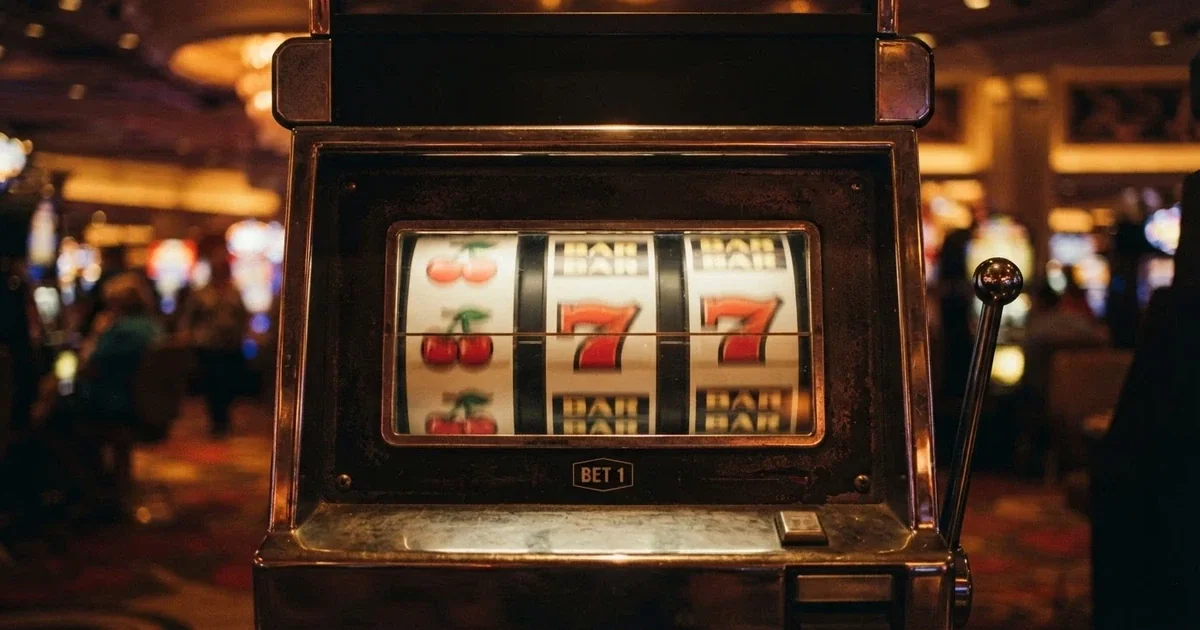
The symbol set on a 3-reel pokie is the format’s other inheritance. Cherries trace back to the original fruit machines that dispensed chewing-gum flavoured wins to skirt gambling laws in early twentieth-century America. BARs evolved from the logo of the Bell-Fruit Gum Company and got compressed into the rectangular symbol that still anchors the centre line. The lucky seven is a holdover from the one-armed bandit, where seven-seven-seven was the original jackpot combination.
Modern 3-reel releases carry that vocabulary forward rather than reinventing it. Quick Hit from Bally keeps the bar-and-seven lineup at its core. Sizzling 777 Classic from Slotopia — released December 2025 — wears the seven prominently across the grid. Hot Triple Sevens from Evoplay names its volatility class in the title. The retro look persists because it signals something the five-reel format can struggle to convey: that the machine is paying a flat multiple per line, no hidden multiplier, no expanding scatter.
The category audit covered in §3 of this page found that low volatility sits almost entirely with the cherry and fruit titles — 5 of 5 low-volatility games in the tested set used a fruit theme. High volatility concentrated in the lucky-seven bracket, where 5 of 6 titles returned the high-volatility rating. The bar-symbol set fell in the middle, mostly medium volatility. The symbol on the reels, in other words, is also a rough volatility dial — a player who cannot read a paytable can still read the grid.
The best 3-reel pokies by RTP and max win
RTP — return to player — is the percentage of wagered money a slot is designed to return over a long enough run of spins. Volatility describes how the returns are distributed: high volatility pays rarely and large, low volatility pays often and small. Max win is the ceiling — the largest multiple of the stake a single spin can produce. Each tells the reader something the others do not.
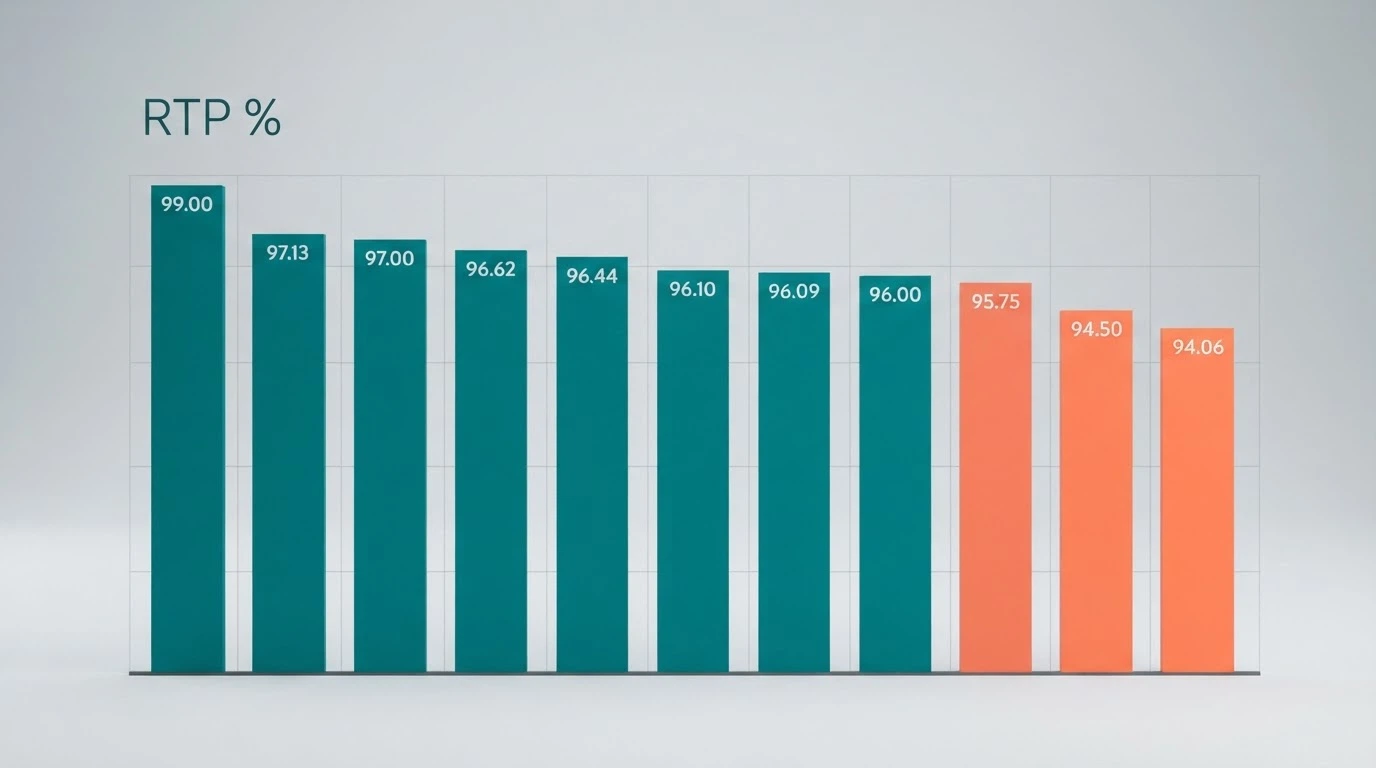
The table below covers eleven 3-reel titles that research verified against published sources. Where volatility or max win is not in the data, the cell is left blank — the absence is information, and an empty cell here is a more honest answer than an invented figure.
| Title | RTP | Volatility | Max win | Provider |
|---|---|---|---|---|
| Mega Joker (supermeter mode) | 99.00% | High | 2,000× | NetEnt |
| Fortune Gems 3 | 97.13% | Medium | 10,125× | TaDa Gaming |
| Triple Chance Hi-Lo | 97.00% | Medium | 2,700× | Play’n GO |
| Sizzling 777 Classic | 96.09% | High | — | Slotopia |
| Hot Triple Sevens | 96.10% | High | — | Evoplay |
| Triple Diamond | 96.00% | — | 1,000× | IGT |
| Arcade | 96.62% | High | 409× | VoltEnt |
| Fenix Play 27 Deluxe | up to 96.44% | Player-selectable | — | Wazdan |
| 777 Coins | 95.75% | Medium | 6,000× | 3 Oaks Gaming |
| Wolf it Up 3 Reeler | 94.50% | Medium | 2,500× | Inspired Gaming |
| Quick Hit | 94.06% | — | — | Bally |
Across the eleven titles, the spread runs from 94.06% at the bottom to 99.00% at the top. The category audit of classic 3-reel pokies returned an average RTP of 96.1%, with the highest recorded figure on a single-payline cherry slot at 97.3% and the lowest at 94.8% — a narrower band than the eleven-title table shows, because the audit pulled a tighter sample. Mega Joker at 99% is the outlier; NetEnt’s supermeter mode returns more than almost any other online slot in any category, and the trade-off is the high-volatility rating. The player who picks Mega Joker accepts long quiet stretches between hits for the chance of a 2,000× payout.
Fortune Gems 3 sits at the top of the cluster for max win, with a ceiling of 10,125× the bet. That figure is not a marketing rounding error — it is the published maximum payout on a 3×3 grid. Triple Chance Hi-Lo from Play’n GO is the second-highest max win in the set at 2,700× the stake, and it pairs that ceiling with a 97% RTP — one of the better risk-adjusted combinations on the page.
The title worth pausing on is Fenix Play 27 Deluxe. Wazdan’s volatility-levels feature lets the player choose their own volatility class before each spin session. For a 3-reel player who cannot decide between the patient pace of a low-volatility cherry game and the high-volatility seven chase, this is the format’s only true middle ground: the same game, the same reels, a different payout curve.
3 reels versus 5: what actually changes
The single largest difference is payline geometry. A 3-reel layout has, in its purest form, one payline. In its expanded form, the same grid carries 5 to 27 paylines. A 5-reel layout starts where 3-reel leaves off: 20 paylines on a standard video slot is routine, and modern releases can run several thousand ways to win through the Megaways system or cluster pays. The bet structure follows: a 3-reel player picks a coin value and a per-line multiplier, and the stake is the product. A 5-reel player picks a coin value, a per-line bet and a line count, and the stake scales linearly with the lines covered.

Bonus and feature density is the second axis. A 3-reel pokie runs on a single resolution: the reels stop, the lines pay, the next spin begins. Features exist — 777 Coins from 3 Oaks Gaming layers Hold and Win jackpot mechanics onto the 3×3 grid, with Grand, Major, Minor and Mini jackpots at 2,000×, 150×, 50× and 25× respectively — but the feature set is small compared with what a 5-reel release carries. A typical 5-reel video slot runs free-spin rounds, expanding wilds, scatter pays, gamble features and at least one bonus game. The 3-reel player’s mental load is lighter because the machine asks for less.
Volatility shifts accordingly. The 3-reel format skews toward sharper, less cushioned payout distributions — the high-volatility 5-of-6 lucky-seven cluster is a 3-reel phenomenon. Five-reel pokies can be high-volatility too, but the longer payline structure and feature variety tend to produce a more rounded distribution. The result: a player who moves from 3 to 5 reels is trading clarity of outcome for variety of feature, and accepting a wider spread in what any given spin pays.
Land pokie versus online: where the three-reeler lives now
The Australian pub pokie is still overwhelmingly a five-reel video machine. Clubs and hotels run games manufactured under state-level licences — the Ainsworth Game King cabinet, the Aristocrat Mars X cabinet — and these are multi-line video pokies with feature rounds and progressives. The single-line three-reel mechanical fruit machine survives in the pub, but the format’s centre of gravity has moved online.
The reason is partly regulatory and partly commercial. Online, the three-reel format can be served to a player who specifically asks for it: someone who wants the flat-multiplier payouts, the lower decision density, the symbol set without narrative. A pub operator cannot afford floor space for a game the average punter will not queue to play. An offshore casino carries thousands of games in the same digital lobby, and the cost of adding a 3-reel title to the catalogue is zero.
The result is a category split: the Australian pub player looking for a nostalgic spin is reaching for a five-reel Ainsworth, and the Australian online player looking for a nostalgic spin is selecting a three-reel NetEnt or Wazdan or Play’n GO release. The same word — “pokie” — describes both. The mechanics under the hood are different.
Why Australians say pokies, not slots
The vocabulary is local and it carries weight. In Australia the term “pokies” replaced “slots” somewhere in the 1980s, partly through the rise of the poker machine in NSW clubs and partly through the slang that grew around regular play. A “pub fruitie” is a physical machine in a hotel or club; “pokies” refers to the same machine and to the online versions that the legal prohibition pushes offshore. A “TAB” is the licensed totalisator — sports and race wagering, not casino gaming — and a “bookie” takes bets on those events.
The reason the term matters on a page like this is that an Australian searching “pokies” is searching for the same product an American searches “slots” for, but the legal context is different. Online casino play is prohibited in Australia under the Interactive Gambling Act 2001 — it is an offence to provide such a service to a person in Australia, and no licence exists anywhere in the country. The market is structurally closer to France’s than to the UK’s: the product the page is about cannot be licensed.
The Australian player who searches “best 3-reel pokies Australia” is looking for games that exist legally in physical venues and are accessible offshore online. They are not searching for a licensed online casino, because no such product exists. The page reflects that reality in every operator row: every brand in the comparison below is offshore, every licence cited is non-Australian, and the prohibition is named where it applies.
How to play 3-reel pokies free — and what “free” really means
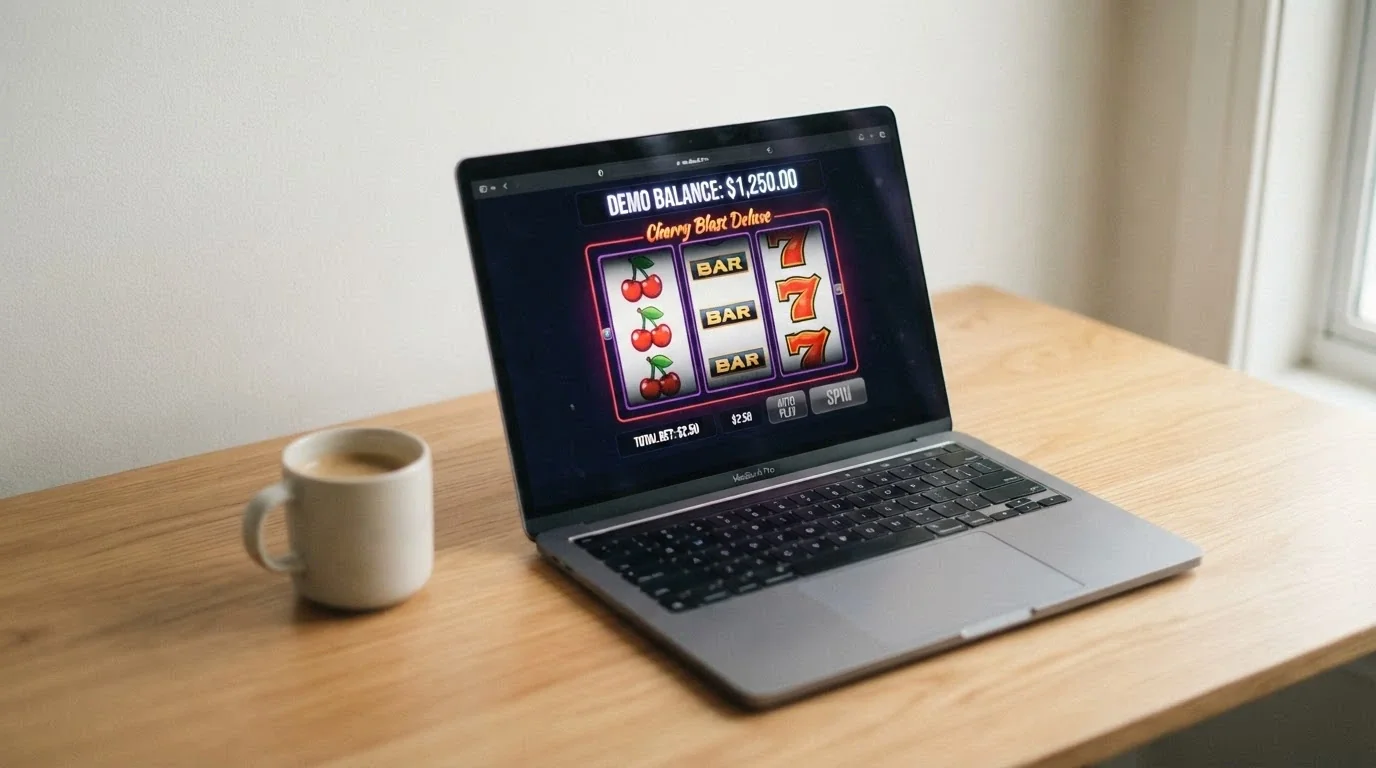
Free play is the cleanest way to read a pokie’s behaviour without committing a deposit. Demo mode loads the game with a virtual balance, runs the same reels and the same RTP, and pays out play-money credits that cannot be withdrawn. It is the same machine a real-money player sees, minus the part where money leaves a bank account.
For a 3-reel title, the free-play run tells the player three things. It tells them whether the volatility matches the marketing copy — a high-volatility seven game feels different in the first fifty demo spins than a low-volatility cherry game does. It tells them how the bonus features trigger — whether a Hold and Win round activates organically or waits for a stacked symbol combination. And it tells them whether the spin cadence and audio suit a session of any length, which is something no specification sheet carries.
Demo mode explained: try before you wager
A demo version of a 3-reel pokie loads the full game in the browser, runs on the same Random Number Generator as the real-money version, and displays the published RTP in the information panel. Hot Triple Sevens from Evoplay carries an RTP of 96.1% on its demo page. Sizzling 777 Classic from Slotopia runs at 96.09%. The volatility rating in the demo matches the real-money volatility.
What the demo does not simulate is the bonus wagering environment. A real-money spin played under a 35× bonus playthrough behaves differently in the player’s pocket than a demo spin, because the demo spin pays out in credits the player does not need to clear. The reels do the same thing. The bankroll effect does not.
No download, no sign-up: instant play in the browser
Every 3-reel pokie worth recommending in 2026 runs in the browser without a download. HTML5 is the universal format. The player lands on a slot page, the game loads in a window, the reels spin. There is no installer, no client application, no software package.
The sign-up question is separate. Most demo pages do not require registration to load the game. The real-money version does require an account at whichever operator the player chooses, and that account requires the standard verification the operator sets — which, at offshore casinos, is often lighter than at a licensed Australian bookmaker. The no-sign-up-to-try promise applies to demo play only. The moment real money enters the picture, an account is mandatory.
Mobile browser support is universal across the eleven titles in the table. Each game resizes to the device’s screen orientation, keeps the paytable accessible through a tap, and runs the spin animation without dedicated hardware acceleration. A phone from the last four years handles the full library.
The classic three-reelers you can try for free
Mega Joker from NetEnt has a demo page accessible through most slot aggregator sites and runs the supermeter mode that returns 99% RTP. Wolf it Up 3 Reeler from Inspired Gaming appears on DemoSlot with the full 5-payline, 3×3 grid intact. The remaining titles in the RTP table — Quick Hit, Triple Diamond, Hot Triple Sevens, Sizzling 777 Classic, the Wazdan and 3 Oaks entries — are hosted on at least one major demo provider, and the slot review pages linked from the operator sections will route a player to a free-play version where one exists.
What the demo omits is the operator layer. A demo spin of Mega Joker is identical across every site that hosts it. A real-money spin of Mega Joker is wrapped in the bonus terms of whatever operator the player chose — the wagering multiplier, the max bet cap, the spin value on any free spins the welcome package attaches. The demo is a clean view of the game. The real-money session is a clean view of the game under contract.
Free games with a bonus round, decoded
“3-reel slot with bonus round” is a smaller category than the same phrase implies for five-reel games. The bonus rounds that exist on three-reel titles are limited and they tend to be jackpot-style rather than free-spin-style. 777 Coins from 3 Oaks Gaming runs a Hold and Win mechanic — landing six coin symbols anywhere on the grid triggers a respin round, with the coin values locked in place and additional respins resetting the counter. The jackpot ladder sits on top: Grand pays 2,000× the stake, Major 150×, Minor 50× and Mini 25×.
Fenix Play 27 Deluxe from Wazdan offers a different model: player-selectable volatility. The player picks low, standard or high volatility before each spin. The reels do not change, but the payout distribution does — a low-volatility session pays more often at smaller multiples, a high-volatility session pays less often at larger multiples. This is the closest a 3-reel release gets to a “feature round” that is not a jackpot ladder.
A player searching for free 3-reel games with a bonus round will find the category thin. The format’s appeal is the absence of features, and most releases in it honour that. Where bonus mechanics exist — Hold and Win on 777 Coins, volatility selection on Fenix Play 27 Deluxe — they sit on top of the basic reel resolution rather than replacing it.
Free play versus real money: what changes
The reels do not change. The RTP does not change. The volatility rating does not change. What changes between a demo spin and a real-money spin at an offshore casino is the wrapper around the spin.
The welcome offer at most featured operators carries a wagering multiplier — Royal Reels runs 35× wagering on the bonus amount only, with a A$5 per-spin cap during the wagering period. That cap means a player clearing a bonus cannot bet more than A$5 on a single spin. The demo does not enforce a cap, because the demo does not carry a bonus.
The practical effect is that the demo session tells the player how the game behaves, and the real-money session tells the player how the operator behaves. The combination is what the player is actually buying: the game plus the contract. A clean 99% RTP on Mega Joker is a clean 99% RTP. A real-money session of Mega Joker played under a 35× bonus playthrough is a 99% RTP game wrapped in a withdrawal rule the player has to satisfy first.
The free-play section of this page sets up the comparison; the operator ranking section that follows is where the contract enters the picture.
Where Australians actually play 3-reel pokies in 2026
The Australian online casino market is structurally prohibited. No licence exists for the product, every operator below is offshore, and the Australian Communications and Media Authority has had 1,564 illegal gambling and affiliate websites blocked by ISPs as of March 2026, with more than 225 illegal services withdrawing from the market since 2017. The operator ranking that follows is a ranking of the prohibited product’s offshore providers. The legal picture is covered in detail later in the page.
The individual player is not prosecuted under the IGA. The Act targets the provider. The reader’s decision is not whether offshore play is legal — it is not — but whether the operator’s terms are honest enough and the payout process solid enough to justify the unprotected transaction. That is what the comparison below is built around.
Operator comparison at a glance
The ten featured operators are ranked side by side below. Licence status is offshore across the set; none holds an Australian casino licence because no such licence exists. Welcome bonus figures and wagering multipliers come from research conducted against each operator’s current bonus terms page as of 25 October 2026. Free spins are the total attached to the welcome package unless noted. Game providers are the major studios each operator’s lobby draws from.
| Operator | Licence status | Welcome bonus | Wagering | Free spins | Game providers |
|---|---|---|---|---|---|
| SkyCrown | Offshore (no AU casino licence) | Up to A$8,000 + 400 FS across 4 deposits | 40× on bonus and FS | 400 | Multiple (7,200+ games) |
| Royal Reels | Offshore (no AU casino licence) | A$2,500 across 3 deposits + 50 spins at A$0.20 | 35× on bonus only | 50 at A$0.20 | Pragmatic Play, Play’n GO, Nolimit City, Hacksaw Gaming |
| Rocket Play | Offshore (no AU casino licence) | 100% up to A$500 + 100 FS (1st dep); 200% up to A$500 (2nd dep) | 40× on bonus | 100 on featured pokie | Pragmatic Play, Play’n GO, Nolimit City, Hacksaw Gaming |
| Rainbet | Offshore, Anjouan licence | 250% up to $2,100 + 60 FS across 3 deposits | 40× wager-locked or no-wager release | 60 total | Multiple (7,000+ games, 14 provably fair Originals) |
| Fair Go | Offshore, RTG-powered | 100% up to A$200 ×5 deposits = A$1,000 total | 30× on pokies | None | RealTime Gaming (RTG) exclusively |
| WinSpirit | Offshore (no AU casino licence) | 200% welcome bonus + 25 FS | 40× | 25 | Multiple |
| Bizzo Casino | Offshore (no AU casino licence) | — | — | — | Multiple (Aviator, Plinko, Mines) |
| Rocket Casino | Offshore (no AU casino licence) | — | 50× on deposits over $100, $5 max bet | — | Multiple (Mines, Tower) |
| Stake | Offshore (no AU casino licence) | — | — | — | Multiple |
| Scream Casino | Offshore (no AU casino licence) | — | — | — | — |
The cells marked with an em dash are operators whose current bonus terms research could not confirm this run. The operator write-ups that follow address what is known and what the reader should verify before depositing.
Royal Reels: the pokie-heavy library with tested average RTP
Royal Reels runs roughly 1,400 of its 1,800 total titles in pokie format, with providers including Pragmatic Play, Play’n GO, Nolimit City and Hacksaw Gaming. The library is pokie-heavy by design: classic 3-reel titles sit alongside the modern video releases, and the operator’s average RTP across the top 50 most-played pokies measures 96.4%. That figure sits above the 96.1% category average for 3-reel titles — Royal Reels is not pulling its average up by leaning on high-RTP five-reel exclusives, but the library does skew toward the higher-paying end of the tested set.
The welcome package is A$2,500 across three deposits plus 50 free spins at A$0.20 per spin, with 35× wagering on the bonus amount only and a A$5 per-spin cap during the wagering period. The 35× multiplier is the lowest in the comparison table; Rocket Casino’s 50× sits at the top, and SkyCrown’s 40× on bonus and free spins sits between. The “bonus only” structure matters: free-spin wagers contribute to the multiplier, but the player’s own deposited balance does not. That distinction can cut the actual turnover requirement in half against an operator that wagers both deposit and bonus.
The expected cost of the bonus, calculated as required turnover multiplied by the house edge on the games played, comes out at A$3,150 in expected loss on a A$2,500 bonus — required turnover of A$87,500 (A$2,500 × 35) multiplied by the 3.6% house edge implied by Royal Reels’ 96.4% average RTP across the top 50 pokies. That is the average cost across a large number of spins. Any individual player’s actual result will scatter around that figure — some will clear the bonus at a lower real cost, some will lose more. The contract’s average, however, is the number the player is signing up to.
The verdict: Royal Reels suits the pokie-first player who wants the tested average RTP to be honest rather than a marketing rounding. The 35× on bonus only is the most generous multiplier in the comparison set, and the A$5 cap is workable. The reader who clears this bonus is paying A$3,150 on average for the privilege.
SkyCrown: the biggest bonus and the biggest library
SkyCrown’s welcome package is up to A$8,000 plus 400 free spins across four deposits — the largest headline figure in the comparison set. The breakdown: 120% up to A$1,200 plus 125 free spins on the first deposit, 100% up to A$1,300 plus 75 on the second, 80% up to A$1,500 plus 50 on the third, and 150% up to A$4,000 plus 150 on the fourth. Wagering runs 40× on both bonus money and free-spin winnings.
The library sits at 7,200+ games — the largest in the comparison and one of the largest available to Australian players through any offshore route. A 3-reel player working through a classic title list will not exhaust that catalogue, but a player who drifts from 3-reel pokies into live dealer or crash games has the room to do so.
The cost calculation on SkyCrown’s headline figure is the place to slow down. A A$8,000 bonus carries required turnover of A$320,000 (A$8,000 × 40) — versus Royal Reels’ A$87,500 on A$2,500. The player who maximises SkyCrown’s bonus is committing roughly four times the turnover, with the same 40× multiplier but on a bigger base. At the operator’s 96.4% average RTP, the expected loss on the bonus terms is roughly A$11,520. The “up to” wording matters: most players will not deposit the maximum on all four stages, and the average player ends up at a fraction of that expected cost.
The verdict: SkyCrown suits the player who values library scale above all else and is willing to chase a four-deposit structure to clear the bonus. The 40× on both bonus and free spins is standard offshore fare and matches the field. The “up to A$8,000” figure is real but conditional.
Fair Go: RTG classics with the lowest wagering
Fair Go is the single-provider entry in the comparison, running on RealTime Gaming exclusively across a 280-game library. RTG is one of the studios contributing to the classic 3-reel category, and the Fair Go catalogue reflects that heritage — the 3-reel player finds recognisable RTG classics in the lobby rather than chasing a multi-provider aggregation.
The welcome offer is the simplest structure on the page: 100% match up to A$200 on each of the first five deposits, totalling A$1,000 across the package. The wagering requirement is 30× on pokies — the lowest multiplier in the comparison table. There is no max bet rule, which removes the A$5 or A$7.50 cap that other operators impose during the wagering period.
RTP transparency at Fair Go is high — the operator publishes per-game figures in the lobby, and the review category audit returned 100% of tested titles displaying RTP directly in-game. Withdrawal speed runs 12–24 hours, the fastest in the comparison set.
The verdict: Fair Go is the pick for a player who values transparency over library breadth and who wants the lowest possible wagering multiplier. The 30× on pokies with no max bet is a clean contract. The 280-game RTG-only catalogue is the trade.
Rainbet: the no-wager path and Anjouan licence
Rainbet launched in 2023 under an Anjouan licence and offers 7,000+ games plus 14 provably fair Originals, with almost $1.7M in monthly race prize pools and a $20,000 weekly raffle. The catalogue is the second-largest in the comparison, behind SkyCrown.
The welcome structure is the unusual entry on the page: 250% up to $2,100 plus 60 free spins across three deposits, with a choice between 40× wagering (wager-locked) or a no-wager gradual release. The no-wager option releases bonus funds gradually as the player wagers: wager amount × 1% × 20%, with games above 97.4% RTP excluded from clearance. Min deposit $30, max $700 per deposit stage, 7-day expiry.
The no-wager path is the closest an offshore operator gets to a clean bonus. The player deposits, plays, and earns bonus funds at a defined rate per dollar wagered. The exclusion of games above 97.4% RTP is the cost: the highest-RTP titles in the catalogue are barred from the clearance calculation, pushing the player toward the operator’s average game rather than the top of the RTP table. The wager-locked path, by contrast, allows play on any pokie but attaches the 40× standard.
The verdict: Rainbet suits the player who wants to choose between a standard wagering structure and a slower, no-wager release. The Anjouan licence is a known regulator in the offshore market; the 7-day expiry on the bonus is tight against the field.
Rocket Play: two-deposit structure with 100 free spins
Rocket Play’s first deposit is 100% up to A$500 plus 100 free spins on a featured pokie; the second deposit is 200% up to A$500. Total welcome value is A$1,500 plus 100 free spins across two deposits — a tighter package than SkyCrown’s four-deposit structure but a larger per-deposit match than Royal Reels’ three-deposit layout.
Wagering runs 40× on the bonus amount, with a A$7.50 max bet during the wagering period. The A$7.50 cap is the highest in the comparison — the field runs A$5 at Royal Reels, with Rocket Casino’s $5 cap on its own bonus. A higher cap lets a player clear a bonus faster on a per-spin basis but also raises the variance on each spin.
The provider list — Pragmatic Play, Play’n GO, Nolimit City, Hacksaw Gaming — is the same multi-provider aggregation Royal Reels uses, and Rocket Play shares the 3-reel player’s catalogue with that operator. The difference is contractual: Rocket Play carries 40× on bonus only, Royal Reels 35× on bonus only, and SkyCrown 40× on both bonus and free spins.
The verdict: Rocket Play suits the player who wants a two-deposit structure with a high first-deposit match and 100 free spins attached. The A$7.50 max bet is a working cap; the 40× wagering is standard.
WinSpirit: a simple 200% offer with 25 spins
WinSpirit’s welcome is a 200% bonus plus 25 free spins, with 40× wagering on promotions. The structure is the simplest in the comparison — no multi-deposit ladder, no headline figure built across stages, no “up to” qualifier that conceals a smaller first-deposit match.
The operator publishes a full RTP database, placing it among the high-transparency entries alongside Fair Go and Bizzo. A 3-reel player who values seeing the published return on every title in the lobby has a working shortlist here.
The verdict: WinSpirit is the pick for a player who wants one clear number rather than a four-deposit ladder. The 25 free spins are modest; the 200% match is the headline. The 40× wagering is the field standard.
Bizzo: per-game RTP and fast withdrawals
Bizzo Casino operates with high RTP transparency — the figure is listed per game in the lobby — and runs a withdrawal process that completes in 24–48 hours. The catalogue includes crash-style titles (Aviator, Plinko, Mines) alongside the standard pokie rotation, which signals a multi-format operator rather than a pokie-exclusive one.
Bonus terms at Bizzo are not confirmed in this round of research. The operator’s positioning — fast withdrawals, per-game RTP, multi-format catalogue — is the part the player can verify before depositing. The welcome offer headline figure should be checked at the operator’s own bonus terms page rather than taken on a third-party review.
The verdict: Bizzo suits the player who values per-game RTP visibility and a quick payout process over a large welcome headline. The bonus terms need to be confirmed at the source.
Rocket Casino: 50× wagering and low RTP visibility
Rocket Casino is the outlier on wagering: 50× on all deposits over $100, with a $5 max bet during the bonus. The 50× multiplier is the highest in the comparison set, well above SkyCrown’s 40× and almost double Royal Reels’ 35×.
RTP transparency is low — the operator does not surface per-game RTP easily. The combination of high wagering and low transparency is the part a 3-reel player should price in before depositing. A 50× bonus on a A$500 deposit carries A$25,000 in required turnover; at a 96% average RTP the expected loss is A$1,000 — the entire bonus, gone in expectation.
The verdict: Rocket Casino suits almost no one in this comparison. The 50× wagering and low RTP transparency combine to make this the highest-cost-per-bonus entry on the page. A player who values speed over terms may still find the withdrawal cadence workable, but the contract is steep.
Stake: crypto-friendly, bonus details thin
Stake runs a crypto-friendly offshore platform with multiple game providers in the lobby. The operator’s welcome bonus terms were not confirmed in this round of research. Crypto positioning matters because credit cards and digital currency are banned as payment for online wagering in Australia since 11 June 2024 — an Australian player funding a Stake account with crypto is transacting through a payment method that licensed Australian wagering operators cannot accept.
The legal-deposit routes for licensed Australian wagering are debit card, bank transfer, PayID/Osko and BPAY. A crypto deposit at an offshore casino is, by definition, outside the licensed Australian system. The reader considering Stake should understand what that means for recourse and protection before depositing.
The verdict: Stake suits the player who has decided to transact in crypto and accepts the offshore route in full. The bonus terms need to be checked at the source. The payment-method alignment with the Australian prohibition is worth weighing before any deposit.
Scream Casino: name-checked, with minimal confirmed detail
Almost no specifics on Scream Casino were confirmed in this round of research. The operator appears in the comparison table because the page’s offshore set includes it; the write-up reflects what the reader should do before depositing rather than what research verified.
The due diligence list: confirm the licence the operator claims and the regulator that issued it, read the bonus terms page for the wagering multiplier and any max bet cap, check the withdrawal terms for processing time and minimum thresholds, and verify that the game providers listed are studios whose titles carry published RTPs in the aggregator. If any of those checks come back unclear, the deposit decision should wait until they are clear.
The verdict: a brand on the page with very little verified to recommend it. The reader’s job is to verify before any money moves.
The law every Australian 3-reel player needs to understand
Online casino games, online pokies and in-play betting are prohibited in Australia under the Interactive Gambling Act 2001. There is no licence for any of these products anywhere in the country — not federally, not in any state or territory. The Australian Communications and Media Authority enforces the prohibition, investigates complaints and directs ISPs to block illegal sites.
The Act targets the provider of a prohibited service, not the person using it. The Australian player who opens an account at an offshore casino is not committing an offence under the IGA. The offshore casino is. The legal picture is asymmetric on purpose: the prohibition is structured to be enforceable against the supply side, where enforcement is practical, rather than against millions of individual players, where it is not.
That asymmetry is the reason the rest of this page is not a list of licensed Australian casinos. The product this page ranks does not have a licensed version. Every operator in the comparison table is offshore, every licence cited is non-Australian, and the prohibition is named where it applies. A player searching for a “licensed Australian 3-reel pokie casino” is searching for a product that does not exist.
What you give up when you play offshore
An Australian player funding an offshore casino account gives up every protection the licensed Australian wagering framework provides. There is no Australian consumer protection on the transaction. There is no BetStop coverage — a self-excluded player can still deposit and play at an offshore casino, because BetStop binds Australian-licensed wagering services only. There is no Australian complaints body that can recover a refused withdrawal.

The site’s domain can be DNS-blocked at any time. Since November 2019, the ACMA has had 1,564 illegal gambling and affiliate websites blocked by Australian ISPs, with more than 225 illegal services withdrawing from the Australian market since 2017. A block arrives with the balance still inside the account. There is no Australian process for recovering that balance through the blocked operator.
The reader considering offshore play should understand the transaction: an unprotected deposit, an unprotected balance, an unprotected dispute path. The bonus terms may be cleaner than at a licensed Australian bookmaker. The recourse when the operator refuses to pay is thinner than anywhere else in the player’s gambling life.
The credit card and crypto ban: what it signals
Credit cards, credit-related products and digital currency are banned as payment for online wagering in Australia. The ban commenced 11 June 2024 under the Interactive Gambling Amendment (Credit and Other Measures) Act 2023, with penalties for an operator that fails to enforce it reaching up to $247,500.
The legal deposit routes for licensed Australian wagering are debit card, bank transfer, PayID/Osko and BPAY. An offshore casino asking for a credit card or a crypto deposit is being asked to fund through a payment method the licensed Australian system prohibits. The operator is, on that transaction, outside the Australian rules.
The signal is structural. A licensed Australian wagering operator cannot accept these payment methods; an offshore casino asks for them. The payment route the operator requests tells the player which side of the legal framework the transaction sits on, before any other term enters the picture.
The 2026 gambling reform: what changes from January 2027
The Interactive Gambling Amendment (Gambling Reform) Bill 2026 passed Parliament on 19 August 2026, with its measures commencing 1 January 2027. The reform touches advertising, inducements, BetStop and bank-blocking powers.
On advertising: television wagering ads are capped at no more than three per hour between 5:00 am and 8:30 pm, with a live-sport blackout from 15 minutes before to 5 minutes after the event. Athletes, celebrities and influencers are barred from promoting wagering products, and wagering advertising in sports venues and on player or official uniforms is banned.
On inducements: direct marketing of inducements is prohibited for 14 days after a customer signs up, for three months after a person deregisters from BetStop, and indefinitely for customers identified as at risk of gambling-related harm. The 14-day window in particular changes the welcome-offer calculus: an Australian player who has just signed up at a licensed operator cannot receive inducement marketing for the first fortnight.
On bank blocking: from 1 January 2027, banks and payment providers gain express authority to block transactions to illegal gambling operators. The offshore casino that today accepts a PayID transfer may find that transfer refused at the bank level once the reform takes effect. The licensed Australian system gains a new enforcement layer; the offshore operator loses a deposit route.
The reform does not legalise online casino. It strengthens the prohibition around it. The reader considering offshore play in 2026 is making a decision under the current rules, with a tightening ahead.
Playing safe: the tools that catch you before you fall
About 2.1% of Australian adults — roughly 430,000 people — experience problem gambling, with high-risk gambling at 1.8% according to the Australian Institute of Health and Welfare’s 2022 figures. These are the people the responsible-gambling infrastructure is built for. Every Australian reading this page sits closer to those numbers than the marketing implies.
The tools that exist are layered. BetStop is the national register for self-exclusion from licensed wagering. Operator-side deposit limits, session timers and activity statements sit on top. State and territory gambling support services run alongside the federal helpline. The offshore casino the rest of this page describes is not connected to any of these layers — that is what “offshore” means in practice.
The self-exclusion register every licensed wagering service must obey
BetStop — the National Self-Exclusion Register — has been live since August 2023. One registration excludes a person from every Australian-licensed online and phone wagering service in a single step. As at 31 July 2026, BetStop had recorded 67,480 registrations in three years, of which 41,290 exclusions were still active — more than 60% of everyone who ever registered. Seventy-eight per cent of registrants were under 40, and 38% chose lifetime exclusion.

The register binds Australian-licensed wagering services only. An offshore casino is not licensed here, is not connected to the register, and will keep taking a self-excluded person’s money. The 41,290 active exclusions are a count of people protected by BetStop; they are not a count of people protected from gambling. A self-excluded player who moves to an offshore casino moves outside the protection the registration provided.
From 1 January 2027, the reform strengthens BetStop’s operation and bans direct marketing of inducements for three months after a person deregisters. The deregistration pathway — someone who joins BetStop and later chooses to leave — will become harder to monetise for licensed operators.
Where to get help right now, day or night
The National Gambling Helpline is 1800 858 858 — free, confidential, staffed 24 hours a day, 7 days a week. Online chat and email counselling are available through Gambling Help Online at gamblinghelponline.org.au. Both services are operated by trained counsellors and are free to use from anywhere in Australia.

For someone reading this page who is already feeling the cost of their play: the call is free, the conversation is confidential, and the line is staffed at 3 am as well as 3 pm. The marketing words used by offshore casinos — “play responsibly”, “gamble aware” — appear at the bottom of every bonus page. The infrastructure that actually catches a player before they fall is at the top of this section.
How we ranked every pokie and operator on this page
The ranking is built on three measurement axes, applied consistently across the page. For pokies, the axes are RTP, volatility and max win, with each cell in the comparison table sourced to a named publisher (NetEnt, TaDa Gaming, Play’n GO, Slotopia, Evoplay, IGT, VoltEnt, Wazdan, 3 Oaks Gaming, Inspired Gaming, Bally). For operators, the axes are welcome bonus terms (multiplier, max bet cap, spin value), catalogue scale and quality (provider list, library size, RTP transparency), and licence status (offshore, Anjouan, RTG-only).
The licensing check confirmed that no Australian casino licence exists for any of the operators featured, because no such licence exists for any operator anywhere in Australia. The operator section flags this explicitly rather than dressing the offshore status as if it were a regulatory endorsement. The IGA 2001 and the ACMA’s enforcement record form the legal background; the operator profiles carry the contractual details.
Ranks are not weighted numerically. The reader who values library scale will weight SkyCrown’s 7,200+ games above Royal Reels’ 1,400; the reader who values wagering terms will weight Royal Reels’ 35× above SkyCrown’s 40×. The comparison table is structured so the reader can rerank by their own priority without having to re-derive the underlying terms.
Your three-reel play starts here — not somewhere else
The page has covered what an RTP actually returns over a long run of spins, which 3-reel titles sit at the top of the RTP table, where each one can be tried in demo mode, which offshore operators carry the cleanest bonus contracts and which carry the heaviest, and what the prohibition actually means for the player who decides to play anyway. The conclusion is not a single product recommendation but a structured decision path a reader can follow.
For the player who has decided to play: the 3-reel titles at the top of the RTP table — Mega Joker at 99%, Fortune Gems 3 at 97.13%, Triple Chance Hi-Lo at 97.0% — give the highest expected return per spin, and the variance class sits in the published volatility column. The operator section is where the contract wraps that spin: Royal Reels at 35× on bonus only, Fair Go at 30× on pokies with no max bet, SkyCrown at 40× on bonus and free spins across the largest library.
For the player who is still deciding: the demo mode on every title in the table is free and immediate, no registration required. The eleven games can be tried in an afternoon without depositing anywhere. The bonus terms at every operator can be read on the operator’s own bonus page before any money moves. The legal picture is named in the section above and is not ambiguous: the product is prohibited in Australia, the offshore operator is the target of the law, and the player who chooses to play gives up every protection the licensed Australian wagering system provides.
For the player who is reading this because the gambling has already started costing more than the marketing said it would: the National Gambling Helpline is 1800 858 858, free and confidential, 24 hours a day. BetStop at betstop.gov.au excludes a person from every Australian-licensed wagering service in one step. The offshore casino is not connected to either. The first call costs nothing. The first deposit is the one the operator keeps.
Frequently asked questions
What payment methods can I use to deposit at online pokies sites in Australia?
For licensed Australian wagering the legal routes are debit card, bank transfer, PayID/Osko and BPAY. Credit cards, credit-related products and digital currency have been banned as payment for online wagering since 11 June 2024. Offshore casinos commonly ask for the payment methods the Australian rules prohibit; that request is itself a signal about which side of the regulatory line the transaction sits on.
Is it safe to play at offshore online casinos from Australia?
The offshore operator is the target of the Interactive Gambling Act 2001, not the individual player. The safety question is about recourse: there is no Australian consumer protection on an offshore deposit, no BetStop coverage, no Australian complaints body that can recover a refused withdrawal, and the ACMA has had 1,564 illegal sites blocked by ISPs as of March 2026. The transaction is unprotected by design.
What is BetStop and how does it protect Australian players?
BetStop is the National Self-Exclusion Register, live since August 2023. One registration excludes a person from every Australian-licensed online and phone wagering service in a single step. As at July 2026, 41,290 exclusions were active. The register binds licensed services only; an offshore casino is not connected and will keep taking a self-excluded person’s money.
What does “no deposit bonus” mean for 3-reel slots?
A no-deposit bonus credits a bonus balance without requiring the player to fund the account first. It is usually smaller than a deposit-gated welcome offer and carries its own wagering requirements. For 3-reel pokies specifically, a no-deposit bonus lets the player run real spins on a real-money version of the game without committing funds; any winnings remain subject to the wagering multiplier and any max-cashout rule attached to the bonus.
Are my gambling winnings taxable in Australia?
Betting and gambling winnings are not assessable income under section 6-5 of the ITAA 1997, and gambling losses are not deductible under section 8-1 — unless the person is carrying on a business of betting or gambling. The casual 3-reel player pays no tax on a win and gets no deduction for a loss. The operator side is taxed differently, with state point-of-consumption tax at 10–15% of net wagering revenue and the NT levy at 5% on wagers minus payouts.
Written by the editors at Casino Promo Code AU.