$1 Deposit Casinos in Australia: What Your A$1 Actually Pays For
 Available in AU
Data current as of 24 October 2026 · Licence and operator claims verified against the ACMA register and operator-published terms.
There is no Australian online casino. The Interactive Gambling Act 2001 prohibits the product, and no licence for online casino games exists federally or in any state or territory. Every casino targeting Australian players is offshore, unlicensed at home, and operates under rules of its own choosing. That sits behind the $1 banner before any other number does, and the rest of the page reads against it.
A genuine A$1 deposit is a rare edge case, not a starting point. Card processing alone runs A$0.30–A$0.50 per transaction, which eats a third to half of the deposit before any play. PayID, the default Australian rail, sits at a A$5–A$10 floor. Neosurf vouchers and most e-wallets miss the dollar entirely. The only path that routinely reaches a true A$1 is a small cryptocurrency transfer on a low-fee network. The dollar casino is, for most Australians, a crypto casino.
Table of Contents
- Your A$1 Deposit Won’t Buy What the Banner Promises
- Only One Rail Actually Hits a Dollar — and It’s Not PayID
- The 10 Offshore Casinos That Take Australian Players at the Lowest Deposits
- The Few Pokies You Can Genuinely Spin at A$1
- Mobile Play at A$1 — Same Sites, Smaller Screen
- New A$1 Casinos in 2026 — Fresh Faces, Same Offshore Rules
- Every A$1 Casino Targeting Australia Is Offshore — Here’s What That Actually Means
- Responsible Gambling When the Casino Isn’t Australian
- How We Checked and Compared These A$1 Deposit Casinos
- What a Dollar Actually Gets You at an Online Casino
- Frequently Asked Questions
Your A$1 Deposit Won’t Buy What the Banner Promises
The marketing promise of a $1 minimum deposit casino is simple. The cashier tells a different story. Between the two sits every hidden cost that turns a dollar into something smaller: processing fees, payment-rail minimums, game-level bet floors and withdrawal caps that the welcome page never quotes. Australian players comparing sites on price alone will see the A$1 sticker, fund an account and discover the floor. Some of what an A$1 actually buys is honest, and some of it is a constraint masquerading as a feature.
What a A$1 Minimum Deposit Casino Actually Is
A low-deposit casino is an operator that lets a new player fund an account below the A$10–A$20 floor that mainstream brands set. The A$1 entry point is the marketing extreme of that category: it lowers the cost of testing a brand, opens the door to players who do not want to commit more than a cup of coffee, and lets an operator advertise a headline number that ranks well in search.
What a A$1 minimum deposit casino actually does, behind the banner, is push the cost of payment processing onto a different line of the budget. Card processors charge the operator roughly A$0.30–A$0.50 per transaction. On a A$1 deposit, the processor takes a third to half of the player’s bankroll before any spin. Neosurf and PayID charge the operator less per transaction but enforce higher per-deposit minimums that push the player to a A$5, A$10 or A$20 floor instead. The A$1 that survives all of this is almost always a crypto transfer on a cheap network — a market segment the Australian government has restricted for licensed wagering since 11 June 2024.
The other thing a A$1 minimum deposit casino is, structurally, is an offshore brand. No Australian licence exists for online casino. The operator is therefore outside the Australian Consumer Law, outside BetStop, outside the ACMA complaints process, and inside whatever framework the licence it does hold (almost always Curaçao or Anjouan) requires. The dollar is real; the safety net is not.
The Real Minimum Deposit Most Australian Players Will Face
The A$1 banner survives the click, then meets the cashier. PayID, the default instant bank rail in Australia, runs a typical minimum of A$5–A$10 across the operators accepting Australian players. Cards sit at A$10–A$20+, held up by processing-cost economics that punish small deposits. Neosurf vouchers come in fixed denominations starting at A$10, so a dollar is structurally impossible. E-wallets like MiFinity and eZeeWallet enforce A$5–A$10 minimums that mirror PayID.
Crypto is the only rail that reaches a A$1, and even there the network has to be cheap. Bitcoin transaction fees run A$1.50–A$3.00, which on a dollar deposit is the fee plus the deposit. Litecoin keeps the network fee under A$0.05 and the deposit lands whole. Tether on Tron costs about A$1.00 flat — workable on a dollar transfer, but only by a thin margin. The advertised A$1 is a crypto-native offer, and the operator list that actually delivers it is shorter than the affiliate tables suggest.
The marketing lesson is the obvious one: the dollar is a banner, the cashier is the truth, and the gap between them is where the deposit method decides the rest of the experience.
Which Casino Games You Can Reach With a Single Dollar
A dollar buys access to the bottom of the lobby. Pokies accept bets as low as A$0.01 per line on titles like Book of Pyramids (BGaming), where a dollar stretches to 100 spins at minimum lines. Starburst (NetEnt) and Book of Dead (Play’n GO) start at A$0.10 a spin, so a dollar lasts 10 spins each. Big Bass Bonanza (Pragmatic Play) opens at the same A$0.10 floor. Wolf Gold (Pragmatic Play) starts at A$0.25, which on a dollar is four spins.
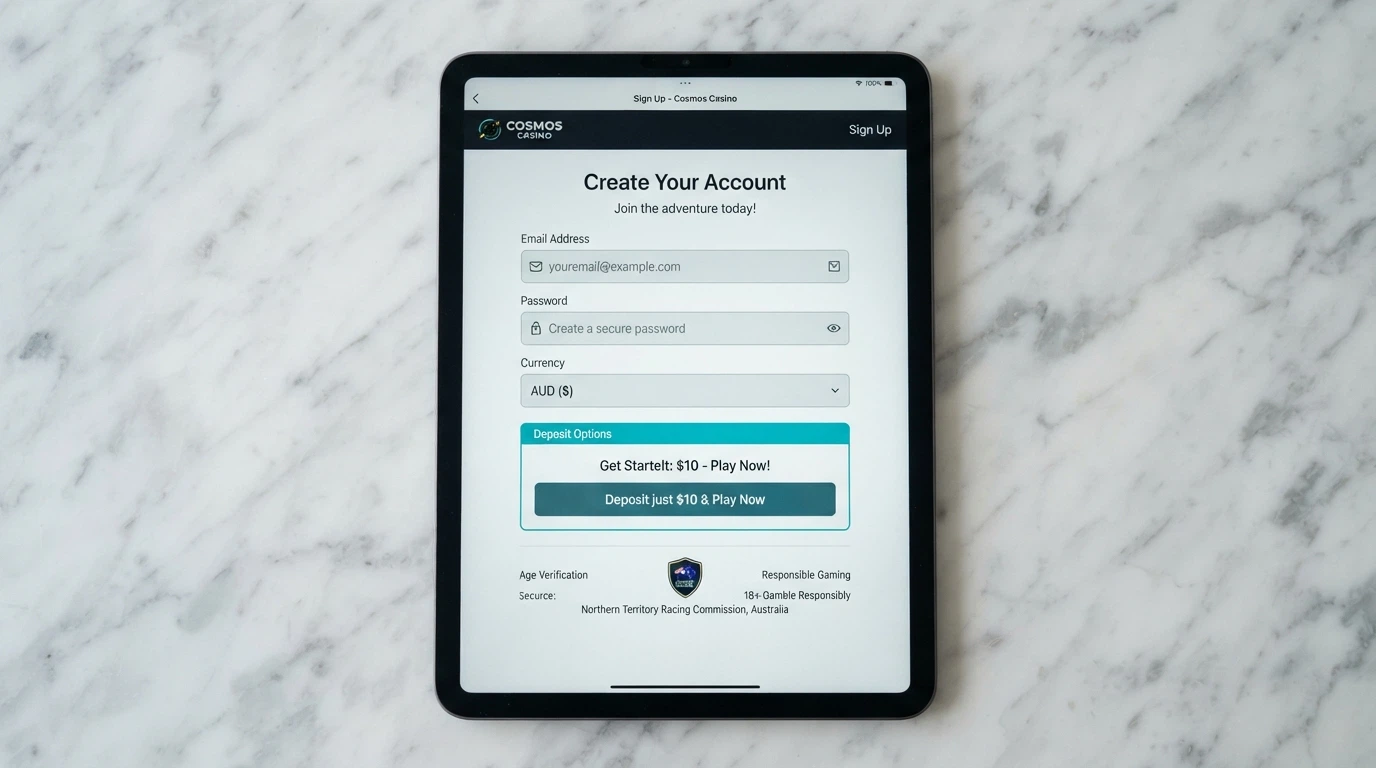
Table games sit above the dollar line. Roulette, blackjack and baccarat minimums run A$1 to A$5 per hand, and live dealer tables sit higher. A dollar bankroll will not reach a real-money hand at the standard table. The A$1 deposit casino is, in practice, a pokie casino — and within pokies, a one-cent-spin casino. The game library is wider than a $1 suggests, but the playable games are a thin band of the lowest-stake slots.
Volatility shapes what a dollar does. A low-volatility title like Starburst returns small wins often; a high-volatility title like Razor Shark (Push Gaming) or Book of Dead sits on long dry runs between larger payouts. A dollar’s worth of play at low volatility is a slow, steady drain. At high volatility, it is closer to a lottery ticket — most sessions end at zero, a few return something. The choice of which dollar game to play is a bet on which disappointment the player prefers.
Real-Money Play vs Demo Mode at the Minimum Deposit Level
The real-money versus free-play choice is sharper at A$1 than at A$100. Demo spins are unlimited and cost nothing; a dollar buys maybe 100 spins at the lowest stake, with real cash on the line. The marketing implication is that demo play is the better way to learn a pokie. The marketing implication is also the marketing.
Where real money diverges is on the way out. Most low-deposit operators apply a maximum cashout cap on bonus or minimum-deposit play in the A$50–A$200 range. Some apply a 10x-deposit cap, which on a A$1 deposit means withdrawals of more than A$10 are blocked at the cashier regardless of what the player has won. A player who lands a 50x win on a dollar bet in Book of Dead sees A$5; under a 10x cap, the most that ever clears is A$10.
Real money at the A$1 level is a different game to demo, because the rules around the winnings are tighter than the rules around the play. The deposit is flexible. The exit is not.
Only One Rail Actually Hits a Dollar — and It’s Not PayID
The four rails Australian players actually meet — PayID, card, crypto and prepaid or e-wallet — sit at four different price floors. Only one of them reaches a dollar with any reliability, and the rail that does is also the one the Australian government has restricted for licensed wagering. The geometry is not a coincidence.
PayID and OSKO: The Default Australian Rail — at A$5–A$10
PayID is the rail most Australian players will use by default. It links a bank account to a PayID identifier (a phone number, email or ABN) and clears through the OSKO instant payment system, typically in under a minute. For everyday payments it is the obvious choice, and it is what most Australians reach for first when they encounter an offshore cashier that names PayID as an option.
The minimum at the cashier, however, is not a dollar. PayID’s typical minimum across offshore casinos accepting Australian players runs A$5–A$10. The reason is operational: the same A$0.30–A$0.50 processing cost that hits a card transaction applies to a PayID transfer at a smaller scale, and the operator floors the deposit below the loss-per-transaction threshold. POLi, the old near-instant bank-payment rail, was shut down at the end of September 2023; PayID and OSKO functionally replaced it, and the floor came with the replacement.
A player who wants PayID will pay A$5–A$10 to start, and that is the floor for any of the ten operators in the comparison below. The dollar casino is a different rail.
Credit and Debit Cards: Processing Costs Kill the Dollar Deposit
A card deposit sounds like the path of least resistance. In practice it is the path of most resistance below A$10. Card processing costs the operator A$0.30–A$0.50 per transaction, and the operator passes that floor onto the player. Real card minimums at offshore casinos run A$10–A$20+.
The bigger tell sits in the payment options list. Credit cards, credit-related products and crypto are banned as payment for online wagering in Australia as of 11 June 2024, with penalties of up to A$247,500 for an operator that fails to enforce the ban. A licensed Australian wagering operator does not offer a credit-card deposit button. An offshore operator that does is operating outside Australian rules by definition, and that is the structural fact that defines the entire market. The credit-card icon at the cashier is less a payment option than a marker of where the casino is regulated, and the answer is “not here”.
A player who pays A$10 on a card to start a dollar-themed casino has paid ten times the headline. The dollar was the banner. The card is the floor.
Cryptocurrency: The Only Rail That Genuinely Reaches A$1
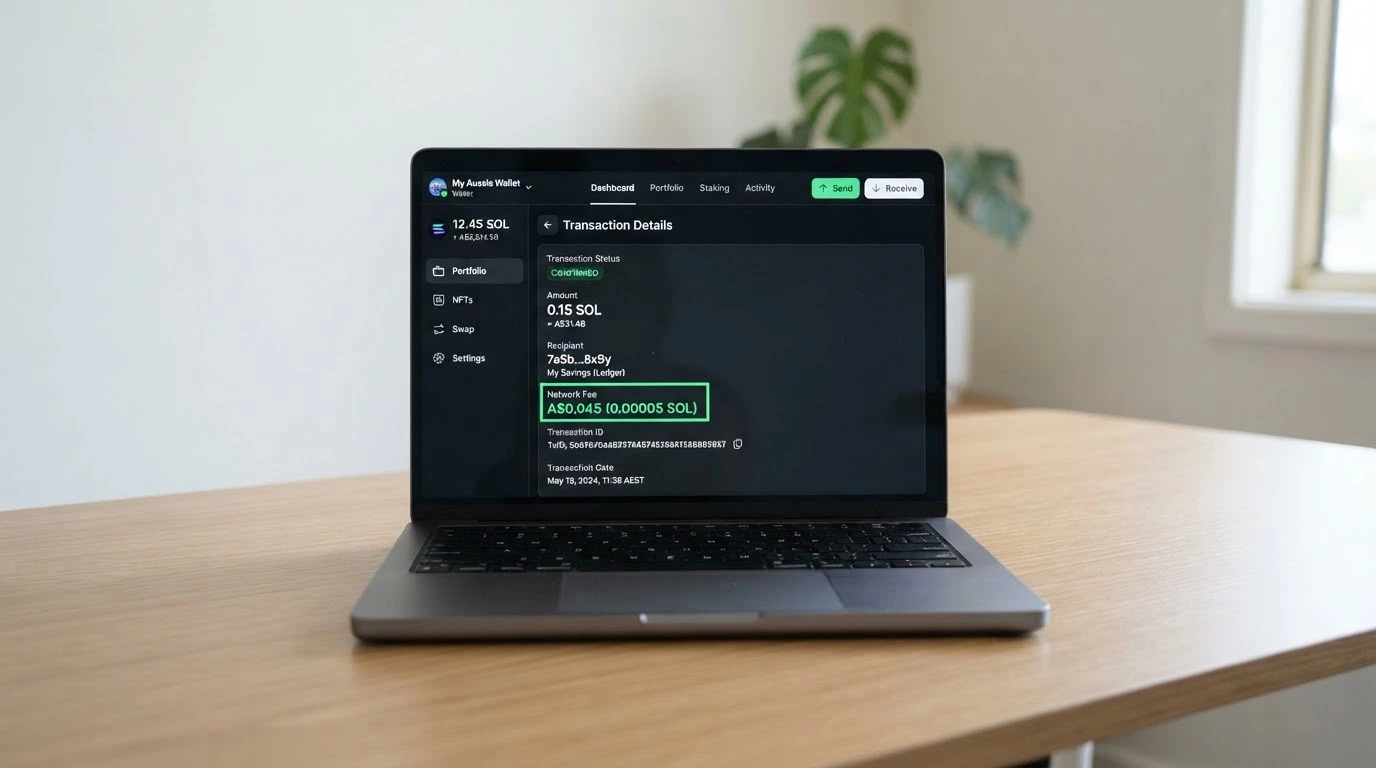
Crypto is the only rail that reaches a dollar with the deposit intact. The deciding factor is the network fee, and the spread between coins is large enough to define the offer.
Bitcoin Lightning fees run A$1.50–A$3.00 per transaction, which on a dollar deposit consumes the deposit. A player sending A$1 in Bitcoin is paying for the privilege. Litecoin keeps the network fee under A$0.05, so a A$1 deposit lands as roughly A$0.95 to A$1.00 at the cashier. Tether on Tron costs about A$1.00 flat — workable, but only just, and the fee is most of the deposit.
Two things follow. The first is that the genuine A$1 deposit casino is a Litecoin or Tron-USDT casino, not a Bitcoin casino, and the affiliate list that ranks by headline A$1 price without naming the network is hiding the variable that decides whether the deposit survives. The second is that crypto is the rail the Australian government has restricted for licensed wagering. A player using it at an offshore casino is doubly outside the Australian framework: outside the licensing regime, and outside the payment regime. Both are choices the player has to make knowingly.
Neosurf, E-Wallets and the Rails That Never Reach a Dollar
Neosurf and the e-wallet cluster (MiFinity, eZeeWallet and similar) miss the dollar by design. Neosurf sells prepaid vouchers in fixed denominations, the smallest of which is A$10. E-wallets enforce A$5–A$10 minimums that mirror PayID. Neither rail can deliver a dollar.
That is not a flaw in the products. It is the floor the operators set for a reason: a A$1 deposit on either rail is uneconomic for the operator and structurally hard to clear on the voucher side. The dollar casino skips both rails. A player who wants to fund an account with a prepaid card or an e-wallet is paying A$5 or A$10 to start, and the rest of this page’s comparison holds.
The 10 Offshore Casinos That Take Australian Players at the Lowest Deposits
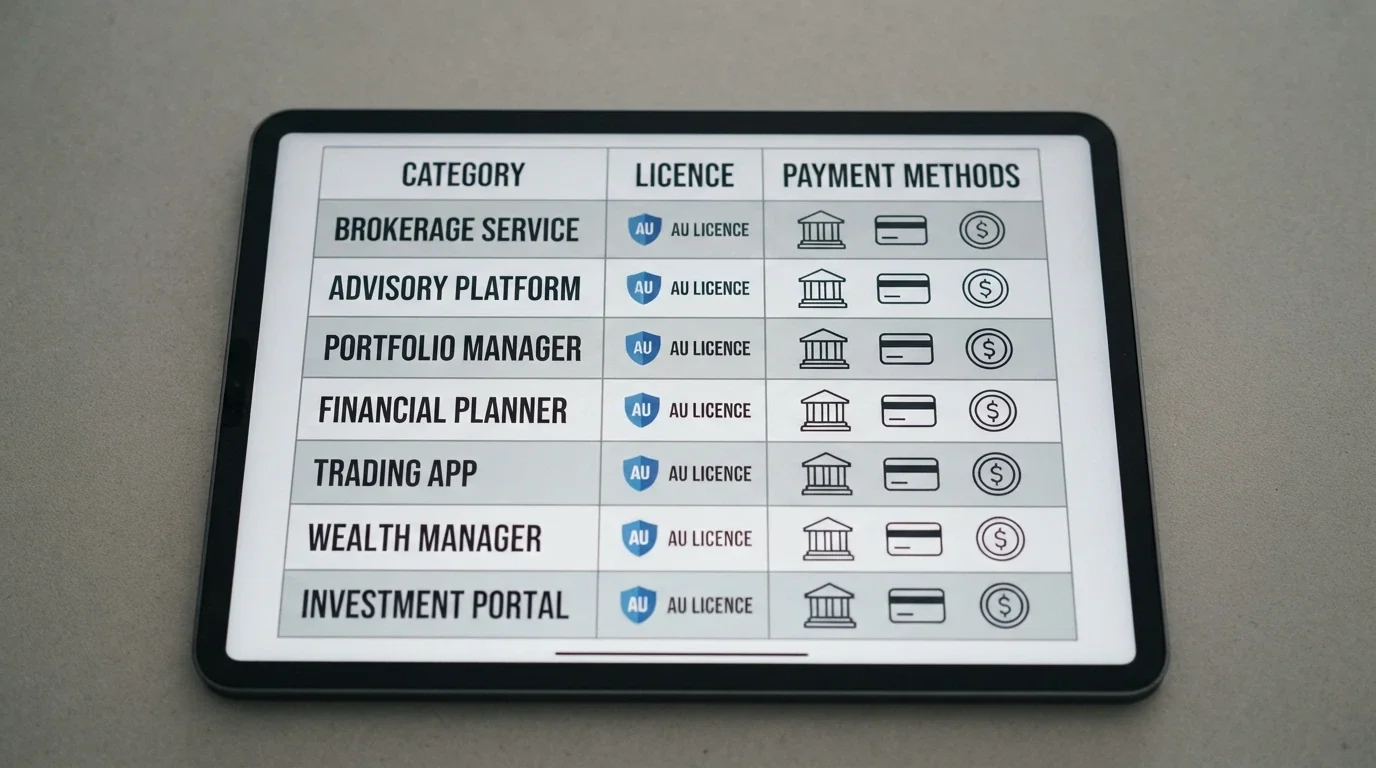
The table below lists the ten offshore casinos accepting Australian players at the lowest deposit floors, ordered by fit to the A$1 deposit topic. Every operator is offshore. None holds an Australian licence, because no Australian licence for online casino exists. BetStop does not cover any of them, ACMA can block any of them at any time, and the bonus terms are governed by the operator’s home regulator, not by Australian consumer law.
| Operator | Licence | Payment Methods | Accepts Crypto |
|---|---|---|---|
| Skycrown | Curaçao eGaming | PayID, cards, Neosurf, MiFinity, 30+ methods | Yes |
| Fair Go | Curaçao eGaming (Deckmedia N.V.) | PayID, cards, crypto | Yes |
| Rocket Play | Curaçao eGaming | PayID, cards, crypto | Yes |
| Rainbet | Anjouan (RBGAMING N.V.) | Crypto (primary), PayID | Yes |
| WinSpirit | Curaçao eGaming | PayID, cards, crypto | Yes |
| Royal Reels | Curaçao eGaming | — | — |
| Stake | Curaçao eGaming | Crypto (primary) | Yes |
| Scream Casino | Curaçao eGaming | — | — |
| Bizzo Casino | Curaçao eGaming | E-wallets, crypto | Yes |
| Rocket Casino | Curaçao eGaming | — | — |
The cells left blank are payment-method columns where research did not confirm a current set. A reader who wants the full rail list for Royal Reels, Scream Casino or Rocket Casino should check the operator’s own cashier page. What is known across all ten is the licence: Curaçao eGaming in nine cases, Anjouan in one. None of the licences require connection to BetStop or acceptance of Australian consumer-law remedies. A player reading the table should treat the licence column as “where the operator is regulated”, not “where the player is protected”.
The rest of this section covers each operator in turn. Welcome terms, game count and any other figure is the figure research confirmed for that brand. Where research does not confirm a term, the writeup names it qualitatively rather than guessing.
Skycrown
Skycrown is the largest game library in the featured set. The operator lists 7,000+ pokie titles and accepts 30+ payment methods, including PayID, cards, Neosurf, MiFinity and a wide crypto set. The welcome offer runs up to A$8,000 + 400 free spins across the first four deposits, with a 50x playthrough requirement on the bonus balance. Separately, Skycrown publishes a 100% up to A$4,000 + 400 free spins headline at 40x wagering with a A$30 minimum deposit on the bonus — the two structures sit in different terms pages and a player should check which is active at sign-up.
Skycrown also offers 20 no-deposit free spins on registration, which is one of the more player-friendly touches in the offshore set. No-deposit spins keep the deposit requirement out of the welcome path entirely, which is the only honest version of “play without funding” the market offers.
The verdict on Skycrown is size and breadth. The 7,000+ pokies figure is real, the payment-method list is wide, and the no-deposit spins are a genuine concession. The cost is wagering: 40x–50x on the bonus, on a Curaçao-licensed operator that ACMA can block at any time and BetStop does not cover. A player who wants the largest game library and is comfortable with offshore rules finds the most breadth here. The absence of Australian consumer protection is the trade-off.
Fair Go
Fair Go is the AU-facing RTG casino in the set. The operator runs on Realtime Gaming software, holds a Curaçao eGaming licence under Deckmedia N.V., and lists 280 games — modest by Skycrown standards, but pitched at the Australian punter who knows the RTG catalogue. The welcome offer is a five-tier structure: 100% match up to A$200 on each of the first five deposits, totalling A$1,000, with a ~30x wagering requirement. On top of that, 15 no-deposit free spins on Bubble Bubble at 60x wagering — a steeper requirement than the deposit bonus, but a real A$0 deposit path.
The 30x on the deposit bonus is below the 40x–50x that dominates the offshore set, which is one of Fair Go’s edges. The 280-game library is the cost: a player who wants a 7,000-pokie lobby is in the wrong place. The Curaçao licence is the standard offshore framework, with no Australian consumer protection attached.
The verdict on Fair Go is fit for the smaller-library, AU-pitched punter who values a lower wagering multiple over a wider lobby. The no-deposit spins are a useful test path, the 30x welcome is below market, and the 280-game catalogue is a known constraint rather than a hidden one. Offshore rules apply in full.
Rocket Play
Rocket Play’s welcome offer is a two-step structure. The first deposit is a 100% match up to 200 EUR plus 100 free spins, with a 20 EUR minimum. The second deposit is a 200% match — the bigger of the two, by design, to keep a returning player funding the account. The licence is Curaçao eGaming, and the payment set covers PayID, cards and crypto.
Rocket Play is a mainstream Curaçao-licensed brand with a higher second-deposit boost than the industry default. A player who values a strong second deposit over a strong first will prefer it; a player who values a single-deposit welcome will find the structure split across two. Offshore rules apply, ACMA can block the site, and BetStop does not cover it. The PayID, card and crypto rails are the standard offshore cluster, and the A$1 path runs through crypto on a low-fee network.
Rainbet
Rainbet is the only Anjouan-licensed operator in the featured set, and the most crypto-native of the ten. The welcome is 250% up to A$2,100 + 60 free spins across three deposits at 40x wagering in a 7-day window, with a A$30 minimum deposit on the bonus. The game library is 6,500+ titles from 40+ providers, and the operator launched in 2023 under RBGAMING N.V.
The important figure is the withdrawal cap. Rainbet’s published terms cap withdrawals from a welcome code balance at A$50, regardless of the size of the win. On a A$30 minimum-deposit bonus, a A$50 cap is workable. On a A$1 deposit using the bonus, a A$50 cap is the ceiling before the 10x-deposit trap applies, which would reduce it further. The player should read the welcome-code terms before claiming. A “250% up to A$2,100” headline is meaningless next to a A$50 cashout floor.
Rainbet launched in 2023, which puts it in the new-entrant cohort rather than the legacy set. A newer operator is a less-tested operator. A player choosing Rainbet is choosing a fresh brand over a long-running one, with the Anjouan licence instead of Curaçao, and with a withdrawal cap that needs to be checked at the cashier.
The verdict on Rainbet is crypto-native breadth with a tight cashout ceiling. The 6,500+ games are real, the crypto focus is real, and the A$50 welcome-balance cap is the single most important number on the page. Read the terms before funding the bonus.
WinSpirit
WinSpirit is a Curaçao-licensed operator accepting PayID, crypto and cards. The licence is the standard offshore framework, the payment set covers the three rails an Australian player is most likely to use, and the rest of the published offer was not confirmed in the research underlying this page. A player considering WinSpirit should treat the bonus terms, the game count and the welcome offer as published-on-site, not as confirmed-by-third-party.
The base profile is mainstream Curaçao with the standard three rails. A player who already has a WinSpirit account and knows the brand will find the same operator here. For those comparing the list for the first time, Skycrown, Fair Go, Rocket Play and Rainbet offer more confirmed operational detail.
Royal Reels
Royal Reels is a Curaçao-licensed offshore brand. Specific payment methods, welcome terms and game count were not confirmed in the research underlying this page, and a player considering Royal Reels should check the operator’s own published terms at sign-up. The licence is the standard offshore framework, with the standard offshore caveats: no Australian consumer protection, no BetStop coverage, and an ACMA blocking risk that applies to any site in this market.
Stake
Stake is the most recognised brand in the crypto-primary cluster of the set. The Curaçao licence is the standard offshore framework, the payment model is crypto-primary, and Stake’s brand recognition outside Australia (sponsorship, sports partnerships, public-profile ambassadors) puts it ahead of most offshore operators in visibility. Bonus terms, game count and welcome specifics were not confirmed in this round of research and should be checked at the operator’s own terms page.
The value of Stake for an Australian player is the crypto-native design, the size of the player pool, and the brand recognition that comes with it. The cost is the same as every other operator in this section: offshore, no Australian protection, ACMA can block it.
Scream Casino
Scream Casino is a Curaçao-licensed offshore brand. Payment methods, welcome terms and game count were not confirmed in the research underlying this page. A player should treat the operator’s own published terms as the source of truth and check them at sign-up. Offshore rules apply in full.
Bizzo Casino
Bizzo Casino is a Curaçao-licensed operator with a payment-method focus on e-wallets and crypto. The licence is the standard offshore framework, the e-wallet and crypto focus is a slight tilt away from the PayID-heavy Australian cluster, and a player who already uses MiFinity or eZeeWallet will find a familiar rail set. Welcome terms, wagering and game count were not confirmed in this round of research and should be checked at the operator’s own published terms page.
Rocket Casino
Rocket Casino is a Curaçao-licensed offshore brand. Specific payment methods, welcome terms and game count were not confirmed in the research underlying this page. A player considering Rocket Casino should check the operator’s own published terms at sign-up. Offshore rules apply in full: no Australian consumer protection, no BetStop coverage, and ACMA can block the site at any time.
The Few Pokies You Can Genuinely Spin at A$1
A dollar in a pokie wallet buys play, not choice. Of the thousands of titles in a modern offshore lobby, only a handful open at A$0.01–A$0.10 a spin, and a dollar at those floors is a finite number of spins regardless of the RTP. The table below lists the pokies research confirmed as reachable from a A$1 bankroll, with the per-title figures the sources carry.
| Slot Title | Provider | RTP | Volatility | Min Bet |
|---|---|---|---|---|
| Book of Pyramids | BGaming | 97.13% | — | A$0.01 |
| Starburst | NetEnt | 96.1% | Low | A$0.10 |
| Book of Dead | Play’n GO | 96.21% | High | A$0.10 |
| Wolf Gold | Pragmatic Play | 96.01% | Medium | A$0.25 |
| Big Bass Bonanza | Pragmatic Play | 96.71% | Medium | A$0.10 |
| Razor Shark | Push Gaming | 96.7% | High | — |
| Gates of Olympus | Pragmatic Play | 96.5% | — | — |
A blank cell in the table is research carrying no figure for that title, not the title being unavailable. Razor Shark and Gates of Olympus have confirmed RTPs but no min bet in the research; a player should check the in-game panel before staking.
The practical cost of a A$1 session on Book of Pyramids, using the planned calculation: 100 spins at A$0.01 per spin, at 97.13% RTP, gives an expected loss of 100 × A$0.01 × (1 − 0.9713) = A$0.0287. A dollar’s worth of Book of Pyramids at minimum lines costs about three cents in expected house edge, and the remaining A$0.97 is the bankroll a player has at the end of an average session. That figure is a statistical average over many spins, not a guarantee for any one session — a high-volatility title will swing widely around it, a low-volatility title will sit closer to it. The calculation is what the average session costs in house edge; what any individual session returns is a different question, and the house always has an edge.
Online Pokies vs Pub Pokies: The RTP Gap That Matters at Low Stakes
Australian pub pokies return 85%–90% to players on average. Online pokies routinely return 96%–98%. The gap looks modest on a percentage basis — six to thirteen points — and it is the difference between a dollar and a different dollar at the end of a session.
At A$1 staked across a session, an 87% pub pokie returns 87 cents in expected payout; a 97% online pokie returns 97 cents. The dollar is the same at the input. The expected return is 10 cents apart, which is 10% of the bankroll. Across a longer session the gap compounds; across a single dollar session it is the difference between a coin and a usable balance.
The gap is not a marketing claim. It is a function of the cost structure: pub pokies carry venue costs, machine-hire costs and state tax; online pokies run on lower overhead and pass a higher percentage back. The player on a dollar bankroll benefits more from the gap than the player on a thousand-dollar bankroll, because the percentage is a percentage of a small number. Online pokies are the better dollar casino, and the RTP gap is the reason.
Provider Breakdown: Who Makes the Pokies You Can Play at A$1
Pragmatic Play is the dominant name in the low-stake pokie cluster. The provider’s typical RTP sits at 96.50%, and the studio is known for high-volatility hits like Gates of Olympus and the Big Bass Bonanza line. A player choosing a Pragmatic Play title is choosing high variance, which on a dollar bankroll means longer dry runs and larger wins when they hit.
NetEnt sits at the other end of the cluster. NetEnt’s typical RTP range runs 96.00%–99%, and the studio’s output is weighted toward low and medium volatility. Starburst is the cleanest example: a 96.1% RTP, low volatility, A$0.10 minimum. A dollar at Starburst is ten spins of low-variance play, which is the closest an online pokie gets to “watch your money slowly drain” as a session shape.
BGaming and Play’n GO fill the middle. Book of Pyramids (BGaming) at 97.13% RTP and A$0.01 minimum is the most generous dollar-game in the researched set. Book of Dead (Play’n GO) at 96.21% RTP, A$0.10 minimum, high volatility is the high-risk dollar-game: a session either ends at zero or returns something worth cashing out, and the variance is wide.
A player choosing a dollar pokie is choosing among these four profiles. Low volatility, high RTP, few spins per dollar; high volatility, mid RTP, longer dry runs. The dollar does not change the math. It changes how much of the math the player can watch.
Mobile Play at A$1 — Same Sites, Smaller Screen
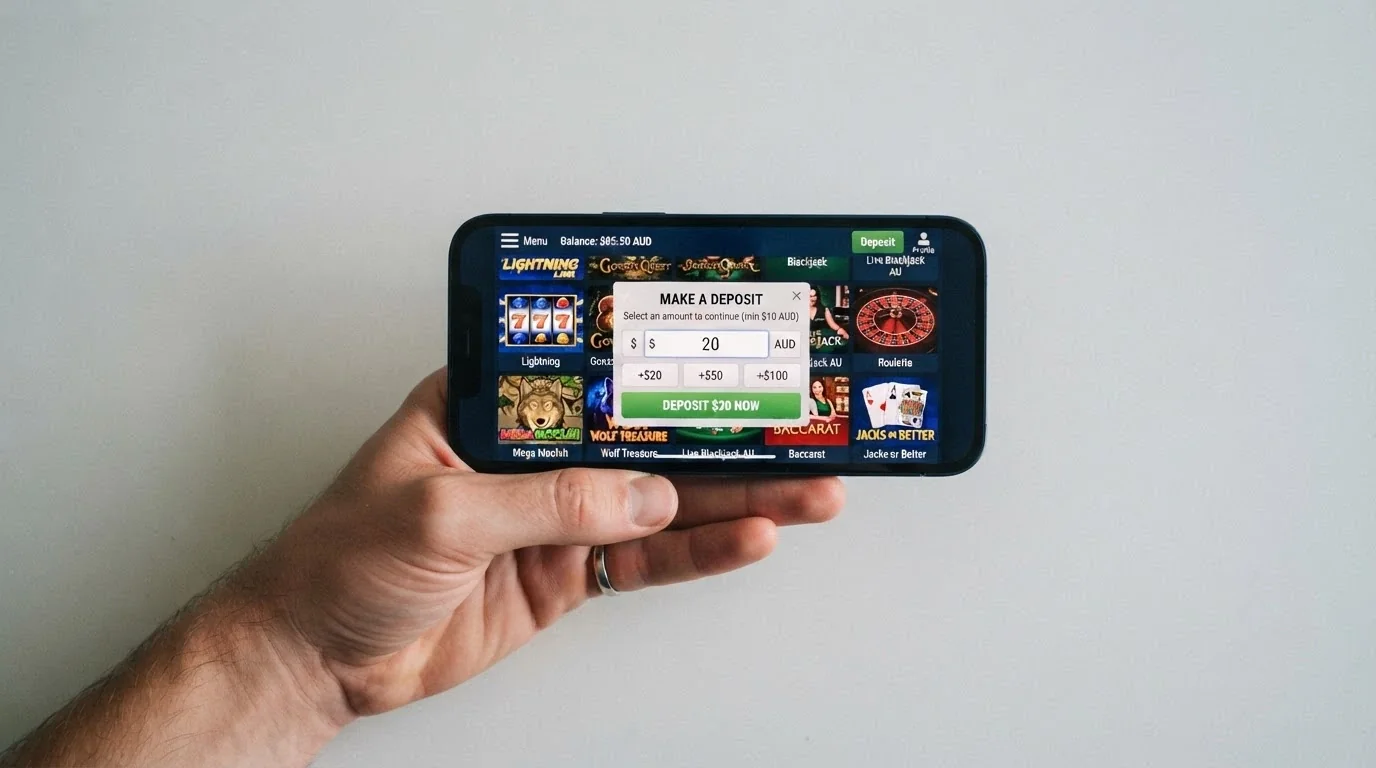
A$1 deposit casinos work on a phone the way they work on a desktop: through the browser, on the same cashier, on the same games. The mobile experience is not a separate product. It is the same product on a smaller screen, and the same offshore rules apply.
Mobile Casino Play at the A$1 Deposit Level
Offshore casinos in the A$1 cluster are browser-based. The deposit screen, the cashier, the game lobby and the bonus terms all run in mobile Safari, Chrome or the Android default browser, with no app download required. A player who wants to deposit A$1 from a phone opens the site, hits the cashier, picks a payment method, and funds the account — same flow as the desktop, in a smaller viewport.
The mobile cashier UX is where the dollar either survives or doesn’t. On a small screen, the A$0.01 minimum-bet selector on Book of Pyramids is harder to set accurately; the deposit field on a crypto cashier is easier to mistype. A player using a phone should double-check the stake-per-spin and the deposit amount before confirming; the offshore site will not catch a typo. The same PayID, card and crypto rails work on mobile, with the same minimums: PayID at A$5–A$10, card at A$10–A$20+, crypto on a low-fee network as the only path to a real A$1.
Mobile Pokies at A$1: Touch Controls and Small-Screen Play
Mobile-optimised pokies run in portrait or landscape, with a spin button large enough for a thumb. Touch-to-spin replaces click-to-spin, and the autoplay menu sits behind a small icon. On a dollar bankroll, autoplay is dangerous: a 100-spin autoplay on Book of Pyramids at A$0.01 per spin runs the bankroll to zero in roughly eight minutes, with no intervention. A player who sets autoplay on a dollar bankroll is choosing to watch the balance drain rather than to play the spins.
Data use on a mobile pokie is light. A typical session at the lowest stake consumes a few hundred kilobytes per spin on the reels and a few megabytes for the initial game load. The bottleneck is not data; it is the player’s attention and the bankroll.
The portrait-versus-landscape choice is personal. Portrait shows fewer rows but a larger spin button; landscape shows the full reels but a smaller spin target. Either way, the dollar plays the same. The screen size changes the ergonomics. The math does not move.
New A$1 Casinos in 2026 — Fresh Faces, Same Offshore Rules
A new casino in the A$1 deposit market is, structurally, the same product as a five-year-old casino. Offshore licence, no Australian permit, no BetStop coverage, ACMA blocking risk. The “new” label is a marketing signal — fresh welcome terms, a newer game library, often a slightly looser welcome to attract first deposits — and the “new” label is also a smaller track record, with no public history of how the operator handled a withdrawal dispute or a player complaint.
Rainbet is the reference point in the current set: launched 2023, Anjouan-licensed under RBGAMING N.V., 6,500+ games from 40+ providers, and a welcome package with a A$50 cashout cap on the welcome-code balance. A player who wants a fresh brand has one in the table. A player who wants a long track record has the older Curaçao brands.
New-Casino Welcome Offers: What a Fresh Brand Gives a A$1 Player
New casinos compete on welcome terms, and the headline numbers are larger than what legacy brands publish. Rainbet’s 250% up to A$2,100 across three deposits is a typical new-brand structure. The percentage is high, the multiple is high, and the cashout cap is the variable that matters. A new brand with a A$50 cashout ceiling on a 250% bonus is offering a larger percentage on a smaller exit.
The standard cashout range at the A$1 tier runs A$50–A$200 across the offshore set, and the 10x-deposit cap — which limits any withdrawal to ten times the deposit amount — is the variable that decides the real ceiling. On a A$1 deposit, a 10x cap means the maximum withdrawal is A$10 regardless of what the welcome page advertises. A player who hits a 50x win on a dollar spin in Book of Dead on a 10x-cap operator sees A$5; on an A$200 cashout-cap operator, the cap is the ceiling. The new-brand welcome is bigger in percentage and tighter in ceiling, and the player should read the ceiling before claiming the percentage.
A new casino’s welcome is a marketing expense the operator is willing to absorb to acquire a first-time depositor. The marketing expense is real money on the operator’s side, which is why the wagering multiple and the cashout cap are the levers that recover it. The bonus is not generosity. It is acquisition cost, recouped at the cashier.
Every A$1 Casino Targeting Australia Is Offshore — Here’s What That Actually Means
No online casino holds an Australian licence. The Interactive Gambling Act 2001 prohibits online casino games, online pokies and in-play sports betting. There is no licence for online casino federally or in any state or territory. Every casino in the comparison table above is offshore, and the offshore status is the structural fact that defines the rest of the player’s experience.
The Interactive Gambling Act 2001: Why No Online Casino Holds an Australian Licence
The IGA was passed in 2001 and was strengthened by the Interactive Gambling Amendment Act 2017, which closed offshore loopholes and gave ACMA enforcement and blocking powers. The product it prohibits is online casino games, online pokies and in-play betting. The model is provider-targeted: it is illegal to offer the service to a person in Australia, with penalties aimed at the operator, not the player. The individual player is not prosecuted.
The implication for the player is that the offshore site is operating outside Australian law by definition. The licence it does hold (almost always Curaçao or Anjouan) is governed by the regulator that issued it, and the player’s rights are whatever that regulator enforces. There is no Australian consumer protection body that can recover money lost at an offshore site. The player has no recourse through the Australian Financial Complaints Authority, no recourse through the state and territory gaming regulators, and no recourse through ACMA. ACMA’s role is to enforce the prohibition against the operator, not to arbitrate player disputes.
The “providing the service is banned in terms” framing from the regulator captures the structural position. The product is prohibited, the operator is illegal, and the player’s relationship with the operator is outside the Australian legal framework.
ACMA Enforcement: 1,564 Sites Blocked and Counting
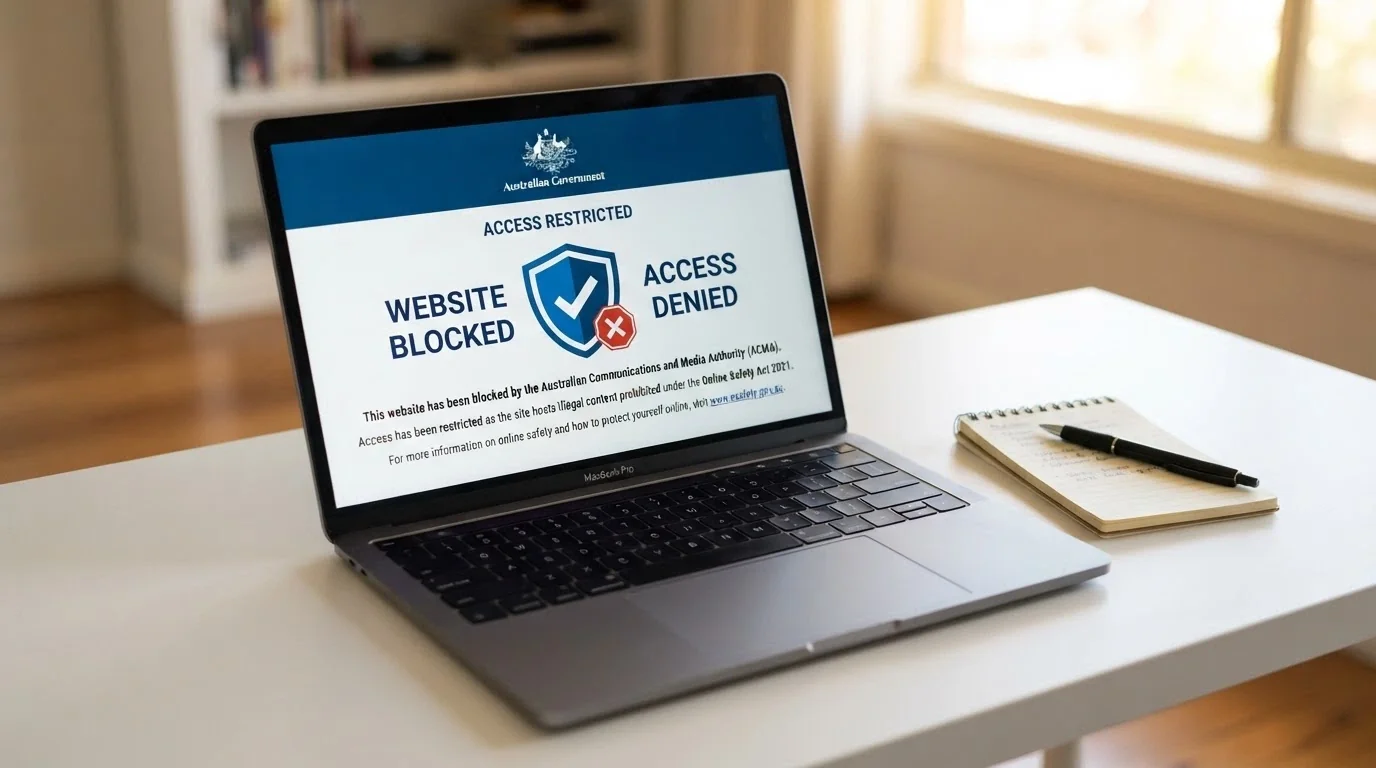
ACMA has had 1,564 illegal gambling and affiliate websites blocked by Australian ISPs as of March 2026, and more than 225 illegal services have withdrawn from the Australian market since enforcement strengthened in 2017. The blocking is at the ISP level: a player trying to reach a blocked site sees a notice and a dead page. A player with a balance on a blocked site has the balance at the offshore operator, with no Australian path to recover it.
The credit-card and crypto payment ban, in force since 11 June 2024, is the second enforcement lever. Operators that accept banned payment methods face penalties of up to A$247,500 per breach. A licensed Australian wagering operator does not offer credit cards or crypto at the cashier. An offshore operator that does is outside the payment regime as well as the licensing regime.
The takeaway for a player is that any of the ten sites in the comparison table can be blocked tomorrow. The dollar deposited today may sit on a site that is unreachable by the end of the week. Withdrawal before the block is the player’s only guaranteed path to the funds.
The 2026 Reform: What Changes on 1 January 2027
The Interactive Gambling Amendment (Gambling Reform) Bill 2026 passed Parliament on 19 August 2026. The measures commence on 1 January 2027. The reform adds three new enforcement tools to the existing framework.
The first is bank and payment-provider blocking authority. From 1 January 2027, banks and payment providers gain express authority to block transactions to illegal gambling operators. A player funding an offshore casino from an Australian bank may see the transaction declined at the source, before the cashier ever sees it. The credit-card ban and the crypto ban are now joined by a payment-rail block, which is the lever that makes the existing bans harder to route around.
The second is advertising restrictions. Wagering advertising on TV is capped at 3 ads per hour between 6:00 am and 8:30 pm, with a live-sport blackout running 15 minutes before to 5 minutes after the event. Radio ads are barred during school times; broadcasting sporting odds is banned outright; online ads are restricted to logged-in, verified 18+ users with opt-out. Athletes, celebrities and influencers are barred from promoting wagering products. An offshore casino advertising a welcome bonus to Australians is breaking the prohibition itself, and the new restrictions make that marketing harder to place.
The third is inducement marketing restrictions. Direct marketing of inducements is prohibited for 14 days after sign-up, for three months after a BetStop deregistration, and indefinitely for at-risk customers. The A$1 deposit welcome bonus is itself an inducement, and the 2027 framework tightens the rules on who can be marketed to and when.
A player using an offshore A$1 casino in 2026 is using a product the regulator is actively restricting. The 2027 changes do not legalise the product, do not license the operator, and do not provide Australian consumer protection. They make the offshore route harder to use, which is a different thing.
Responsible Gambling When the Casino Isn’t Australian
The Australian responsible-gambling framework is built for licensed operators. Offshore casinos are outside it. A player using an offshore A$1 casino in 2026 has access to the Australian help services (the helpline, Gambling Help Online) but not to the Australian protection tools (BetStop, customer-set deposit limits enforced at the licensed-operator level).
BetStop: Australia’s Self-Exclusion Register — and the Offshore Gap
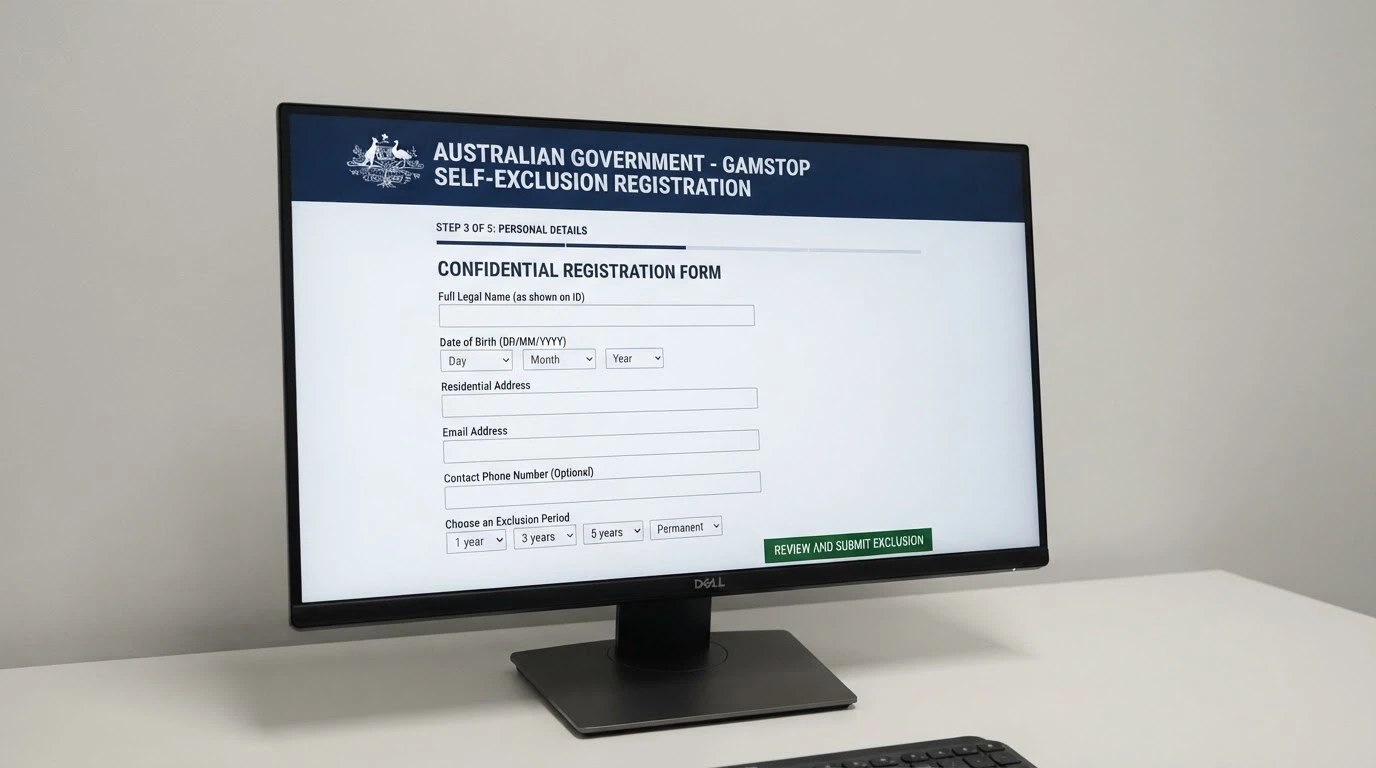
BetStop — the National Self-Exclusion Register — went live in August 2023 and held 67,480 registrations by 31 July 2026, of which 41,290 exclusions were still active. 78% of registrants were under 40, and 38% chose lifetime exclusion. The register binds Australian-licensed wagering services: one registration excludes a person from every licensed online and phone wagering operator, covering approximately 150 licensed providers.
The gap is the offshore casino. BetStop does not bind an offshore operator. A self-excluded player can still open an account at any of the ten sites in the comparison table, deposit A$1, and play. The protection is at the licensed end of the market, not at the offshore end. A self-exclusion from BetStop does not extend to the dollar casino; the dollar casino is outside the register’s reach.
This is the most concrete harm of the offshore route. A player who has taken the step of self-excluding from Australian wagering has done the responsible thing at the licensed end, and the offshore end does not see it. The protection the player thought they had is partial, and the gap is the entire offshore market.
Deposit Limits, Session Controls and Where to Get Help
Customer-set deposit limits are available at licensed wagering operators. An offshore casino may offer a deposit-limit tool on its account page; the tool is enforced by the offshore operator, under the offshore operator’s rules, with no Australian oversight. A limit set at an offshore site is a personal commitment, not a regulatory requirement.
The Australian help services reach every player regardless of where they play. The National Gambling Helpline is 1800 858 858, free, confidential and staffed 24 hours a day, 7 days a week. Gambling Help Online (gamblinghelponline.org.au) provides online chat and counselling. Both are free, both are confidential, and both are accessible to a player at an offshore casino as easily as a player at a licensed operator.
About 2.1% of Australian adults (roughly 430,000 people) experience problem gambling, with high-risk gambling at 1.8% in 2022 (Australian Institute of Health and Welfare). The dollar casino’s small stakes do not make it safer. The dollar is a small bet on a high-volatility game, which is the profile most associated with the rapid-loss sessions that lead to harm. A player using an offshore A$1 casino in 2026 is outside the protection tools, inside the help services, and on their own between the two.
The Tabcorp penalty — A$112,680 for BetStop self-exclusion breaches at a licensed operator — is the regulator’s enforcement signal at the licensed end. There is no equivalent signal at the offshore end, because there is no equivalent enforcement framework.
How We Checked and Compared These A$1 Deposit Casinos
The ten operators above were chosen from Australian market data, verified through search results for “A$1 deposit casino australia,” and confirmed as active offshore brands accepting Australian players. The licence column is the licence the operator publishes; the payment-methods column is the set research confirmed at the cashier.
Verification was against three sources: the ACMA register and enforcement notices (for the offshore and prohibited status of every operator in the table), the operator’s own published terms (for the welcome package, the wagering multiple and the cashout cap), and the research set’s per-title figures for the pokie table. Where research did not confirm a figure (welcome terms for six of the ten operators, payment methods for three of the ten), the writeup names the gap rather than guessing a number.
The criteria that ordered the ranking were fit to the A$1 deposit topic: crypto acceptance (the only rail that reaches a real A$1), confirmed welcome terms, payment-method coverage, and the size of the game library. The single most important column is the licence column: every operator is offshore, every operator is outside Australian consumer law, and the licence is the only regulatory framework the player has.
A reader using this comparison should treat the bonus terms and the payment-methods column as a starting point, check the operator’s own current terms page at sign-up, and read the cashout cap before funding the bonus. The table is the starting point. The cashier is the truth.
What a Dollar Actually Gets You at an Online Casino
A dollar at an offshore A$1 casino buys a few dozen spins on a low-stake pokie, no Australian consumer protection, and no recourse if the operator refuses a withdrawal. It buys the chance to play, not the safety net to play inside. The offshore status is the structural fact, and the rest of the page reads against it.
The dollar is a real number, and the path to it is narrow. Cryptocurrency on a low-fee network is the only rail that routinely delivers a genuine A$1 deposit; PayID, cards, Neosurf and e-wallets all floor above the dollar. Of the payment methods the Australian government allows for licensed wagering, none of them reach a dollar; the only method that does is the one the government has restricted. The A$1 casino is, in practice, a crypto casino at the A$1 tier.
What the dollar buys in play is real: 100 spins on Book of Pyramids at A$0.01 per line, 10 spins on Starburst or Book of Dead at A$0.10, four spins on Wolf Gold at A$0.25. The expected loss across a dollar’s worth of Book of Pyramids at 97.13% RTP is about three cents, which is the honest cost of a dollar session. The expected return is roughly 97 cents. The rest of the dollar — the 3 cents, plus the variance on top of it — is the house edge, and the house always has it.
What the dollar does not buy is a regulator on the player’s side. BetStop does not cover any of the ten operators in the comparison table. ACMA can block any of them at any time, and 1,564 sites have already been blocked since 2019. No Australian consumer protection or complaints body can recover money lost at an offshore site. The 2027 reform adds bank-level payment blocking on top of the existing credit-card and crypto bans, which will make the offshore route harder to use, not safer for the player who uses it.
The honest answer to “is an A$1 deposit casino worth it” is that the dollar buys exactly what the dollar buys. A few dozen spins, a small expected loss, and a position outside the Australian legal framework. The player who wants the dollar buys it knowing that the rest of the experience is governed by the operator’s home regulator, not by Australian law. The protection the player has is the help services — the helpline, Gambling Help Online — which are free, confidential, 24/7, and reachable regardless of where the player is playing. A player who wants more than that is looking for a product the Australian market does not provide, because the product is prohibited.
Frequently Asked Questions
Can you actually cash out winnings from a A$1 deposit?
Yes, but the ceiling is tight. The standard maximum cashout at the A$1 deposit tier runs A$50–A$200 across the offshore set, and some operators apply a 10x-deposit cap that limits any withdrawal to ten times the deposit amount. On a A$1 deposit, a 10x cap means a maximum withdrawal of A$10 regardless of what the player wins. A player who hits a 50x win on a dollar bet in a high-volatility pokie sees A$5 under a 10x cap. Check the cashier’s withdrawal terms before funding the deposit.
Why do casino sites promise a A$1 deposit then ask for A$10 at the cashier?
The A$1 is the headline; the cashier is the floor. PayID, the default Australian rail, runs A$5–A$10 minimums at offshore operators. Cards run A$10–A$20+ because card processing costs (A$0.30–A$0.50 per transaction) make smaller deposits uneconomic. Neosurf vouchers come in A$10 fixed denominations. E-wallets enforce A$5–A$10 minimums. Cryptocurrency on a low-fee network is the only rail that reaches a dollar, and even then only on Litecoin or Tron-USDT, not on Bitcoin where the network fee exceeds the deposit.
Do A$1 deposit casinos offer welcome bonuses?
Some do, but the bonus is rarely compatible with a A$1 deposit. Skycrown, Fair Go, Rocket Play and Rainbet publish welcome packages with A$30 minimum deposits on the bonus balance — the A$1 deposit unlocks the account, not the welcome. The wagering multiple (30x–50x across the set) and the cashout cap (A$50 on Rainbet’s welcome-code balance) decide the bonus’s real value, and both are tighter at the low end of the market. Read the terms before funding the bonus; the headline percentage is not the offer.
What is the best payment method for small deposits at Australian casinos?
Cryptocurrency on a low-fee network is the only method that reaches a genuine A$1. Litecoin keeps the network fee under A$0.05, so a A$1 deposit lands whole. Tether on Tron costs about A$1.00 flat, which works on a dollar transfer by a thin margin. Bitcoin transaction fees run A$1.50–A$3.00, which on a dollar deposit consumes the deposit. Among the non-crypto rails, PayID is the cleanest Australian option at a A$5–A$10 floor, with the OSKO instant clearing. Cards, Neosurf and e-wallets all floor above the dollar.
Is a genuine one-dollar deposit really possible at Australian-facing casinos?
Yes, but only on a narrow band of crypto rails, and only at offshore operators. No Australian-licensed online casino exists, because the Interactive Gambling Act 2001 prohibits online casino games, online pokies and in-play betting. Every A$1 deposit casino targeting Australian players is offshore, operating under a Curaçao or Anjouan licence, and outside the Australian legal framework. The dollar is real. The Australian consumer protection, BetStop coverage, and ACMA complaints path are not. A player funding a A$1 deposit is making a small bet on a high-variance game at an offshore operator, with no recourse if the operator refuses the withdrawal.
Written by the editors at Casino Promo Code AU.