
Where Australian players actually take their USDT in 2026
Stablecoin gambling is no longer a fringe option for Australians. Bank cards get declined at online casinos. Direct debit payments hit the same merchant blocks. And every player who has watched a Bitcoin deposit lose 12% overnight has wondered whether they should have picked a coin that doesn’t move. Tether — USDT, a token pegged to the US dollar — answers that question directly, and the offshore casinos that accept it now sit at the centre of the Australian crypto-gambling conversation.
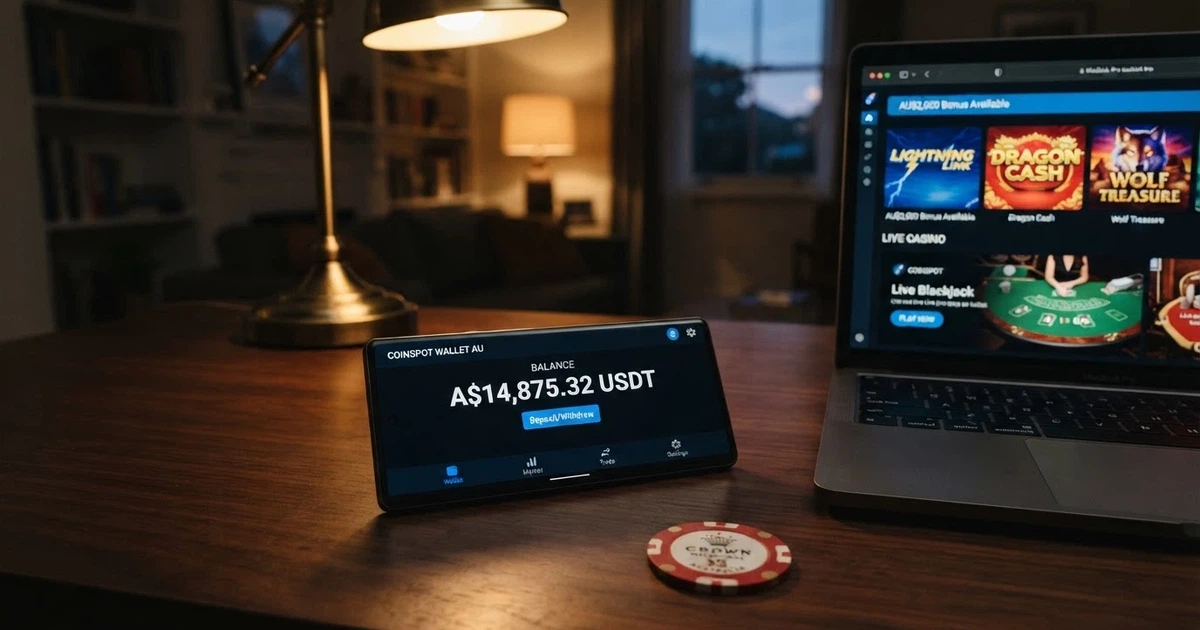
This page ranks the ten USDT casinos that Australian players fund most often, lays out the bonuses and the wagering that come with them, and explains the part that most affiliate lists skip: what Australian law actually says about the offshore operator you’re sending Tether to, what an A$8,000 welcome package really costs to clear, and which mobile and no-KYC patterns the market has settled into.
Data current as of 16 October 2026; licence claims were checked against the Curaçao Gaming Control Board register, the Tobique Gaming Commission public register and the Anjouan Gaming Board operator list.
Table of Contents
- Why Tether casinos are reshaping Australian online play in 2026
- The top 10 Tether casinos for Australian players
- What Australian law actually says about offshore Tether casinos
- Playing smart: guardrails every USDT casino player needs
- Why your 2026 Tether casino bonus is smaller than it looks
- How USDT deposits and withdrawals actually work
- Tether casino gaming on your phone: what actually works
- The privacy promise: no-KYC play and its real limits
- The games worth playing with USDT in 2026
- Demo mode and free spins: risk-free routes into Tether play
- What separates a trusted Tether casino from the rest
- New Tether casinos worth watching in 2026
- How we evaluated every Tether casino on this page
- Your USDT casino shortlist: what to do next
- Frequently asked questions
Why Tether casinos are reshaping Australian online play in 2026
Australian players who arrived at crypto gambling via Bitcoin discovered a second casino hiding inside the first. A 0.01 BTC deposit on Monday could be worth A$1,050 by Wednesday — or A$880. The house edge was still 3–5%, but the currency edge was running as well, and it ran in both directions. Tether removes that second layer entirely. Pegged to the US dollar, USDT holds its value through a gaming session and through the night. Winnings do not drop 10% while you’re sleeping.
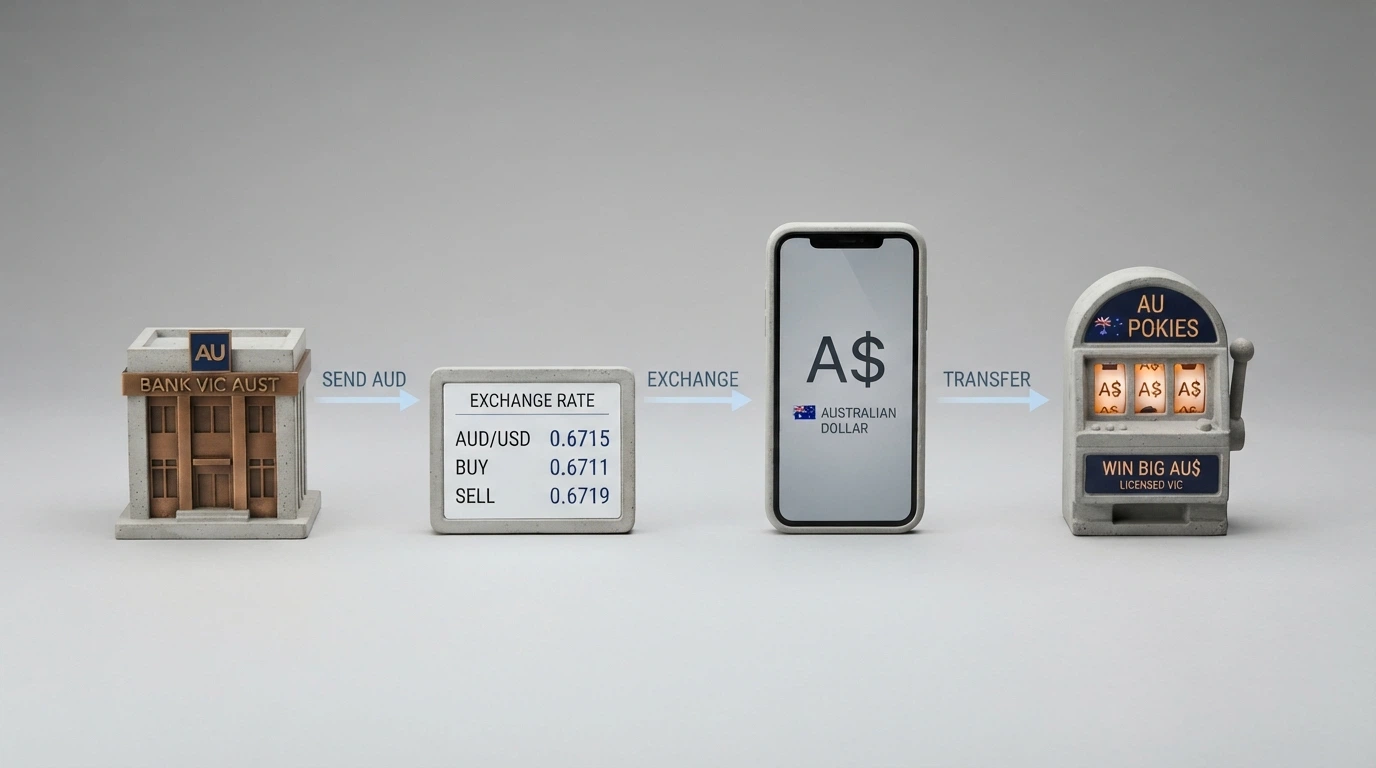
That stability, combined with the speed of TRC-20 transfers and the routine blocking of gambling transactions by Australian banks, is why stablecoins now lead the offshore deposit market for AU players. The flow looks roughly like this: an Australian bank account funds a registered exchange such as CoinSpot or Independent Reserve; the exchange sends USDT on the TRON network to the casino’s deposit address; the casino credits the balance, usually in under an hour; and the reverse chain runs when the player cashes out. None of those steps passes through a card network that flags gambling merchants.
What a Tether casino actually is
A Tether casino is an online gambling site — slots, live dealer, table games — that accepts USDT as a deposit and withdrawal method, alongside or in place of fiat. Most of them are licensed offshore, in Curaçao, Tobique or Anjouan, and none hold an Australian online casino licence, because the Interactive Gambling Act 2001 prohibits Australian operators from offering those games. The category is defined by what it accepts, not by where it sits — and the practical consequence is that every brand on this page is operating outside the Australian regulatory perimeter, which means the player protection regime that applies to locally licensed bookmakers does not apply here.
Where USDT differs from earlier crypto gambling currencies is in its peg. Bitcoin and Ethereum move with the market; USDT is designed to stay at one US dollar per token. That peg is what makes it a gaming currency rather than a speculative one, and it is why TRC-20 — USDT running on the TRON blockchain — has become the default rail for Australian players. Fees are typically under a dollar, confirmations run in 30 to 60 seconds, and a deposit that arrives quickly is a deposit the player can actually use.
How USDT deposits change the game for Australian players
The practical shift for an Australian player moving from card deposits to USDT is not philosophical. It is the difference between a transaction that gets declined at the bank and a transaction that clears in under a minute. Card and direct-debit deposits at offshore casinos are blocked by a meaningful share of Australian banks — Westpac, CBA, NAB and ANZ have all publicly maintained blocks on known gambling merchant codes — which means a player trying to fund an offshore account the old way often finds the payment failing for reasons the bank will not always explain.
The stablecoin path bypasses that blockage entirely. The exchange that sells the USDT is a regulated Australian digital currency exchange, not a gambling merchant, and the blockchain transfer that follows is a peer-to-peer token movement that no Australian bank sits inside. Crypto casinos — the better-run ones, at least — process those deposits in under an hour and credit the balance without a hold. Withdrawal is the same in reverse: a TRC-20 USDT transfer back to the player’s own wallet, then a sale on the exchange and a deposit back into the Australian bank account. The whole loop, in a working setup, takes minutes rather than days.
The AUD-to-USDT-to-casino chain is also the chain that holds the tax question. Each conversion from AUD to USDT and back is a CGT event in Australian tax law, which means a player running through the chain regularly needs to track cost bases — a real consideration, even if the underlying gambling winnings themselves are not taxable as ordinary income. That topic is covered in its own section below.
The top 10 Tether casinos for Australian players
The comparison below ranks the ten offshore operators that Australian USDT players encounter most often. Every one of them accepts Tether on at least one network, and every one of them operates outside the Australian regulatory regime. The columns are filled only where research carries a specific figure; the gaps are honest, not editorial laziness.

| Operator | Licence | Welcome Bonus | Free Spins | Wagering | Bonus Validity |
|---|---|---|---|---|---|
| Stake | Curaçao | — | — | — | — |
| BitStarz | Curaçao | A$500 + 180 FS | 180 | 40x | 7 days per bonus |
| Sky Crown | Curaçao | A$8,000 + 400 FS | 400 | 40x | 14 days per tier |
| RocketPlay | Curaçao | A$1,000 + 100 FS | 100 | 40x | 5 days |
| Fair Go | Curaçao | 300% up to A$3,000 + 50 FS | 50 | 30x (deposit + bonus) | 150 days |
| Bizzo | Curaçao | A$750 + 200 FS | 200 | 35x | 30 days |
| Wild Fortune | Tobique #0000064 | A$2,000 + 175 FS | 175 | 45x | 7 days |
| Shuffle | Curaçao OGL/2024/1337/0628 | — | — | — | — |
| Cloudbet | Curaçao | Up to 2,500 USDT + 30% rakeback | 100 | 0x | — |
| Thrill | Anjouan | Up to 70% rakeback | — | 0x | — |
The wagering column lands in the 30–45x band the market has settled into, with the zero-wagering outliers — Cloudbet and Thrill — sitting well outside it. Validity windows swing from 5 days at RocketPlay to 150 days at Fair Go, and that 30-fold difference reshapes how playable each offer actually is.
Stake
Stake is the brand Australian crypto players encounter first when they ask around, and for a reason: it runs no traditional welcome bonus at all. The model is rakeback and VIP — a percentage of house edge returned to the player, scaled by wager volume — and the maths behind it works out very differently from a deposit match. A player who deposits A$1,000 in USDT, plays through A$50,000 of slots, and qualifies for a 5% rakeback receives A$2,500 back regardless of whether they won or lost the session. There is no wagering multiple to clear and no expiry date to race.
The trade-off is upfront value. A new player opening Stake gets none of the headline-grabbing figure that a Sky Crown or BitStarz welcome package advertises, and the rakeback only compounds as volume grows. The game catalogue is wide — Pragmatic Play, Hacksaw and Evolution sit at the core — and crypto payouts are instant once a withdrawal is requested. The Curaçao licence is the offshore standard; the protection regime behind it is thin, which is a feature of the category rather than a Stake-specific failing.
For a player who plans to play regularly, the rakeback model beats almost every deposit match in the table above. For a player making a single deposit to try the site, the welcome-bonus operators offer more visible value.
BitStarz
BitStarz is the high-volume multi-currency brand of the offshore USDT casino market, and the welcome package sits at the head of the table — A$500 plus 180 free spins, with 40x wagering on the bonus funds. The fuse is short: 7 days per bonus, after which any uncleared bonus balance expires. A$20 is the minimum deposit.
The short validity window is the spec a player has to read first. Forty times wagering on, say, A$500 of bonus funds works out to A$20,000 of turnover required within a week. At an A$1 spin size, that is 20,000 spins; at an A$5 spin size, it is 4,000 spins. Either way, the player who treats the bonus as a slow grind will lose it to the clock long before they lose it to the wagering. BitStarz suits players who play high-volume from the first session and can clear the requirement inside the window.
Crypto payouts are instant; the game catalogue covers Betsoft, Evolution and NetEnt among others, which means the live dealer tables and the high-RTP slots are both present.
Sky Crown
Sky Crown carries the biggest headline figure on this page: A$8,000 plus 400 free spins, gated at 40x wagering on the bonus and spread across the first several deposits rather than dropped in one tranche. Each tier runs a 14-day validity window. The minimum deposit is A$30, and crypto payouts are quoted at under an hour.
A$8,000 is a figure that looks generous until you do the clearing maths. Forty times wagering on A$8,000 of bonus money is A$320,000 of required turnover. Even at A$5 a spin, that is 64,000 spins — and the player has 14 days per tier, not 14 days for the whole package. The bonus is real, but it is built for sustained high-volume play, and the player who treats it as a quick promotional credit will leave most of it on the table.
Game providers include BGaming, Platipus and Evolution, so the live dealer side of the catalogue is fully covered. Sky Crown is a better fit for the player who intends to spend weeks playing through it than for the one who wants a single weekend session.
RocketPlay
RocketPlay takes a different approach to the same wagering multiple. A$1,000 plus 100 free spins at 40x sounds like a smaller offer than Sky Crown’s, and it is — but the validity window is five days, and the bet cap is A$7.50 while a bonus is active, which means the player is locked into a smaller denomination and a tighter clock.
The five-day window is the spec to read. A player running A$1,000 of bonus at 40x needs to turn over A$40,000; capped at A$7.50 a spin, that is 5,333 spins. At five seconds per spin, that is 7.4 hours of continuous play, achievable in five days but only by a player who treats the clearing as the session’s actual purpose. The cap is the design: RocketPlay wants the volume, and it wants the volume inside its casino, not redirected to a competing site.
Crypto payouts are quoted at under 24 hours, and Pragmatic Play and Evolution supply the bulk of the catalogue.
Fair Go
Fair Go is the RealTime Gaming specialist in this set, and it runs the longest bonus validity window of any operator on the page: 150 days. The welcome package is 300% up to A$3,000 plus 50 free spins, with 30x wagering applied to deposit + bonus combined. The minimum deposit is A$20.
The 150-day window fundamentally changes what the bonus is. Thirty times wagering on A$3,000 of bonus plus a A$1,000 deposit is A$120,000 of required turnover — but spread across five months, that is roughly A$800 a day, a pace a casual player can sustain. Fair Go is the operator in this table that fits the player who wants a bonus they can clear without restructuring their week.
The trade-off sits elsewhere. Payouts are quoted at 48–72 hours rather than instant, and withdrawals on no-deposit free chips are capped at A$180 — a rule that limits the upside of any free promotion the casino runs. RTG is the only major provider, which means the game catalogue is narrower than the Evolution-powered competition. Fair Go is a slow-grind brand, built for players who like the rhythm of a long bonus run.
Bizzo
Bizzo runs the mid-weight package in the comparison table — A$750 plus 200 free spins at 35x wagering, with a 30-day validity window and a A$25 minimum deposit. The wagering multiple sits at the lower end of the 35–45x market band, and the month-long window is generous enough that a moderate-volume player can clear it without urgency.
Thirty-five times wagering on A$750 of bonus is A$26,250 of required turnover; at A$1 a spin, that is roughly 36 hours of play over 30 days, well within reach for a player running one or two sessions a week. Pragmatic Play and Evolution supply the catalogue, and crypto payouts are quoted at under 24 hours. Bizzo is the operator in this table that fits the player who wants a recognisable bonus structure without the urgency of a five-day window or the burden of a 150-day grind.
Wild Fortune
Wild Fortune holds the only Tobique Gaming Commission licence in this ranking — licence number 0000064 — and it stands out for a tested figure rather than a marketing one. Crypto withdrawals at Wild Fortune averaged 5 hours 24 minutes in third-party testing, which is the kind of number a player can plan around. The welcome package sits at A$2,000 plus 175 free spins, with 45x wagering and a 7-day validity window.
Forty-five times is the highest wagering multiple in the featured set, and the 7-day window is the shortest outside RocketPlay. A$2,000 of bonus cleared at 45x is A$90,000 of turnover — heavier than Sky Crown’s per-tier figure, and tighter on time. Pragmatic Play, Evolution and Play’n GO are the headline providers, and the minimum deposit is A$30. Wild Fortune suits a player who wants tested withdrawal speed rather than the headline bonus figure, and who plans to clear volume aggressively inside the week.
Shuffle
Shuffle is the Curaçao VIP house with a named licence number — OGL/2024/1337/0628, issued by the Curaçao Gaming Control Board — and no mass-market welcome bonus. The operator is owned by Natural Nine B.V., registered in Curaçao under number 160998. Like Stake, the model is rakeback and VIP rather than deposit match, and crypto payouts are instant.
Shuffle fits the same reader Stake fits: a player who plans regular volume and values returned rake over upfront bonus credit. The difference is positioning — Shuffle leans into its named Curaçao licence as a trust signal, while Stake markets on volume and brand recognition. Both sit outside the Australian regulatory regime, and both run on the same offshore-licence premise that defines the whole category.
Cloudbet
Cloudbet is the zero-wagering operator that breaks the table’s pattern. Up to 2,500 USDT in cash rewards — not bonus funds — with no wagering requirement attached, plus a 30% rakeback and 100 free spins. The release mechanism is points-based rather than turnover-based, but the headline is what matters: no 40x multiplier, no validity window, no bet cap.
Zero wagering changes the maths entirely. A$1,000 received as cash reward at Cloudbet is A$1,000 the player can withdraw immediately; the same A$1,000 at Sky Crown, with 40x wagering, is A$1,000 the player must turn over A$40,000 to clear. Cloudbet’s offer rewards volume and patience rather than aggressive clearing, and it suits the player who treats casino play as an ongoing activity rather than a session-by-session grind. Evolution and Microgaming supply the live and RNG catalogues respectively.
Thrill
Thrill rounds out the table with the second zero-wagering model — up to 70% rakeback, no deposit-match welcome bonus, no free spins, instant crypto payouts. The licence is Anjouan, which is a lighter regulatory regime than Curaçao and significantly lighter than Tobique; Pragmatic Play and Hacksaw supply the catalogue.
Thrill is the brand for the player who has decided rakeback beats deposit match as a model, and who is comfortable with an Anjouan-licensed venue rather than a Curaçao one. The lack of a welcome package is a feature, not an omission — the operator is not trying to attract one-off depositors.
What Australian law actually says about offshore Tether casinos
The legal picture for an Australian player using an offshore USDT casino is one most players get wrong in one direction or the other. Operators are prohibited; players are not prosecuted. That asymmetry is the working reality.
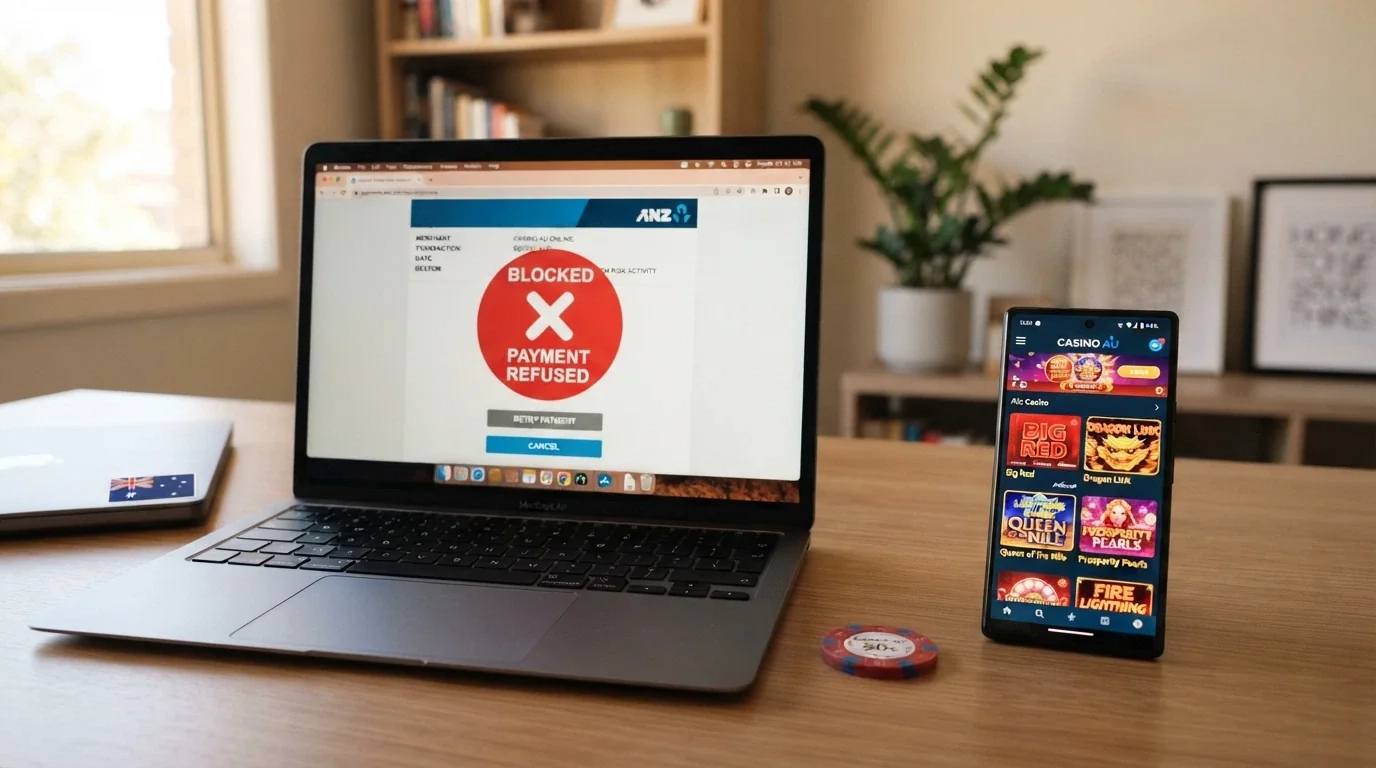
The Interactive Gambling Act 2001 prohibits Australian operators from offering online casino games — slots, live dealer, table games — to customers in Australia. Sports betting and lotteries are licensed locally; everything else is not. Section 15(2A) of the Act is the operative clause, and the Australian Communications and Media Authority (ACMA) is the regulator that enforces it against operators, not against players. None of the ten brands on this page holds an Australian online casino licence, because no such licence exists to be granted.
What that means for the player is that no Australian law criminalises accessing these sites. ACMA’s enforcement runs at the operator and the payment-rail level: domain blocking, advertising restrictions, and pressure on Australian payment processors. The Australian player who funds an offshore USDT casino is not committing an offence under the IGA. They are also not protected by the Australian regulatory framework if a dispute arises — and that gap is the real cost of the offshore category.
The reforms the Australian government announced in April 2026 do not change the picture for offshore casino access. The National Self-exclusion Register (BetStop) and pre-commitment schemes target online wagering — sports betting — and the Interactive Gambling Amendment (Gambling Reform) Bill 2026, introduced to Parliament on 2 July 2026, focuses on advertising bans and harm-minimisation infrastructure rather than on legalising online casinos. None of this is going to produce an Australian-licensed online slots casino in the foreseeable future.
The tax position is its own consideration. Gambling winnings in Australia are generally not taxable as ordinary income, because the ATO treats them as luck-based rather than as earnings. But the crypto round-trip — AUD to USDT at purchase, USDT back to AUD at sale — creates Capital Gains Tax events at each conversion. A player who moves A$5,000 into USDT, gambles with it, and converts the remainder back to AUD at the end of the year has, in tax terms, sold a CGT asset at each conversion point. Tracking cost bases across those conversions is the player’s responsibility, and ignoring them is not a position the ATO has been lenient about.
The licensing reality: what offshore means in practice
Every casino on this page holds a licence — just not an Australian one. Curaçao is the most common jurisdiction, and the Curaçao Gaming Control Board issues numbered licences (Shuffle’s OGL/2024/1337/0628 is a recent example). Tobique Gaming Commission licence 0000064 covers Wild Fortune, and the Anjouan Gaming Board covers Thrill. None of those regimes replicates the player-protection framework Australian players may be used to from locally licensed bookmakers — no Australian dispute resolution, no AFCA-style ombudsman, no automatic application of the National Consumer Protection Framework.
What the offshore licences do enforce varies by jurisdiction. Curaçao’s modernised framework (post-2024) requires operators to maintain segregated player funds and to submit to regulatory oversight on anti-money-laundering compliance, though dispute resolution remains weaker than at locally regulated venues. Tobique and Anjouan sit further down the regulatory hierarchy, and the player-protection regime at those venues is closer to a licence-of-operation than to the consumer-protection framework an Australian player might assume.
AUSTRAC’s Travel Rule — which kicks in at AU$10,000 for crypto transactions — applies to the Australian exchange on the player’s side of the chain, not to the offshore casino. That means an Australian exchange moving more than AU$10,000 in USDT is required to collect and transmit counterparty information, and a player funding an offshore casino via such an exchange may find their exchange asking for the casino’s details. None of this stops the transaction, but it does mean the no-KYC promise on the casino side has a ceiling once the AUD-to-USDT conversion crosses the threshold.
Playing smart: guardrails every USDT casino player needs
Crypto gambling moves faster than fiat gambling, and the harm profile moves with it. USDT removes the price-volatility risk that makes Bitcoin and Ethereum sessions a second gamble, but it does not remove the speed risk — instant deposits and instant withdrawals shorten the gap between impulse and action, and they shorten the cooling-off window that a bank transfer used to provide.
The help resources are Australian and free. The National Gambling Helpline — 1800 858 858 — runs 24 hours a day. Gambling Help Online, at gamblinghelpline.org.au, offers webchat and email counselling. BetStop, the National Self-Exclusion Register, launched in 2023 and lets a player exclude themselves from every Australian-licensed online wagering provider in a single registration. The limitation for a player at an offshore USDT casino is that BetStop’s exclusion does not bind offshore operators — a player registered with BetStop can still deposit at Stake, BitStarz or Sky Crown — which means the offshore side of harm minimisation has to come from the player and from the casino’s own responsible-gambling tools.
Crypto adds a specific harm pattern that fiat play does not. Instant settlement removes the natural pause between a losing spin and the next deposit, and a player who has lost A$500 in a session can move another A$500 in USDT inside a minute. Loss-chasing — the recognised pattern of depositing more to recover a loss — runs faster in a stablecoin environment than it ever did with bank transfers. That speed is a feature of the category, and it is also the reason the responsible-gambling frameworks that apply to fiat casinos matter even more for USDT play.
Practical limits and help resources for crypto gamblers
- The National Gambling Helpline (1800 858 858) is the first call for any Australian player who feels their gambling is drifting.
- Gambling Help Online (gamblinghelpline.org.au) offers webchat and email support around the clock.
- BetStop covers Australian-licensed operators in one registration; offshore casinos sit outside its scope.
- Set a USDT deposit ceiling before the first session, and treat the ceiling as a hard floor: when it is reached, stop funding the account for the week.
- Treat a stablecoin wallet the way you treat a cash wallet — a visible, capped balance that the player cannot quietly top up mid-session.
- Where the casino offers deposit limits, session reminders or time-out tools, activate them on the first day, before play patterns set in.
- Track every AUD-to-USDT and USDT-to-AUD conversion as a CGT event for tax purposes, and keep the records.
Why your 2026 Tether casino bonus is smaller than it looks
A$8,000 sounds generous. So does 400 free spins. The wagering requirement is the number that decides what the bonus is actually worth, and the wagering requirement on most of the offers in the table above sits in the 35–45x band that the offshore market has settled into. The maths is unforgiving, and the marketing copy around it is not.

Take the Sky Crown welcome as the worked example. A player who claims the full A$8,000 bonus commits to 40x wagering on the bonus amount, which means A$320,000 of required turnover before any of the bonus balance converts to withdrawable cash. That figure is not a guess — it is the formula the bonus terms apply. A player running slots at A$1 per spin needs to complete 320,000 spins; at five seconds per spin, that is 1,600,000 seconds, or roughly 444 hours of continuous play. The 14-day per-tier window makes that pace aggressive even for a high-volume player.
The bonus-cost calculation runs cleanly with the inputs from the page. Take A$1,000 of bonus at the standard 40x wagering multiple, played at A$1 per spin: turnover of A$40,000, 40,000 spins required, and at five seconds per spin that is roughly 55.6 hours of play to clear the bonus. For a player running two-hour sessions, that is a month of focused play. For a player running weekend sessions only, it is two to three months. The bonus is real, but the time cost is the real number.
The market has settled on 35–45x as the standard wagering band for offshore casino deposit bonuses, and only Cloudbet and Thrill have broken out of it with their zero-wagering models. A player who wants the bonus without the clearing burden has two paths: pick a zero-wagering operator and accept the absence of a deposit match, or pick a deposit-match operator and accept the time cost. There is no third path that produces both.
Welcome bonuses: the big numbers and the fine print
The welcome offers across the featured set range from A$750 at Bizzo to A$8,000 at Sky Crown, with the wagering multiple landing in the 30–45x band and validity windows running from 5 days to 150 days. The match percentage tells you what the bonus is worth at the moment of claim; the wagering multiple tells you what it costs to convert. A 300% match like Fair Go’s triples the deposit, which sounds generous until the 30x multiplier on deposit + bonus pushes the clearing figure up sharply.
The lower wagering multiples — Bizzo’s 35x, Fair Go’s 30x — sit at the more player-friendly end of the band. The higher ones — Wild Fortune’s 45x — sit at the steeper end. None of them are anomalies; all of them are within the 35–45x market standard the offshore segment has settled into.
A player should read three numbers before claiming any welcome bonus: the wagering multiple, the validity window, and the bet cap. The wagering multiple sets the volume requirement; the validity window sets the time pressure; the bet cap (where one exists, as it does at RocketPlay at A$7.50) sets the per-spin ceiling during clearing. Where the wagering is high and the validity window is short, the bonus is built for a player who treats the clearing as the session’s purpose — not for a casual depositor.
Free spins: the real value behind the numbers
Four hundred free spins at Sky Crown is the largest count on the page, but the per-spin value and the cashout cap rewrite the headline. Free-spin value is typically set at the slot’s minimum stake, and most operators cap the maximum cashout from free-spin winnings — a rule that limits how much the player can actually walk away with from a spin-only bonus.
Most of the featured operators carry free spins alongside their deposit match: 400 at Sky Crown, 200 at Bizzo, 180 at BitStarz, 175 at Wild Fortune, 100 at RocketPlay and Cloudbet, 50 at Fair Go. Three of them — Stake, Shuffle and Thrill — do not offer free spins at all, because their models are rakeback and VIP rather than deposit match. The choice between a free-spin-heavy welcome and a no-spin rakeback model is a choice between upfront promotional value and ongoing returned edge, and the right answer depends on the player’s volume.
The market standard cashout cap on free-spin winnings sits in the A$150 range — modest against the headline spin count — and the wagering requirement on spin winnings typically tracks the deposit bonus multiple (40x at most of the featured operators). A 400-spin package at A$0.10 a spin is A$40 of slot turnover before wagering starts; a 400-spin package at A$0.20 a spin is A$80. Either way, the cashout cap is the number that decides the upside.
No-deposit offers: free chips with strings attached
No-deposit bonuses are the rarest offer in the featured set, and the reason is in the rules that surround them. A no-deposit free chip looks like free money, but the cashout cap — Fair Go’s A$180 ceiling is a representative figure — limits the upside, and the wagering requirement still applies. Most of the featured operators do not advertise a no-deposit bonus for the simple reason that the economics of a no-deposit offer are tighter than a deposit-gated one, and the player who claims one is often the player who converts at the lowest margin.
Where a no-deposit offer does appear, the cap is the spec to read first. A A$50 free chip with a A$180 cashout cap and a 40x wagering requirement is a hard offer: the player must clear A$2,000 of turnover, and even if they do, the maximum withdrawal is A$180. The promotion rewards the casino’s acquisition funnel more than the player’s bankroll.
Wagering fine print: the rules that kill a bonus
Beyond the multiplier, three rules decide whether a bonus is beatable. The bet cap while a bonus is active — RocketPlay’s A$7.50 ceiling is the clearest example on the page — prevents the player from running high-denomination spins to clear the turnover quickly. Game-contribution rules mean that not every game type counts 100% toward the wagering requirement; table games often contribute 10–20%, which stretches the clearing time. And the validity window caps how long the player has to finish.
Validity windows across the featured set range from 5 days (RocketPlay) to 150 days (Fair Go), with the bulk of the set clustered between 7 and 30 days. The 5-day window is the tightest in the market and forces a clearing pace that suits a high-volume player only. The 150-day window is the most generous in the market and fits a casual player who wants time to grind.
Some operators also restrict slot play by RTP during promotions — excluding titles above a 97.4% RTP threshold while a bonus is active, for example. That rule cuts off the highest-return slots from bonus clearing, which is a real consideration for a player who plans to grind the wagering on a single title. The rule is not universal across the featured set, but where it exists, it shapes which games the bonus can be cleared on.
How USDT deposits and withdrawals actually work
The four-move chain from an Australian bank account to a casino balance runs in this order: AUD leaves the bank and lands at a registered Australian exchange; the exchange sells AUD for USDT; the player sends USDT (typically TRC-20) to the casino’s deposit address; the casino credits the balance, usually within the hour. The reverse chain — casino balance to USDT to AUD to bank — runs the same way in the opposite direction.
The network choice is the critical fork.
| Network | Confirmation Time | Fees |
|---|---|---|
| TRC-20 | 30 to 60 seconds | Under a dollar |
| ERC-20 | 3 to 5 minutes | Higher (congested) |
TRC-20 — USDT on the TRON blockchain — confirms in 30 to 60 seconds and typically costs under a dollar in network fees. ERC-20 — USDT on Ethereum — confirms in 3 to 5 minutes and costs meaningfully more during congested periods, sometimes more than the deposit itself. For an Australian player funding a casino session, TRC-20 is the default, and the casino deposit page will specify which network the deposit address corresponds to. Sending TRC-20 tokens to an Ethereum-only address — or vice versa — results in lost funds, with no recovery path. Network matching is the single most common cause of a failed USDT casino deposit.
Depositing with USDT: the step-by-step reality
- Buy USDT from a registered Australian exchange such as CoinSpot or Independent Reserve. The exchange handles the AUD-to-USDT conversion and the AUSTRAC reporting on the AUD side.
- Select TRC-20 as the withdrawal network at the exchange, unless the casino specifies a different network on its deposit page.
- Copy the casino’s USDT deposit address and check the network twice — TRC-20 addresses start with T, ERC-20 addresses do not, and the formats are not interchangeable.
- Send a small test transaction first if the deposit amount is significant. A$10 of USDT confirms the address and the network without exposing the full bankroll.
- Wait for the casino to credit the balance. Crypto casinos typically credit within the hour; the better-run ones credit within minutes.
The minimum deposit at the featured operators ranges from low (Stake, Shuffle) to A$30 (Sky Crown, RocketPlay, Wild Fortune), with most operators sitting in the A$20–A$30 band. The minimum is set in USDT at the prevailing AUD-USDT rate, not in AUD, so a small change in the rate shifts the minimum deposit slightly each session.
Withdrawal speed and network choice: what the headlines do not tell you
- TRC-20 is the default network for Australian players: 30 to 60 seconds to confirm, under a dollar in fees, and supported by every featured operator.
- ERC-20 is the alternative network: 3 to 5 minutes to confirm, with higher fees during Ethereum congestion. Useful when TRC-20 is unavailable.
- Minimum withdrawals typically sit at 10 to 20 USDT across the featured set.
- “Instant” payouts in the marketing copy mean after the casino approves the withdrawal, not at the blockchain layer. Wild Fortune’s tested average of 5 hours 24 minutes is a more honest figure than the word instant.
- No casino in the featured set charges withdrawal fees on USDT. Network fees apply, and they sit on the blockchain side rather than the casino side.
The honest answer on withdrawal speed is that instant is a marketing word, not a tested one. Wild Fortune’s published 5h 24m average is the only figure in the featured set that comes from third-party testing rather than the operator’s own copy, and it is the figure a player should plan around rather than the word instant that appears on every deposit page.
Tether casino gaming on your phone: what actually works
Mobile USDT play is the default, not the exception. The featured operators run browser-based mobile casinos that scale to a phone screen without an app download, and the underlying provider platforms — Pragmatic Play, Evolution, Hacksaw, NetEnt, Play’n GO — are built mobile-first. A player who funds a casino via USDT on a desktop can move to a phone session without a separate account setup.
The app-versus-no-app question is mostly settled in favour of no app. Most offshore crypto casinos do not ship native iOS or Android apps — the App Store and Google Play restrict real-money gambling apps by jurisdiction, and offshore operators do not always meet the criteria for inclusion. Browser-based access through Safari or Chrome is the standard path, and the user experience is close enough to native that the absence of an app is not a practical limitation.
The performance picture varies by provider. Evolution’s live dealer tables run smoothly on mobile browsers with a stable connection; slot-heavy sessions from Pragmatic Play and Hacksaw are similarly stable. Where mobile play falls short is on older devices or unstable connections — live dealer streams in particular demand consistent bandwidth — and a player who plans to run long sessions from a phone should test the connection on a low-stakes session first.
The privacy promise: no-KYC play and its real limits
No-KYC casinos sell privacy as a feature, and the marketing works because it speaks to a real Australian frustration — banks flagging gambling transactions, identity verification that delays withdrawals, and a feeling that online gambling carries more surveillance than it needs to. The reality is messier than the marketing.
Most offshore USDT casinos let a player deposit without identity verification, especially in the early sessions and at low volume. The verification trigger sits at the withdrawal side, and it usually fires at a cumulative-withdrawal threshold, at a single-withdrawal size, or when the payment team’s risk model flags the account. A player who plans to cash out a meaningful win in USDT should expect to provide ID at that point, and the casino will hold the withdrawal until verification is complete.
No-KYC reality: when you can play without ID and when you cannot
The deposit-without-ID norm holds across the featured set in practice, though it is not guaranteed by any operator’s terms. The withdrawal side is where verification pressure arrives, and the timing varies. Some operators run verification on the first withdrawal regardless of size; others trigger at a threshold. A player who expects to cash out a large win should plan for verification, not assume it has been waived.
The AML compliance pressure on offshore operators is closing the no-KYC window across the industry. Curaçao’s modernised framework, the EU’s evolving AML directives, and AUSTRAC’s own pressure on the Australian side of the chain all push toward more verification, not less. A player who chooses an offshore USDT casino specifically for the no-KYC promise is buying a feature that may not be there in two years.
Anonymity and its trade-offs
Blockchain pseudonymity is not anonymity. A USDT wallet address is a public string on the blockchain, and a determined analyst can trace its transaction history. The privacy an offshore USDT casino actually delivers is reduced friction at sign-up — no email verification, no ID upload, no address confirmation — rather than true anonymity, which would require coin-mixing tools the player would have to source themselves.
The trade-off sits on the protection side. A licensed, KYC-compliant operator knows who its players are, holds segregated player funds under regulatory supervision, and offers a dispute resolution pathway through the regulator. An anonymous operator offers none of those things, and a player who has a dispute — a bonus not credited, a withdrawal held, a game dispute — has fewer tools to resolve it. Privacy bought at the cost of protection is a bargain the player should make with eyes open, especially at the lighter-licensed end of the offshore spectrum.
The games worth playing with USDT in 2026
USDT deposits unlock the full game catalogue at the featured operators, and the catalogues are wide. Pragmatic Play, Evolution, Hacksaw, NetEnt, Play’n GO, RTG, Microgaming, BGaming, Platipus, Yggdrasil and Betsoft all appear across the featured set, which means the Australian USDT player is not restricted to a sub-catalogue of crypto-only titles. The full slots library, the live dealer floor, and the RNG table games are all funded in Tether.
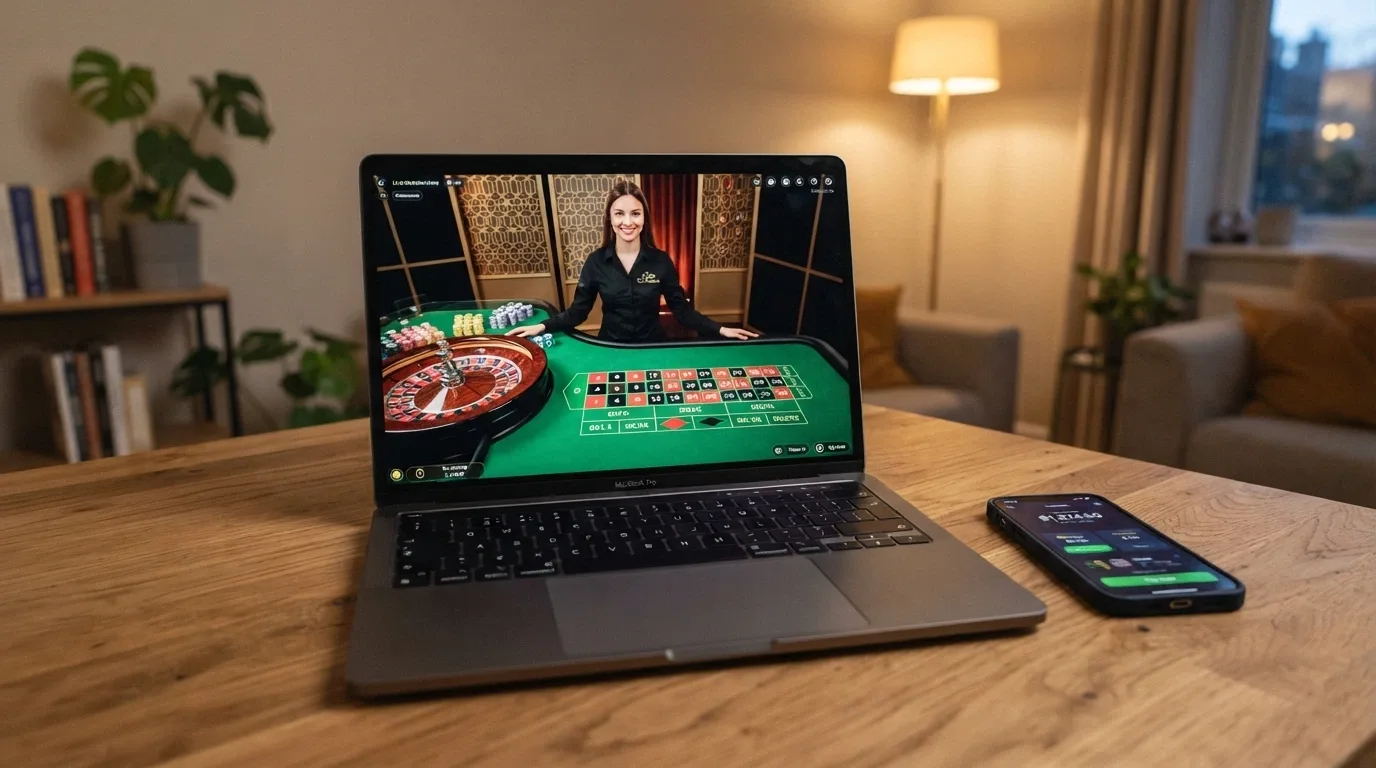
The AU pokies appetite maps cleanly to the offshore slots catalogue. The high-volatility titles from Hacksaw, the Pragmatic Play Drops & Wins network, the NetEnt classics, and the BGaming crypto-native releases all sit in the same lobby and all accept USDT stakes. A player moving from a locally restricted fiat casino to a USDT casino is not giving up game access — they are gaining it.
Slots and pokies: what USDT unlocks
The slot quality question is a provider question, and the provider roster across the featured set is strong. Pragmatic Play’s pokies library is the most-played in the offshore market; Hacksaw’s high-volatility releases have built a devoted following among crypto players; NetEnt and Play’n GO supply the established European catalogues; RTG (at Fair Go) covers the Australian-favoured format. The titles themselves are the same regardless of the deposit currency — the difference at a USDT casino is that funding and withdrawal run through stablecoin rails rather than bank cards.
Volatility considerations matter more in a USDT context than in a fiat context, because the deposit-and-withdrawal loop is fast enough that a player can re-buy mid-session without friction. A high-volatility slot at a USDT casino is a faster game than the same slot at a fiat casino, and the bankroll sizing that works at one does not automatically transfer to the other. A player who plans to run USDT slots should size their session bankroll with the speed of the rails in mind, not with the speed of a bank transfer.
Some operators restrict slot play by RTP during promotional periods — excluding titles above a 97.4% RTP threshold, for instance, while a bonus is active. That rule is not universal, but where it exists, it cuts the highest-return slots out of bonus clearing. The rule reflects the operator’s promotional economics, not the slot’s quality, and a player who plans to grind a bonus should check the restricted-title list before picking a game.
Live dealer and table games with USDT
Live dealer at the featured operators is an Evolution and Pragmatic Play Live duopoly, with Evolution covering Stake, BitStarz, Sky Crown, RocketPlay, Bizzo, Wild Fortune, Shuffle and Cloudbet. The live catalogue is the same one a player finds at any Evolution-powered casino: blackjack variants, roulette wheels, baccarat, game-show formats. USDT funding covers all of it at standard crypto-equivalent table limits.
Roulette and blackjack are the workhorses of the live floor, and the table limits scale with the player’s stake. A low-stakes player can sit at a A$1 minimum blackjack table; a high-volume player can find A$10,000-maximum VIP roulette. The crypto equivalent at USDT-pegged tables tracks the AUD-USDT rate, so the limits in USDT move slightly with the rate but the experience is identical to a fiat-funded table.
The provider concentration is itself worth noting. Evolution and Pragmatic Play Live together cover most of the live-dealer floor at the featured operators, and a player moving between operators will see the same live games. That concentration is a feature (consistent quality, familiar interface) and a limitation (less variety than the slot side) at the same time.
Demo mode and free spins: risk-free routes into Tether play
Most provider-powered casinos offer demo mode on slots, and the featured operators are no exception. Demo play is the way to test a casino’s catalogue without funding an account, and it is the right first step before any USDT deposit.
Free-spin no-deposit offers function as a different kind of trial. A 50-spin free chip at Fair Go (subject to the A$180 cashout cap and the 30x wagering requirement) lets a player test the casino’s RNG and bonus terms before committing a deposit. The economics of a no-deposit offer are tighter than a deposit-gated one, but the trial value is real for a player who wants to test the platform rather than the games.
The operators that offer no free spins — Stake, Shuffle, Thrill — compensate through their rakeback and VIP models. A player who plans to test a no-spin operator has fewer pre-deposit trial routes, and the best path is a small first deposit rather than a free-chip claim.
What separates a trusted Tether casino from the rest
The vetting criteria that an Australian USDT player should apply before funding any offshore casino come down to five checks: licence verification, provable fairness, withdrawal track record, player-feedback patterns, and the bonus terms read in full.
Licence verification means checking the regulator’s public register, not trusting the licence number on the casino’s footer. Curaçao, Tobique and Anjouan all publish operator registers, and a player who wants to verify Wild Fortune’s Tobique licence or Shuffle’s Curaçao licence can do so directly. A licence that does not appear on the regulator’s register is a licence that does not exist.
Provable fairness is the cryptographic check some crypto-native casinos publish on each bet, and it is meaningful where the operator offers it. Not every featured operator publishes per-bet provable-fair hashes; the absence of the feature is not a red flag, but the presence of it is a positive signal.
Withdrawal track record is the third-party testing question, and Wild Fortune’s 5h 24m tested figure is the only one in the featured set that comes from outside the operator’s own marketing. Player forums and review aggregators fill in some of the rest, with the usual caveats about review authenticity.
Player-feedback patterns show up over time, and the operators that have been running for years have patterns a player can read. Newer entrants — the Jackbit-style brands launched in 2022 and after — have thinner track records, and a player who funds a new entrant is funding an unproven operator.
Bonus terms read in full is the simplest and most often-skipped check. The wagering multiple, the validity window, the bet cap, the game contribution rules, and the cashout cap are all in the terms page, and a player who reads them before claiming is a player who cannot be surprised by them later.
New Tether casinos worth watching in 2026
The freshest USDT casino launches sit at the lighter-licensed end of the offshore spectrum — Anjouan-licensed brands launched in 2022 and after — and they tend to compete on two fronts: a more generous welcome structure than the established names, and a more crypto-native product design. Jackbit, launched in 2022 under an Anjouan licence, is representative of the cohort: a casino built for crypto players from the first line of its terms page, with a bonus structure that reflects the new-entrant pressure to acquire users.
The trade-off a player makes at a new entrant is straightforward. A 2022 launch has a thinner track record than a 2017 launch; player-feedback patterns are sparser; third-party testing is rare; and the licence regime is typically lighter than the established Curaçao cohort. A player who values the more generous welcome over the longer track record is making a reasonable choice; a player who values the track record over the welcome has the established names in the table above.
How we evaluated every Tether casino on this page
The ranking is built on four inputs: the licence whitelist, the bonus-terms review, the withdrawal-speed testing where third-party figures exist, and the scope of the operator set itself. Each operator in the featured ten was checked against the relevant regulator’s public register where one exists. The bonus terms were read in full on each operator’s terms page, and the wagering multiple, validity window and bet cap were transcribed from the source. Withdrawal speed figures came from third-party testing where available; the operator-quoted figures are noted as such.
The scope is ten offshore operators and no more. The Australian regulatory regime means no Australian-licensed online casino exists for inclusion, and the broader offshore market runs to several hundred brands. The featured set is the cohort Australian USDT players encounter most often, not the entire offshore market.
The benchmark wagering band of 35–45x comes from the broader offshore segment rather than from the featured set alone. The featured set sits within that band except for the two zero-wagering outliers — Cloudbet and Thrill — and the bonus-cost figures on this page are derived from inputs the table carries, not from a separate model.
Your USDT casino shortlist: what to do next
The decision the page is built around is not which USDT casino to choose. It is which type of USDT casino fits the player’s pattern. A high-volume regular player who can clear 40x wagering inside the validity window has a different shortlist from a casual player who plays one session a week. A player who values privacy over regulatory protection has a different shortlist from one who values the regulatory framework over the friction.
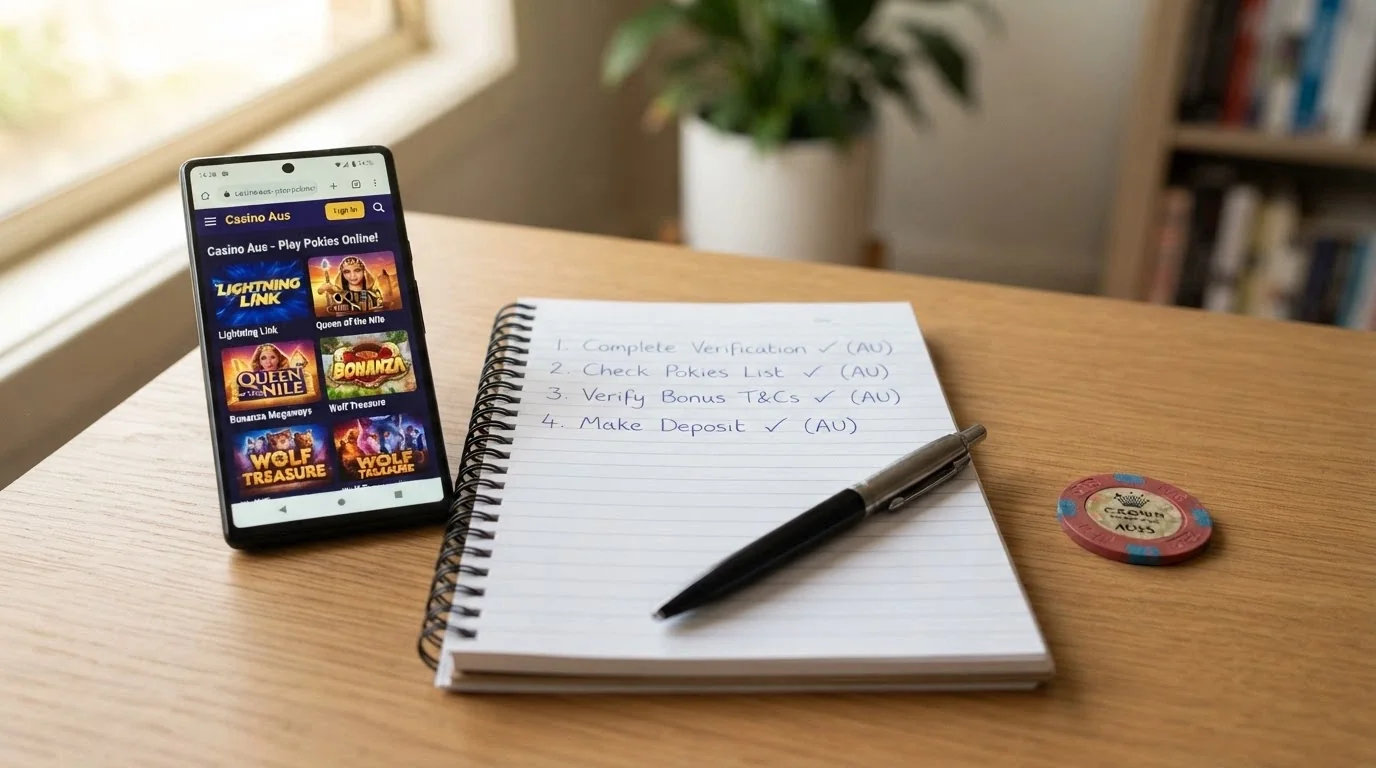
The bonus-versus-rakeback split is the clearest cut. BitStarz, Sky Crown, RocketPlay, Fair Go, Bizzo and Wild Fortune run deposit-match welcome bonuses with wagering multiples in the 30–45x band. Stake, Shuffle, Cloudbet and Thrill run rakeback and VIP models, with Cloudbet and Thrill offering zero wagering on their cash rewards. A player who plans to clear volume inside the validity window should pick from the bonus side; a player who plans to play across months should pick from the rakeback side.
The network-choice decision is settled. TRC-20 is the default for Australian players — fast, cheap, and supported by every featured operator. ERC-20 is the fallback when TRC-20 is unavailable. Sending the wrong network to the wrong address is the most common cause of a lost deposit, and a small test transaction first is the simplest safeguard.
The KYC comfort question is a player-specific decision. A player who is comfortable providing ID at withdrawal will find the offshore experience straightforward. A player who wants true no-KYC play is buying a feature that is narrowing as AML compliance tightens, and the bargain — privacy now, protection later — should be made with that trajectory in mind.
The cleanest single pre-deposit check is the licence verification. Every featured operator names a licence and a regulator. Cross-check the licence number on the regulator’s public register before funding the account, and reject any operator whose licence does not verify. That check costs five minutes and is the single highest-value vetting step on this page.
The Australian USDT casino landscape in 2026 is functional, fast, and almost entirely offshore. The player who reads the bonus terms, verifies the licence, picks the network carefully, and sets a deposit ceiling before the first session is the player who gets the upside of stablecoin gambling without the friction that makes the category risky. The arithmetic is not on the casino’s side, but the friction is lower than it has ever been, and the choice between bonus and rakeback is the choice that decides what the player’s USDT session looks like.
Frequently asked questions
Is it legal for Australians to play at online casinos with Tether (USDT)?
The Interactive Gambling Act 2001 prohibits Australian operators from offering online casino games, and no offshore casino on this page holds an Australian licence. The Act does not, however, criminalise Australian players for accessing offshore sites, and ACMA’s enforcement runs at the operator and payment-rail level. Players are not prosecuted; they are also not protected by Australian consumer law if a dispute arises with an offshore operator.
What is the difference between USDT TRC-20 and ERC-20 for casino deposits?
TRC-20 runs on the TRON blockchain and confirms in 30 to 60 seconds with fees typically under a dollar. ERC-20 runs on Ethereum and confirms in 3 to 5 minutes with higher fees during congested periods. For Australian players, TRC-20 is the default because it is faster and cheaper. The two networks use different address formats, and sending TRC-20 tokens to an Ethereum address results in lost funds with no recovery path.
Do Australian casinos offer specific bonuses for depositing with Tether?
The featured offshore operators do not segment their bonuses by deposit currency — the welcome package is the same whether the player deposits in USDT, BTC or fiat. The wagering multiple, free-spin count and validity window are uniform across deposit methods at each operator. What Tether offers over fiat is speed at the deposit and withdrawal layer, not a different bonus structure.
How fast are Tether withdrawals compared to bank transfers or Bitcoin?
TRC-20 USDT withdrawals confirm in 30 to 60 seconds once the casino approves the request. Bitcoin confirmations run 10 to 60 minutes depending on network congestion, and Ethereum sits in between. Bank transfers from offshore casinos run 1 to 5 business days and are subject to Australian bank blocks on gambling merchants. The casino-side approval time is the variable Wild Fortune’s tested 5h 24m average captures, and it is the figure a player should plan around rather than the word instant in marketing copy.
Do I need to complete KYC (ID verification) to play with USDT in Australia?
Most offshore USDT casinos allow deposits without identity verification, especially in the early sessions and at low volume. Verification typically triggers at the withdrawal side — either at a cumulative threshold or at a single-withdrawal size — and the casino will hold the withdrawal until ID is provided. A player who plans to cash out a meaningful win should expect verification, not assume it has been waived.
How do I convert AUD to USDT to play at an online casino?
The cleanest route runs AUD from an Australian bank account to a registered exchange such as CoinSpot or Independent Reserve, where the AUD is converted to USDT. The USDT is then sent on the TRC-20 network to the casino’s deposit address, which credits the balance, usually within the hour. The reverse chain — casino to USDT to AUD to bank — runs the same way at cashout. Each AUD-to-USDT and USDT-to-AUD conversion is a Capital Gains Tax event, and tracking cost bases across the conversions is the player’s responsibility.