Best Keno Online Casino Australia: The 2026 Guide
 Available in AU
Australia runs a peculiar split on keno. Licensed keno is everywhere, at the local TAB, the club down the road, the corner pub, and growing fast. Online keno at offshore casinos is also everywhere, in the way that things are everywhere when nothing official has stopped them. This page exists because the second of those two things is about to change. Parliament has already passed the ban. From 1 January 2027, online keno becomes a prohibited interactive gambling service in its own right, sitting alongside online casino and in-play betting on the wrong side of the Interactive Gambling Act 2001.
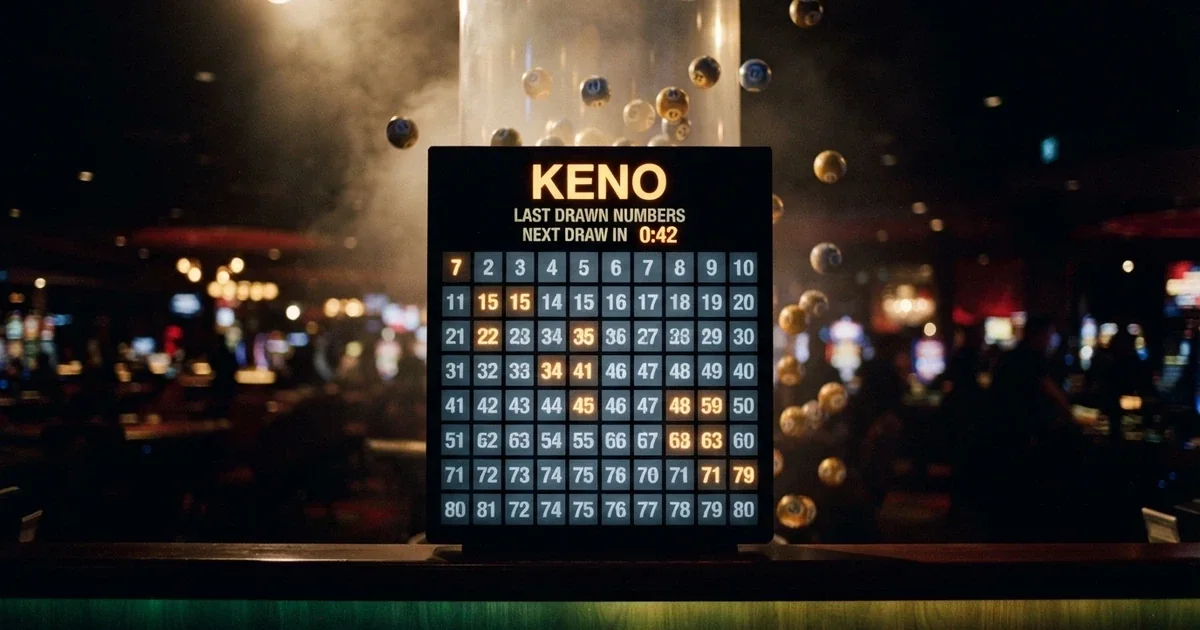
What follows ranks the offshore keno casinos Australians currently reach, lays out the bonus terms the marketing copy tends to gloss over, walks through the keno formats and slot variants on offer, and places the whole trade-off against the legal landscape that is closing in. There is no recommendation at the end. There are ten operators, ten sets of terms, and one framework for deciding whether the trade-off is worth it to you.
Data current as of 24 October 2026, verified against the ACMA register and the operators’ own published bonus terms.
Table of Contents
- Your 2026 Guide to Online Keno: What Australians Can Actually Play
- The Best Offshore Keno Casinos for Australian Players: 2026 Ranking
- Neospin
- Golden Crown
- SkyCrown
- Wild Tokyo
- RocketPlay
- Royal Reels
- FairGO Casino
- Stake
- WinSpirit
- Bizzo Casino
- How Online Keno Works (and Why the RTP Range Matters)
- Keno-Themed Slots and Pokies: Not the Same Game
- Free Keno: Practise Without Spending a Cent
- Crypto Keno Sites: Bitcoin Deposits and Australia’s Payment Ban
- Keno and the Law: The IGA, the 2026 Reform and Your Legal Position
- Staying Safe: The Tools That Protect Keno Players (and the Gaps)
- How We Evaluated These Keno Casinos
- Your Next Move: What Every Keno Player in Australia Needs to Know
- Frequently Asked Questions
Your 2026 Guide to Online Keno: What Australians Can Actually Play
What Australian Players Can Legally Access vs What They Actually Play
The first thing to be clear about is what the law permits. Under the Interactive Gambling Act 2001, online casino games, online pokies and in-play sports betting are prohibited to people in Australia. There is no licence for any of those products anywhere in the country, federally or in any state or territory. The federal statute targets the provider, not the punter, but the provider side is firmly closed. What is licensable, and what does operate under state and territory licences, is wagering on races and sport placed before the event begins, lotteries, and keno.
That is the licensed market. KenoGO, the newest of the licensed keno products, runs draws every three minutes with bets from $1 to $100, and The Lottery Corporation has reported 10 per cent annual keno growth since 2020 across its footprint. These are real products with regulated RTP, somewhere near 75 per cent on standard spots, around 80 per cent on the variant games like keno racing, heads-or-tails and keno roulette. They sit inside pubs and clubs, or behind the KenoGO app, and they answer to a state regulator.
The offshore market is something else. Curaçao-licensed casinos serve Australian players without an Australian licence, because none exists for them to hold. They configure their own RTP, typically between 94 and 99 per cent depending on the game, and they run keno titles alongside thousands of pokies, live dealer tables and the rest. They advertise in Australian dollars, accept Australian-friendly payment methods, and operate in a space where the ACMA has been issuing blocking requests to Australian ISPs since November 2019.
That gap is what this page evaluates. The offshore operators are the brands Australians actually reach when they search for keno online. They are also the brands the regulator is actively trying to remove from reach, with 1,564 sites blocked and counting. The 2026 reform makes the position explicit: from the start of the year after 2026, online keno is banned as a “pocket pokies” product, the rapid-draw, high-frequency, high-spend variant the statutory review described. Parliament passed the bill on 19 August 2026. The clock is running.
Mobile Keno: Playing on Your Phone
There is no Australian-licensed keno app to download from the App Store or Google Play. State and territory keno products are accessed through venue terminals, the KenoGO mobile experience, or a licensed wagering operator’s mobile site. Offshore casino apps do exist for the operators ranked below, but they are not available through Australian app stores, and an Australian punter who wants one is using a workaround that puts the operator squarely outside local rules.
What Australians actually use is the mobile browser. Every featured casino on this list runs a responsive site that loads keno, slots and live dealer tables on a phone screen without needing an install. The experience is serviceable. Pick your spots, tap a stake, watch the draw animate. The speed of the draw cycle is the appeal of online keno, and a phone in landscape mode does the job.
The browser route has practical limits. Browser-based play tends to consume more battery than a dedicated app, and deposit flows that rely on bank redirects or card autofill work less smoothly in a mobile browser than in a native app. None of those limitations are deal-breakers. They are the texture of how the offshore market meets Australian players in 2026.
The Bonus Landscape: What Welcome Offers Actually Cost You
The welcome offers across the operators below range from $1,000 at the modest end to $15,000 at the headline-grabbing end, with free spins attached running from 100 to 620. Read those figures as marketing copy and you would think you had stumbled on a small fortune. Read the fine print and the picture changes quickly.
Three terms do almost all of the work in shrinking a welcome bonus back to its real value: the wagering multiple, the maximum bet during wagering, and the contribution rate of the game you actually want to play. Most offers here carry a wagering requirement of 35× to 50× on the bonus amount, which means you need to wager the bonus many times over before any winnings can be withdrawn. The maximum bet during wagering, usually $5 to $10 per spin or hand, keeps you from clearing the requirement in one big punt. And the contribution rate tells you how much of each dollar you wager on keno actually counts toward that requirement: at Royal Reels, keno contributes only 25 per cent to the wagering target, which quadruples the effective volume you need to put through.
Take Neospin, which carries the biggest headline on this list at 300 per cent up to AU$11,000 plus 300 free spins at 40× wagering. Work the numbers honestly. A player who claims the full $11,000 bonus has to wager $440,000 before any winnings become withdrawable. On a keno title running at 98.08 per cent RTP, that $440,000 in turnover carries an expected loss of $440,000 multiplied by the 1.92 per cent house edge, which is $8,448. That figure is the cost of clearing the bonus under reasonable assumptions, not the cost of playing, but the cost the bonus itself extracts on top of whatever entertainment value the keno provides.
That expected loss is a statistical average across thousands of spins, not a guarantee for any individual session. Some sessions cost more, some less, some will end ahead. The point is that $8,448 is roughly what the bonus costs the average player over the volume the wagering requires. Free-spin caps cut the other direction: at Neospin, free-spin winnings cap at $225, so the 300 spins can never pay out more than that regardless of how they land. A player who views the welcome bonus as a way to win big has already misread the offer.
This is the arithmetic the marketing pages leave out. The headline figure is the maximum deposit match. The wagering multiplier, the game contribution, the max bet, the spin cap, and the validity window are the terms that turn it into something smaller. Read them all before the deposit button.
The Best Offshore Keno Casinos for Australian Players: 2026 Ranking
Ten offshore brands sit below, ranked by keno library depth and bonus size. Every one of them is offering a product that is prohibited to provide to Australians under the Interactive Gambling Act 2001, and that becomes explicitly banned from the start of the year after 2026. None holds an Australian licence, because none exists. The Curaçao Gaming Authority does not publish per-brand licence dates on a public register in the manner of the UK Gambling Commission or the Malta Gaming Authority, and brand-specific licence numbers were not surfaced from the regulator’s own records in this run. Where a licence is listed below, it comes from the operator’s own disclosure and the affiliate review pages that aggregate them.
| Operator | Licence | Welcome Bonus | Free Spins | Wagering | Max Bet |
|---|---|---|---|---|---|
| Neospin | Curaçao Gaming Authority | 300% up to AU$11,000 | 300 | 40× | AU$7.50 |
| Golden Crown | Curaçao Gaming Authority | 100% up to AU$15,000 | 300 | 40× | AU$5 |
| SkyCrown | Curaçao Gaming Authority | 4-tier package up to AU$8,000 | 400 | 40× | AU$5 |
| Wild Tokyo | Curaçao Gaming Authority | Up to AU$5,300 (high-roller route) | 620 | 50× | AU$8 |
| RocketPlay | Curaçao Gaming Authority | 100% up to AU$1,000 + 100 FS (first deposit) | 100 | 40× | AU$7.50 |
| Royal Reels | Not specified | 200% up to AU$2,000 | 100 | 35× | AU$5 |
| FairGO Casino | Curaçao Gaming Authority | 100% up to AU$200 × 5 deposits | — | 30× | AU$10 |
| Stake | Curaçao Gaming Authority | — | — | — | — |
| WinSpirit | Not specified | — | — | — | — |
| Bizzo Casino | Curaçao Gaming Authority | — | — | — | — |
The cells across Stake, WinSpirit and Bizzo carry an em dash because this run did not surface those terms from the operators’ own pages or from affiliate review data current to 2026. Treat any bonus figure you find on those sites as something to verify yourself before depositing, and treat the licence line as a “verify on site” rather than a confirmed attribution. The gap is the point of the em dash, not a placeholder for laziness.
Neospin
Neospin leads the ranking on the strength of its keno library: 14 formats covering Classic, Super, Turbo and Video variants, with featured titles including Book of Keno, Keno 10 (a one-minute draw cycle) and Across the Universe Keno. The welcome offer runs a 300 per cent deposit match up to AU$11,000 plus 300 free spins, with a 40× wagering requirement on the bonus and a maximum bet of AU$7.50 during wagering. Minimum deposit is AU$30. The Curaçao licence is disclosed on the operator’s footer and aggregated by the affiliate pages, though a per-brand licence number was not located on the regulator’s own register.
The arithmetic on the welcome bonus is the same arithmetic that applies to most large offers on this list. A player claiming the full $11,000 faces $440,000 in required turnover before withdrawal. Keno’s high RTP, typically above 98 per cent on the featured titles, keeps the expected loss small relative to turnover (around $8,448 if the player stays on Keno — The Originals at 98.08 per cent RTP), but the volume required is still very large. Free-spin winnings cap at $225, which puts a hard ceiling on what the 300 spins can return even if they land well. Validity period was not surfaced in this run’s sources.
Neospin suits a player who wants the broadest possible keno format selection at a single offshore casino and is willing to clear a heavy wagering requirement to extract value from a large headline bonus. Players who prioritise small, frequent sessions over clearing big bonus amounts should look lower on this list.
Golden Crown
Golden Crown’s headline is the largest single-deposit ceiling among the featured operators: 100 per cent up to AU$15,000 with 300 free spins attached, at 40× wagering. The keno library runs to nine formats across Classic and Super variants, with featured titles including Magic Keno, Amaterasu Keno and Keno Goldencrown. Maximum bet during wagering sits at AU$5 by default, and the bonus validity is seven days, which is tight for a 40× requirement. The Curaçao licence disclosure follows the same pattern as the rest of the ranking — confirmed via operator and affiliate sources, not from a regulator-side register lookup.
A player who hits the full $15,000 match needs to wager $600,000 to clear. At a keno RTP of 98.08 per cent, that produces an expected loss of $11,520, meaningful in absolute terms but still a small percentage of the turnover itself. The seven-day window is the harder constraint than the wagering multiple. Forty times a bonus this size is going to take significant session time even at fast draw speeds, and seven days is not a lot of runway if life intervenes. The free-spin cap was not surfaced in this run.
Golden Crown is the right pick for a high-deposit player who can move volume through keno in a tight window and wants the largest possible single-deposit match. The seven-day expiry makes it the wrong pick for anyone who plays casually.
SkyCrown
SkyCrown splits the welcome offer across four deposits rather than front-loading it, with a cumulative cap of AU$8,000 plus 400 free spins. Minimum deposits step up across tiers, AU$30 on the first deposit and AU$50 by the fourth, and wagering is set at 40× on the bonus. Maximum cashout from bonus funds sits at AU$5,000 per tier, capping at AU$20,000 cumulatively across all four tiers. Free-spin winnings are capped at AU$300 per part. Maximum bet during wagering is AU$5. The full casino library runs to more than 7,000 games with 75-plus live dealer tables, and the Curaçao licence is the standard offshore disclosure.
SkyCrown’s structure suits a player who would rather spread a welcome package across multiple deposits than commit one large sum up front. The per-tier cashout cap is the most distinctive term. Even if a player clears the wagering on tier one and lands a large win, the most they can withdraw from that tier is $5,000. A player planning a single big deposit session will find Wild Tokyo or Neospin a better fit; a player planning to deposit across four sessions and pace their play will find SkyCrown’s tiered structure a reasonable compromise.
Wild Tokyo
Wild Tokyo carries the deepest keno library in the ranking at 23 formats, spanning Classic, Bingo, Super, Express and Bonus variants. Featured titles include Keno Bingo, Keno Express and Dragon Power Keno. The welcome package splits into two routes: a standard path up to AU$3,300 plus 450 free spins, and a high-roller route up to AU$5,300 plus 620 free spins for deposits starting at AU$500. Wagering runs at 50×, the steepest multiple on this list, and the bonus comes with a 5-day clearance window and a 48-hour activation deadline. Maximum bet during wagering is AU$8, the highest on this list. Bonus cashout is capped at 10× the deposit amount, and free-spin winnings cap at AU$170.
The high-roller route produces the largest total package in the ranking, but the 50× wagering and 5-day clearance window make it a demanding offer to clear. A player who deposits AU$500 to claim the high-roller bonus (AU$1,300) faces AU$65,000 in required turnover on the bonus alone.
Wild Tokyo is the right operator for a player who values keno format depth above wagering terms and is willing to work under a tight clearance window. Players who want a longer runway and a lower multiplier should look at FairGO or RocketPlay.
RocketPlay
RocketPlay keeps the welcome structure simple: 100 per cent up to AU$1,000 on the first deposit with 100 free spins on Aztec Magic by BGaming, and a second-deposit bonus of 100 per cent up to AU$1,000. Wagering is 40× on the bonus, maximum bet during wagering is AU$7.50, and the bonus validity window is 5 days. Maximum withdrawal from bonus funds is AU$5,000, and free-spin winnings cap at AU$300. Minimum deposits are AU$30 on the first bonus and AU$75 on the second. The Curaçao licence disclosure follows the standard offshore pattern.
RocketPlay’s offer is the cleanest small-stakes welcome on this list. One bonus per deposit, no tiered complexity, a single free-spin game. A player claiming both deposits faces $40,000 in bonus turnover ($20,000 × 40× across both deposits if matched in full), heavy in absolute terms but spread across two separate cycles, each with its own 5-day window. The 5-day clearance windows on each deposit make it workable for a player who can dedicate several sessions within a week to clearing each bonus.
RocketPlay suits a player who prefers a small, transparent welcome package over a large headline number and can pace their play across two 5-day windows. Players chasing the largest possible headline bonus should look elsewhere.
Royal Reels
Royal Reels offers a 200 per cent match up to AU$2,000 plus 100 free spins on the welcome deposit, with 35× wagering on deposit bonuses and 40× wagering on the AU$10 no-deposit bonus. Maximum bet during wagering is AU$5 per spin. Keno contributes only 25 per cent to wagering requirements, the lowest contribution rate on this list, which effectively quadruples the volume a keno player needs to put through to clear the bonus. Validity runs from 7 to 30 days depending on the specific offer. Licence status was not confirmed in this run’s sources.
The 25 per cent keno contribution is the load-bearing detail. A player who deposits to chase the 200 per cent match and then plays keno to clear it needs to put four times the bonus amount through, because only one in four wagered dollars counts. On a $2,000 bonus, that means $280,000 in keno turnover rather than $70,000. The contribution rate is disclosed in the operator’s bonus terms, but it is the kind of detail that gets missed by players scanning for the headline number.
Royal Reels is the wrong fit for a keno-first player. A punter who is happy to clear wagering on pokies or table games at full contribution will find the 35× multiple competitive; a keno player will find the effective volume punishing.
FairGO Casino
FairGO carries the lightest wagering requirement on this list: 30× on deposit plus bonus across five welcome deposits, each offering 100 per cent up to AU$200, for a total of AU$1,000. Keno is an eligible game at full contribution. Minimum deposit is AU$20, maximum bet during wagering is AU$10, and there is no maximum cashout cap on deposit bonuses, a notable departure from the cashout caps most other operators impose. The Curaçao licence confirms via the operator and affiliate sources.
The arithmetic here is more favourable than any other operator on this list. A player who claims the full $1,000 across all five deposits and clears the 30× wagering faces $60,000 in required turnover, small relative to Neospin’s $440,000 or Golden Crown’s $600,000. Even at a keno RTP of 98 per cent, the expected loss on $60,000 in turnover is around $1,200. The absence of a maximum cashout cap is the second differentiator: at FairGO, what a player wins after clearing the wagering is what they withdraw, with no per-tier or per-bonus ceiling in the way.
FairGO suits a player who wants the smallest possible bonus cost and a long-term relationship with a single offshore operator. The five-deposit structure means the player needs to commit to returning across multiple deposits, which is the right shape for someone who plans to play keno regularly rather than clear one bonus and move on.
Stake
Stake is the only fully crypto-native operator in this ranking. Bitcoin, Ethereum and other digital currencies are the primary deposit and withdrawal route, and the operator’s game library includes keno titles such as Amaterasu Keno alongside a much larger catalogue of slots, table games and live dealer content. The Curaçao licence is the standard offshore disclosure. Welcome bonus terms were not surfaced in this run’s sources and vary by promotion, so verify the current offer directly on Stake’s site before depositing.
The crypto context matters more than usual for an Australian player. Credit cards, credit-related products and digital currency have been banned as payment for online wagering since 11 June 2024, with penalties of up to $247,500 for non-compliance. That ban targets licensed Australian wagering operators and the payment providers serving them; it does not prohibit an individual Australian from sending crypto to an offshore casino. What it does signal is that the receiving operator is operating outside Australian rules, which means no BetStop coverage, no Australian consumer recourse, and the standard offshore risk profile.
Stake is the right fit for a crypto-comfortable Australian player who already holds Bitcoin or another supported currency and accepts the offshore risk profile. Players who want to deposit in Australian dollars via debit card or bank transfer will find the experience less direct.
WinSpirit
WinSpirit carries keno in its game library and offers the standard offshore casino product set. Licence status was not confirmed in this run’s sources, and the welcome bonus terms were not surfaced from either the operator’s site or the affiliate review pages. What this entry tells you is that keno is available and that the brand is reachable from Australia; what it cannot tell you is the bonus size, the wagering multiple, the max bet, or the validity window.
A player considering WinSpirit should verify all bonus terms on the operator’s site before depositing, particularly the wagering requirement, the game contribution rate for keno, and the maximum cashout from bonus funds. The lack of surfaced data in this evaluation is not a recommendation against the operator. It is a gap that the player needs to close themselves.
Bizzo Casino
Bizzo holds a Curaçao Gaming Authority licence per operator and affiliate disclosure, and keno titles appear in its library. Welcome bonus terms were not surfaced in this run’s sources. The standard offshore product set applies: slots, table games, live dealer content and a keno selection behind a Curaçao-licensed platform. As with WinSpirit, any player considering Bizzo should verify the current welcome offer and the bonus terms directly on the operator’s site before committing a deposit.
How Online Keno Works (and Why the RTP Range Matters)
Keno is a number-draw game. Eighty balls sit in a virtual hopper, twenty are drawn at random, and the player wins according to how many of their chosen spots, the numbers they selected before the draw, match the drawn numbers. The format is older than most casino games Australians play online, and the digital version inherits the licensed venue product almost unchanged. What changes between formats is mostly the pace and the visual presentation.
The RTP figures attached to keno vary more than for almost any other casino game. Licensed Australian keno at state and territory operators runs at about 75 per cent return to player across spot types from 1 through 10, 15, 20 and 40, meaning the house edge is roughly 25 per cent on every dollar wagered. The variant games that ride alongside it (keno racing, heads-or-tails, keno roulette) return closer to 80 per cent. Offshore online keno at the operators ranked above runs materially higher: most featured keno titles sit between 94 and 99 per cent RTP, with the operator able to configure the rate within that range. The trade-off for the higher RTP is the regulatory status. The offshore operator answers to no Australian regulator, and the player gets no BetStop coverage, no dispute resolution, and no recourse if the operator declines a withdrawal.
The difference matters. A player wagering $1,000 on licensed Australian keno at 75 per cent RTP has an expected loss of $250. The same $1,000 wagered on an offshore keno title at 98 per cent RTP carries an expected loss of $20. The arithmetic is simple, and the protection the licensed product offers (state regulation, problem-gambling tools, a venue to complain to) is what the $230 difference buys.
Classic, Super, Turbo, Video: The Keno Formats You Will Actually See
Four labels cover most of what an offshore casino puts under the keno tab. Classic keno runs a slower draw cycle, typically a few minutes between draws, and presents the standard 80-number grid with 20 drawn numbers per round. Super keno compresses the cycle and usually adds side bets or bonus payouts for hitting certain patterns. Turbo keno drops the cycle to seconds, sometimes under thirty, and is the format the 2026 reform specifically targets as “pocket pokies”: rapid-draw, high-spend, high-frequency product. Video keno is the animated, single-player version, RNG-driven, no shared draw cycle, the player triggers each round at their own pace.
Most offshore operators offer several of these under different branding. Wild Tokyo’s 23 keno types span all four. Neospin’s 14 formats include Classic, Super, Turbo and Video. Golden Crown’s 9 formats concentrate on Classic and Super. The format you choose changes the rhythm of the session more than the underlying mathematics, though Turbo’s compressed cycle is the one that gets players spending A$1,000 every three minutes, which is the spend pattern the reform is designed to interrupt.
How to Play Keno Online: Rules, Spots and Payouts
The rules are simple. Pick between 1 and 40 numbers from the 80-ball grid (most operators cap at 10 for the standard payout table, with 15, 20 and 40-spot variants as bonus options). Set a stake per draw. Watch the draw. Payouts scale with how many of your selected numbers match the drawn numbers and with how many numbers you selected in the first place.
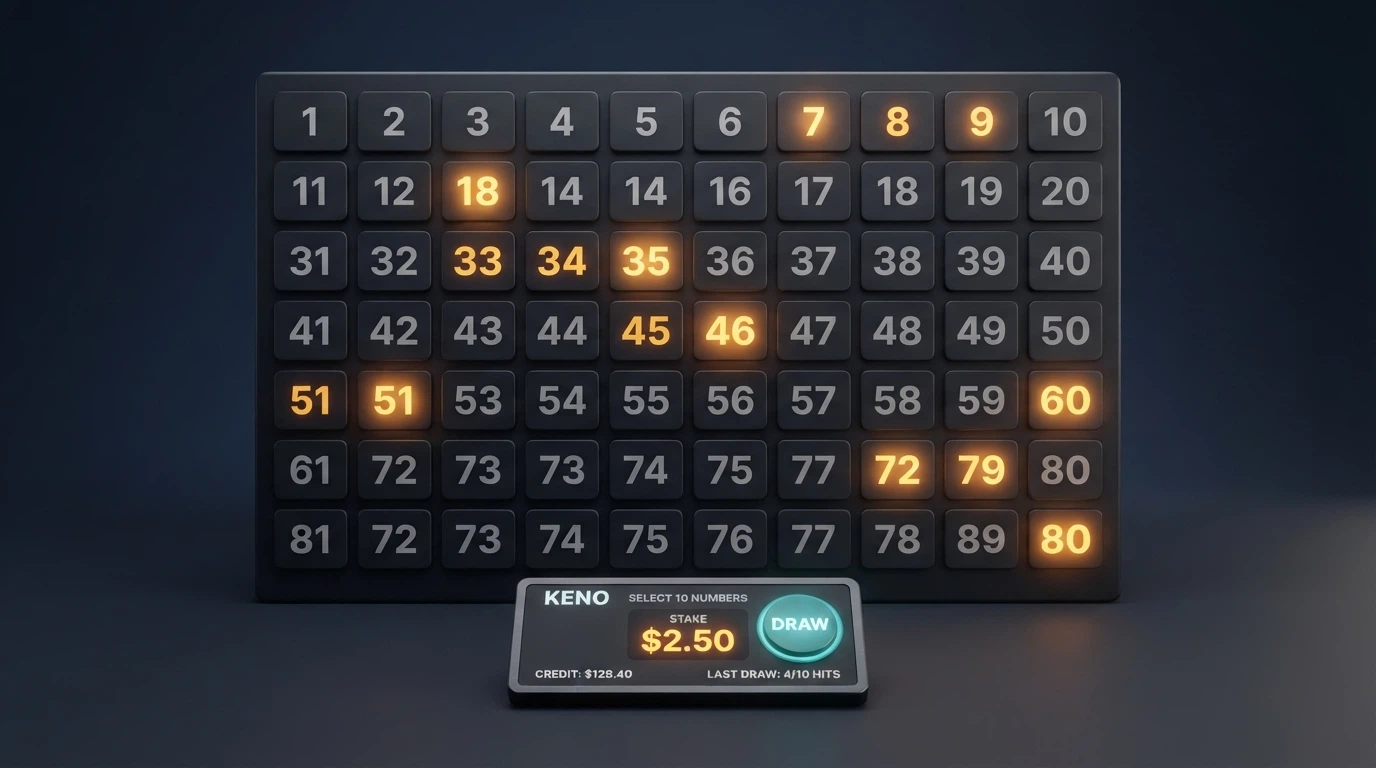
The catch probability collapses fast as the spot count rises. A 4-spot catch, hitting all four of your numbers, occurs once in 326 games on average. A 6-spot catch happens once in 7,753. An 8-spot catch is roughly once in 230,115 games. The payout tables reflect that: more spots means rarer hits and larger payouts when they land. Fewer spots means more frequent small wins. Most recreational keno players sit in the 4-to-10 spot range, where wins are common enough to keep the session interesting and rare enough to make each one meaningful.
QuickPick auto-selects numbers for players who do not want to choose. Multi-card play lets a player run the same spot pattern across multiple cards with different numbers, which spreads variance without changing the underlying RTP. Neither feature shifts the house edge. They are convenience tools, not advantage tools.
Keno Strategy: What the Odds Actually Allow
No betting system beats a 25 per cent house edge. Progressive betting, pattern systems, hot and cold number tracking — none of it changes the long-run expected return on a keno title. What the player can control is the spot count, the session length, and the bankroll discipline around both.
The spot count choice is the lever that matters. Fewer spots mean more frequent wins, smaller payouts, and a session that feels busy. More spots mean rarer wins, larger payouts, and a session that is mostly waiting. The RTP does not change meaningfully across spot counts on most keno titles. The operator balances the payouts to deliver roughly the same house edge regardless, so the choice is about session texture, not about mathematical edge.
Bankroll discipline matters because the RTP numbers are long-run averages. A player wagering $5 per draw on a 6-spot game with 75 per cent RTP has an expected loss of $1.25 per draw, but a short session can produce a win or a loss far from that average. The longer the session, the closer the actual result tends toward the expected loss; the shorter the session, the more variance dominates. Offshore keno at 94 to 99 per cent RTP compresses the long-run loss dramatically, but the variance is the same shape, and a player on a short bankroll can lose the full stake on a cold streak regardless of the RTP.
Live Keno: Real Dealers, Real Draws, Real Time
Live keno streams a physical ball draw from a studio, with a human dealer operating a transparent ball machine in front of the camera. The player picks spots and places stakes through the casino interface; the draw happens in real time on screen. It is the closest online equivalent to a venue keno terminal and the slowest of the keno formats by design. Each draw takes several minutes from bet placement to result.

Live keno is available at most of the featured offshore operators, though specific live-table counts per operator were not surfaced in this run’s sources. The format suits a player who enjoys the visual texture of a physical draw and does not mind a slower session pace. The pace is also the format’s main limitation. A player who wants to clear a wagering requirement on Turbo keno will finish far faster on the rapid-draw version than on a live stream.
Keno-Themed Slots and Pokies: Not the Same Game
Keno slots and pokies are not keno. They are slot machines with keno-themed visuals — an 80-number grid somewhere in the artwork, a draw animation, sometimes a “spot selection” mechanic layered on top of the standard reel-spinning engine. Underneath the theme, they are RNG-driven slot games with their own RTP, volatility and max win, and they pay out according to the slot’s paytable rather than a keno payout table.
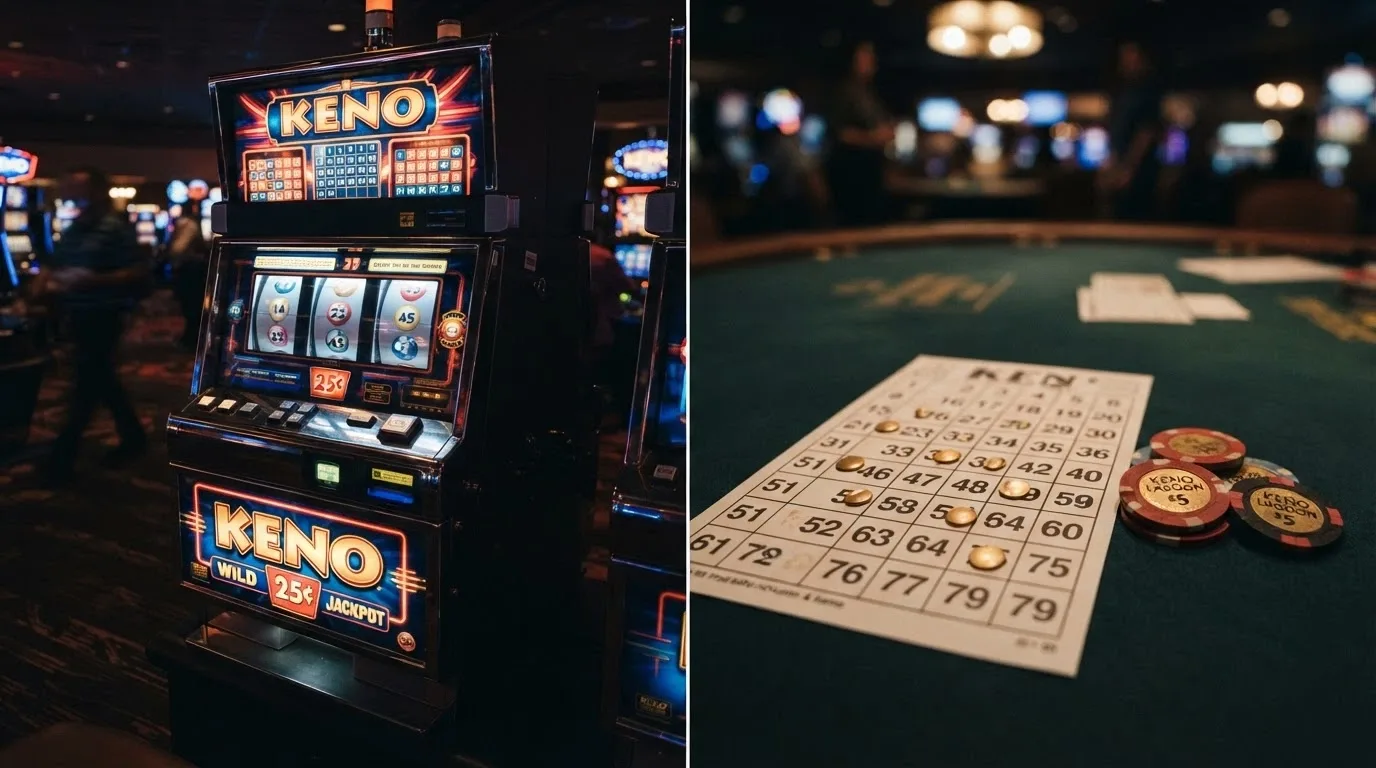
The distinction matters because players searching for “keno” land on these titles and assume they are getting the real game. They are not. Keno slots run on slot mathematics; the RTP figures are comparable to other online slots; and the gameplay is spinning reels with a keno veneer rather than picking numbers and watching a draw.
The Best Keno Slot Titles and Their RTPs
Twelve keno-themed slot titles came out of the research with enough data to populate a table. The RTP figures range from 87.5 per cent at the low end (operator-configurable on Galaxsys titles) to 98.18 per cent at the high end (Burning Keno by Amusnet). The top three by RTP are worth knowing by name, because they return close to the offshore live-keno range while running on slot mathematics.
| Title | Provider | RTP | Volatility | Max Win |
|---|---|---|---|---|
| Burning Keno | Amusnet | 98.18% | Low | 1,000× |
| Keno — The Originals | Coin Machine Gaming | n/a | n/a | 1,000× |
| Book of Keno | Evoplay | 97.01% | — | 10,000× |
| Keno 100000 | LK7 | 96.05% | Medium | 100,000× |
| Amaterasu Keno | Mascot Gaming | 95.5% | — | 100,000× |
| Dragon Power Keno | Atomic Slot Lab | 95.5% | Medium | 20,000× |
| Cleopatra Keno | IGT | 95.25% | — | 10,000× |
| Jungle Keno | Caleta Gaming | 94.87% | High | 60,000× |
| Lucky Bonus Draw Keno | Pixiu Gaming | 94.34% | Medium | 80,000× |
| Keno | Lightning Box | 94% | Medium | 2,500× |
| KENO X | Tank Gaming | 94% | High | 10,000× |
| Galaxsys Keno | Galaxsys | 87.5–99.6% | — | 10,000× |
The table sorts by RTP, and the spread is wide. Burning Keno and Keno — The Originals both return more than 98 per cent, putting them in the same range as the offshore live keno titles. Cleopatra Keno and Dragon Power Keno sit in the mid-95s, which is solid slot territory. Galaxsys Keno is operator-configurable across a range so wide that the RTP column is a range rather than a single figure. A player should check the specific RTP at the casino they are playing at, because the same game can return 87.5 per cent or 99.6 per cent depending on configuration.
Volatility cells left empty for several titles reflect data the research did not surface for those specific games. A blank volatility cell is not a high-volatility or low-volatility claim; it is a gap the player closes by checking the game’s information panel on the casino site or the provider’s own page.
Keno Pokies: What Aussies Are Really Playing
Australian English uses “pokies” for slot machines, and the term has spread from the venue floor to the offshore casino lobby. Keno pokies is what an Australian punter calls a keno-themed slot at an offshore casino — the same product as keno slots, with the local vocabulary applied. The game underneath is still a slot machine: RNG reels, a paytable, scatter symbols and free spin features. The keno theme is decorative.
For an Australian player comparing real keno against keno pokies, the comparison looks like this. Real offshore keno at 94 to 99 per cent RTP, with low-to-medium variance and slow-to-rapid draw pace depending on the format. Keno pokies at 87 to 98 per cent RTP depending on the specific title, with medium-to-high variance and slot-style gameplay. The RTP ranges overlap, but the volatility is different. Real keno pays small amounts frequently; keno pokies concentrate payouts into larger bonus features that land less often. A player who enjoys the rhythm of picking numbers and watching a draw should stick with real keno. A player who enjoys the slot format and treats the keno theme as window dressing will prefer the pokies.
Free Keno: Practise Without Spending a Cent
Demo mode is the standard entry point for keno at offshore casinos, and every featured operator on this list runs it. A player loads the keno title, the casino loads a play-money balance, and the game runs exactly as it would in real-money mode: same RTP configuration, same draw cycle, same payout table. The only differences are the absence of real-money risk and the absence of real-money withdrawal.
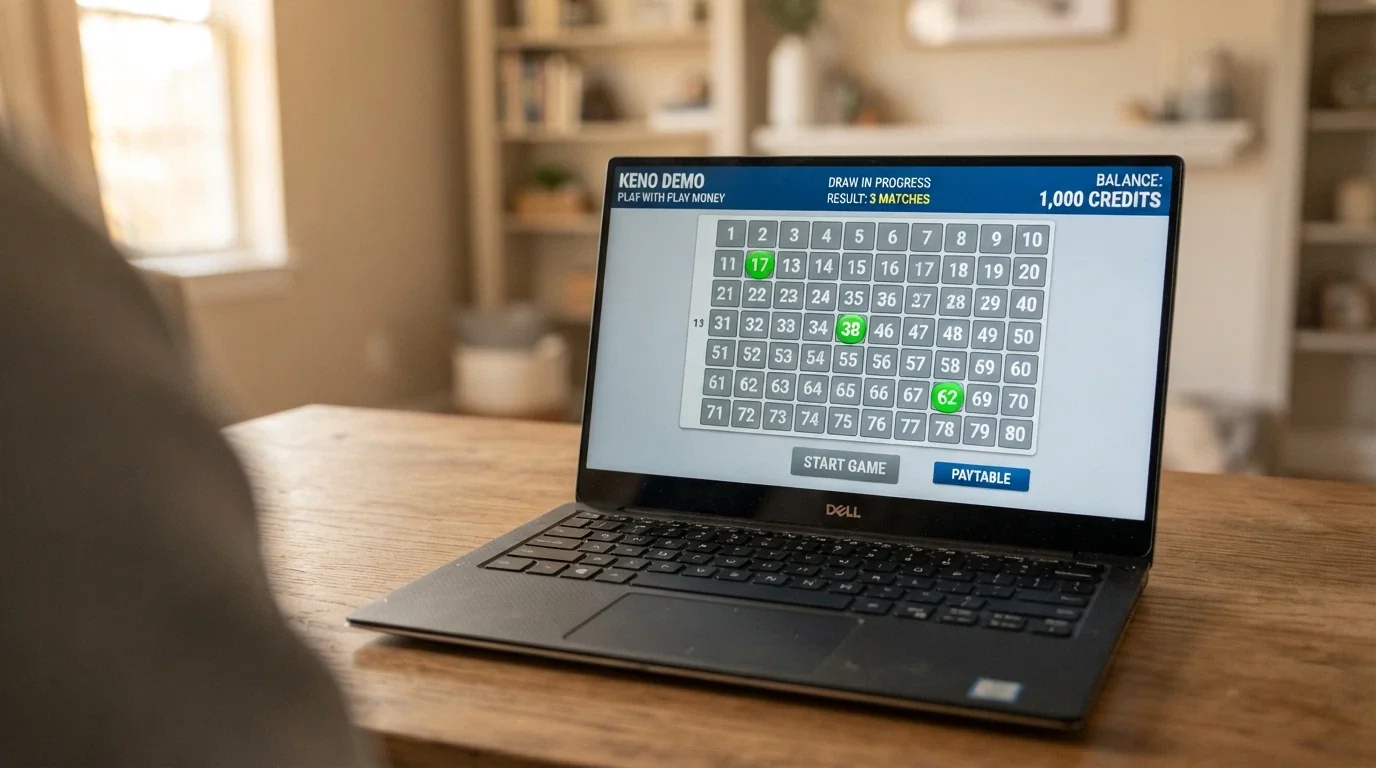
What demo mode teaches is the game mechanics: how the spot selection works, how the payout table scales with spot count, what a Turbo draw cycle looks like at speed, how a live keno stream flows. What it does not teach is bankroll discipline, session control, or anything about the casino’s bonus terms. A player who learns the game in demo and then plays real money is still subject to the wagering requirements, the max bet caps, and the validity windows the moment a welcome bonus is claimed.
Where to Play Free Keno Without Registering
Several featured operators offer no-registration demo access. Load the site, click the keno game, the play-money balance appears without an account. Others require registration before demo play unlocks, which means an email address and a password at minimum, and often a phone number before any game loads.
The trade-off is straightforward. No-registration demo gives instant access with no commitment, but the casino’s full keno library may not be available without an account. Registration-required demo unlocks the full library but asks for personal information before the player has decided whether they want to spend time on the site. A player who is comparing operators should try the no-registration demo route first; a player who has already chosen an operator and wants the full catalogue should accept the registration step.
Free keno is also available outside the casino sites — game-provider demos on developer pages, social casino apps that run keno on a play-money model, and review sites that embed keno games for visitors. None of these routes involve real money, and none of them replicate the casino’s bonus terms or real-money RTP configuration.
Crypto Keno Sites: Bitcoin Deposits and Australia’s Payment Ban
Credit cards, credit-related products and digital currency have been banned as payment for online wagering in Australia since 11 June 2024. The ban sits inside the Interactive Gambling Amendment (Credit and Other Measures) Act 2023, and penalties for non-compliance reach $247,500. The intent is to interrupt the flow of funds to offshore wagering operators by closing the payment routes through licensed Australian banks and payment providers.
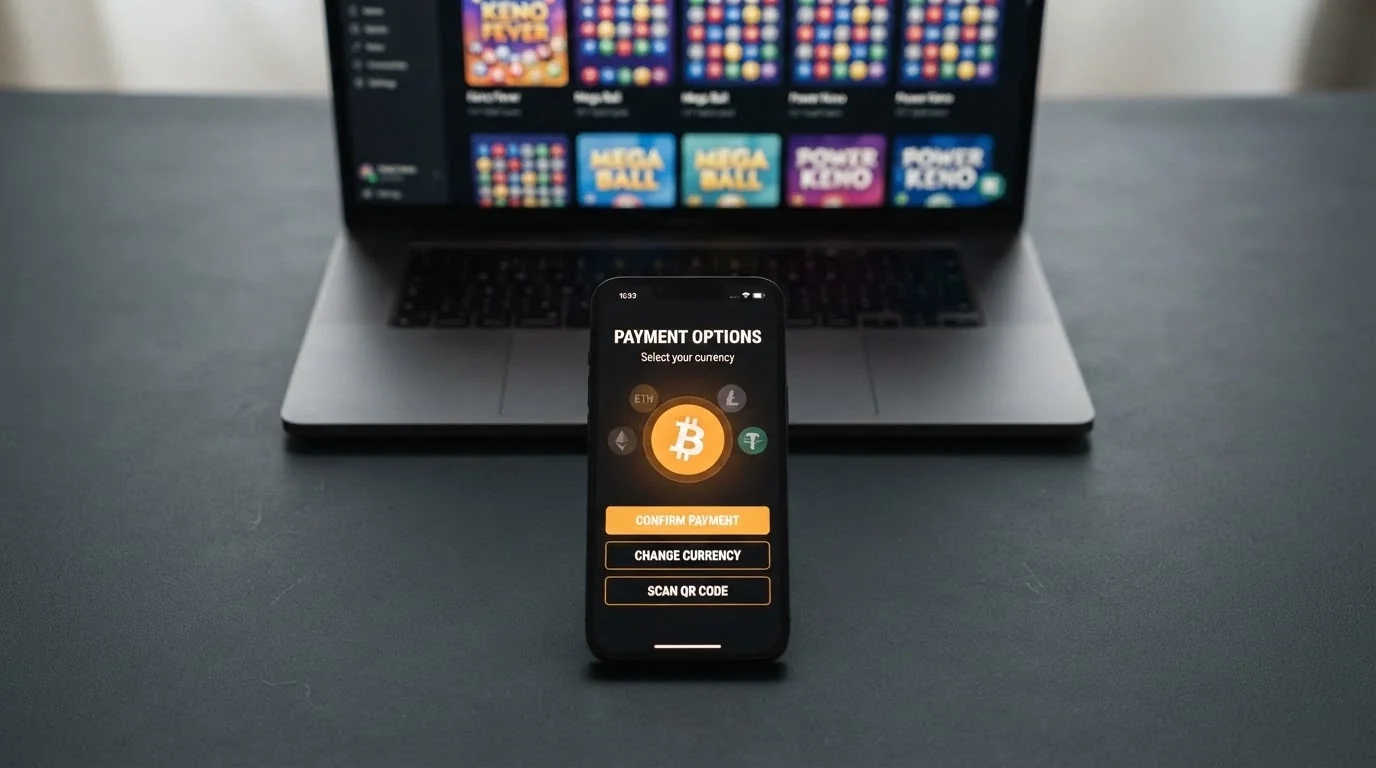
The ban targets licensed operators and the payment ecosystem that serves them. An individual Australian sending Bitcoin to an offshore casino wallet is not committing an offence under the statute; the offence is on the Australian-licensed side of the payment flow. What the ban signals to a player is that the offshore operator is operating outside Australian rules, which compounds the existing offshore risk profile: no BetStop coverage, no Australian dispute resolution, no guarantee of withdrawal.
From 1 January 2027, the 2026 reform layers additional mechanism on top of the existing ban: banks and payment providers gain express authority to block transactions to illegal gambling operators. That authority is aimed at licensed providers and the payment rails they use, but it is also the regulatory direction of travel, and crypto-using Australian players at offshore sites should expect compliance attention to tighten over time.
Which Featured Casinos Accept Bitcoin for Keno
Stake is the only fully crypto-native operator in this ranking. Bitcoin, Ethereum, Litecoin and other supported cryptocurrencies are the primary deposit and withdrawal route, and the operator’s game library includes keno titles alongside slots, table games and live dealer content. The other nine operators on this list may accept crypto at some deposits — the research did not surface definitive crypto-acceptance data for each — but Stake is the operator built around it.
A player who holds Bitcoin and wants to play keno at an offshore casino faces the standard offshore risk profile with crypto-specific complications. Crypto deposits are typically irreversible, which means a mistaken transfer cannot be recalled by a bank. Crypto withdrawals are faster than bank transfers but expose the player to crypto price volatility between deposit and withdrawal. The offshore operator’s crypto wallet address should be verified through the operator’s own official site rather than through a link in an email or social media message.
Keno and the Law: The IGA, the 2026 Reform and Your Legal Position
The Interactive Gambling Act 2001 prohibits the provision of online casino games, online pokies and in-play betting to people in Australia. There is no federal or state licence for online casino in Australia, and there has never been one. The statute targets the provider, not the individual player. No Australian has been prosecuted for gambling on an offshore site, but the absence of a licensed alternative is the structural reason every operator on this list is offshore.

What the IGA does permit is wagering on races and sport placed before the event begins, lotteries, and keno, through operators licensed by a state or territory. Keno at the local TAB, KenoGO’s online product, The Lottery Corporation’s keno offering — all licensed, all regulated, all answerable to a state regulator. The distinction between these products and the offshore online keno on this page is what the next sections make explicit.
The Two Keno Worlds: What a State Licence Actually Guarantees
A state-licensed keno product — KenoGO, The Lottery Corporation keno, the TAB venues — runs under a regulator’s oversight, with stated RTP, consumer protections, dispute resolution pathways, and integration with the responsible-gambling infrastructure Australia has built. RTP runs at about 75 per cent on standard spots and around 80 per cent on variant games. The house edge is roughly 25 per cent. The product is the same keno Australians have been playing in venues for decades, and the regulatory architecture around it is mature.
Offshore online keno runs on different terms. The operator sets its own RTP, typically between 94 and 99 per cent, with the configuration sometimes adjustable per game. There is no Australian regulator overseeing the product, no Australian dispute resolution body, no requirement that the operator honour a withdrawal request, and no obligation to integrate with BetStop or the National Gambling Helpline. If the operator declines a withdrawal, the player has no Australian recourse. If the operator’s site is blocked by an ISP at the ACMA’s direction, the player’s session and any balance held with the operator become difficult to access. If the player wants to self-exclude, BetStop does not reach the offshore site.
The player-protection gap is the difference the offshore market asks the player to accept in exchange for the higher RTP and the larger bonus packages. The Lottery Corporation reported 10 per cent annual keno growth since 2020, which suggests Australians are playing more licensed keno. The offshore market continues to draw a different audience with a different value proposition.
The 2026 Reform: Online Keno Banned from the Start of the Year After 2026
Parliament passed the Interactive Gambling Amendment (Gambling Reform) Bill 2026 on 19 August 2026. The measures commence 1 January 2027. The reform sits alongside the existing IGA prohibition rather than replacing it: online casino remains prohibited, in-play betting remains prohibited, and online keno joins the prohibited list as of the start date.
The reform targets online keno specifically because of the product’s structure. Online keno runs rapid-draw cycles with spend limits as high as A$1,000 every three minutes. Parliament’s characterisation of the product, drawn from a statutory review, identifies it as a “highly repetitive, rapid play gambling product, with high spend limits and high frequency draws”. The reform explicitly bans this product — colloquially labelled “pocket pokies” — alongside the broader package.
The wider reform package adds several layers beyond the keno ban. Banks and payment providers gain express authority to block transactions to illegal gambling operators from 1 January 2027, closing off the Australian-licensed side of the payment ecosystem that currently serves offshore sites. Direct marketing of inducements is prohibited for 14 days after a customer signs up, for three months after a person deregisters from BetStop, and indefinitely for customers identified as at risk of gambling-related harm. The AdStop national wagering advertising opt-out register goes live, funded by a cost-recovery levy on wagering companies. Wagering advertising is capped at three ads per hour between 6:00 am and 8:30 pm, with a live-sport blackout from 15 minutes before until five minutes after live events. Athletes, celebrities and influencers are barred from promoting wagering products.
The keno ban is the headline for this page. The reform’s passage means every operator on this ranking is operating in a window that closes at the start of the year after 2026. Whether the offshore market continues to serve Australian players after that date, and through what channels, is the open question the reform leaves unresolved.
ACMA Enforcement: 1,564 Sites Blocked and Counting
The ACMA’s enforcement powers under the IGA include the ability to direct Australian ISPs to block illegal gambling and affiliate websites. Since the first blocking request in November 2019, the ACMA has had 1,564 sites blocked. More than 225 illegal services have withdrawn from the Australian market since enforcement was strengthened in 2017. The regulator is active, the blocking infrastructure works, and the offshore sites that remain accessible are doing so because they have not yet been added to the ACMA’s blocking list.
Civil penalties for providing a prohibited interactive gambling service reach $2,475,000 per day for an individual and $12,375,000 per day for a corporation. The scale is sized for operators, not players, and the IGA’s target is the provider, not the punter. The enforcement record shows the ACMA using the penalty scale: in January 2026, the regulator issued 8 infringement notices to Tabcorp Holdings for providing prohibited in-play betting services, totalling $158,400 in penalties. The same operator paid $112,680 and entered a court-enforceable undertaking after breaching BetStop self-exclusion rules — including allowing registered individuals to open accounts and access wagering services, a breach an ACMA member described as “undermining the protections from gambling harm that self-exclusion offers”.
The blocking record is what an offshore keno player should pay closest attention to. A site that is accessible today may be blocked tomorrow. A player who has an account balance at an offshore operator when the site is blocked faces the practical difficulty of reaching the operator to withdraw. The ACMA’s enforcement is not the reason to avoid offshore keno on its own — the IGA prohibition is — but the enforcement is the reason the offshore market is structurally unstable.
Staying Safe: The Tools That Protect Keno Players (and the Gaps)
Australia’s responsible-gambling infrastructure has three pillars: the National Self-Exclusion Register (BetStop), the National Gambling Helpline, and the operator-level tools (deposit limits, loss limits, reality checks) that licensed wagering operators must offer. The first pillar has a gap that matters for any keno player. The third pillar does not exist in any meaningful form at offshore operators.
Australia’s Self-Exclusion Register and the Keno Loophole
BetStop launched on 21 August 2023. One registration excludes a person from every Australian-licensed online and phone wagering service — roughly 150 providers in a single step. As of 31 March 2026, 59,830 people had registered with BetStop and 37,247 had active exclusions. The 22,583 who have completed or cancelled their exclusion early represent the gap between registering and following through. Of the total registrants, 78 per cent were under 40 and 38 per cent chose lifetime exclusion — the youngest cohort of Australian problem gamblers self-excluding at the highest rate.
The critical limitation is the product scope. BetStop covers wagering services — sports betting, racing, the licensed bookmaker market. It does not currently cover keno or lottery products. A person who self-excludes through BetStop remains able to play keno at a licensed venue, through KenoGO, or through any offshore keno casino. The statutory review of the IGA identified this as a regulatory gap: a self-excluded individual can still spend up to $1,000 every three minutes on online keno despite being registered on the national exclusion register.
BetStop also does not reach offshore operators. The register is built on the licensed-provider ecosystem; offshore sites that accept Australian players have no integration with BetStop and no obligation to check it. A self-excluded Australian who wants to play keno at an offshore casino can do so today, and no regulatory mechanism in the current architecture stops them.
The reform package does not close the keno gap. From 1 January 2027, the inducement marketing restrictions (the 14-day post-signup window, the three-month post-BetStop deregistration window, the indefinite ban for at-risk customers) tighten the licensed-side protections, but BetStop’s product scope remains wagering-only unless a subsequent regulatory change expands it.
Where to Get Help: Helplines, Counselling and Practical Limits
The National Gambling Helpline is 1800 858 858 — free, confidential, staffed 24 hours a day, seven days a week. Online chat and counselling are available through Gambling Help Online. Both services are funded by the Australian government and are accessible from anywhere in the country. They are the right first call for any Australian whose gambling has moved past entertainment into harm.
About 2.1 per cent of Australian adults — roughly 430,000 people — experience problem gambling, and high-risk gambling was measured at 1.8 per cent in the most recent national prevalence study. The figures are stable across recent surveys, which suggests the underlying harm rate has not shifted meaningfully despite the growth in licensed keno and the continued operation of the offshore market. The BetStop registration profile — 78 per cent under 40, 38 per cent choosing lifetime exclusion — points to the demographic where the harm concentrates.
Operator-level tools vary. Licensed Australian wagering operators must offer deposit limits, loss limits, session time reminders and self-exclusion at the account level. Offshore operators offer some of these — most have a deposit limit and a self-exclusion button somewhere in the account settings — but the tools are not standardised, not always honoured, and not enforced by any external regulator. A player using an offshore operator should set their own deposit and session limits before the first deposit, and treat the operator’s tools as a convenience rather than a guarantee.
How We Evaluated These Keno Casinos
The ranking above is built on four evaluation criteria: bonus terms, keno game variety, licence disclosure, and operator track record on the affiliate review pages that aggregate user experience. Bonus terms were checked against the operators’ own published bonus pages where those pages were reachable, and against affiliate review data where the operator’s own pages did not surface the term. Keno game variety was assessed from the operators’ game lobbies, with format counts (Classic, Super, Turbo, Video, Live) reported where the operator disclosed them. Licence disclosure was checked against the operators’ own footer disclosures and against affiliate pages that aggregate licence data; the ACMA’s register confirms that no featured operator holds an Australian online casino licence, because none exists.
The ranking reflects bonus value and keno depth among offshore operators accessible to Australian players, not an endorsement of any operator as a place to play. Every operator in the ranking is offering a product prohibited to provide to Australians under the Interactive Gambling Act 2001, and the legal landscape around that prohibition is tightening with the 2026 reform. The evaluation is descriptive, not prescriptive: it tells a reader what each operator offers and what the offer costs, and leaves the decision to the reader’s own assessment of the legal, financial and personal risk.
The three operators for which research surfaced limited data — Stake, WinSpirit and Bizzo — appear in the ranking because they are reachable from Australia and offer keno in their libraries. The absence of surfaced bonus and licence data means a player considering those brands needs to verify the current offer and terms directly on the operator’s site before depositing. The em-dash cells in the comparison table reflect the gap, not a refusal to evaluate.
Your Next Move: What Every Keno Player in Australia Needs to Know
The choice this page lays out is a choice between two products that look like the same game and are not. Licensed Australian keno at state-licensed operators returns about 75 per cent to player, sits inside the Australian consumer-protection framework, and integrates with BetStop and the National Gambling Helpline — though BetStop’s keno gap means the integration is partial. Offshore online keno at the operators ranked above returns between 94 and 99 per cent, runs on bonuses with wagering terms that turn large headlines into smaller realities, and operates outside any Australian regulatory framework. The reform banning online keno from 1 January 2027 closes the offshore window entirely for any operator that respects Australian jurisdiction, which is most of them, eventually.
A player who prioritises higher RTP and bigger bonus packages will find the offshore market offers both, at the cost of consumer protections and legal standing. A player who prioritises regulatory protection and problem-gambling integration will find the licensed market offers both, at the cost of RTP and bonus value. Neither path is risk-free: the licensed product extracts a higher house edge; the offshore product extracts a higher structural risk. The art is matching the path to the player’s own circumstances, and recognising that the reform is making the offshore path shorter with every month that passes.
A few practical points cut across both paths. Keno is a high-house-edge game compared to blackjack or video poker, and the RTP differences between spot counts and formats are smaller than the RTP differences between licensed and offshore products. The welcome bonus terms at the operators ranked above are designed to attract deposits, not to be cleared easily, and the expected-loss arithmetic on large bonuses runs into thousands of dollars even at high RTP. BetStop covers wagering but not keno, and self-excluded Australians who want to play keno have limited regulatory recourse. The National Gambling Helpline at 1800 858 858 is free, confidential, and available 24/7 for any Australian whose gambling has moved past entertainment.
The page is a description of the market, not a recommendation. What an Australian does with the offshore keno operators ranked above, or chooses to do at a licensed venue instead, is the reader’s call — made with full knowledge of what each path costs.
Frequently Asked Questions
What is the RTP of online keno games and how does it compare to pokies?
Online keno at offshore casinos typically runs between 94 and 99 per cent RTP depending on the title and the operator’s configuration, while licensed Australian keno at state and territory operators runs at about 75 per cent RTP on standard spots and around 80 per cent on variant games like keno racing and heads-or-tails. Online pokies sit across a wider range, commonly 94 to 97 per cent at offshore casinos, and many keno-themed slot titles carry slot-style RTP figures rather than true keno RTP. The higher the RTP, the lower the house edge; the licensed keno product extracts roughly 25 per cent per dollar wagered, while a 98 per cent offshore keno title extracts closer to 2 per cent.
Can I play free keno online without depositing real money?
Yes. Most offshore casinos on this ranking run demo mode on their keno titles, with several offering no-registration access — the player loads the game and a play-money balance appears. Demo mode replicates the real-money RTP configuration and the game’s mechanics, so a player can learn spot selection, payout tables and draw cycles without spending. What demo mode does not replicate is the bonus terms, the wagering requirements, or the bankroll pressure that comes with real money. Demo keno is also available on game-provider websites and social casino apps outside the offshore casino ecosystem.
What keno bonuses and free spins are available to Australian players?
The featured operators offer welcome packages ranging from AU$1,000 across five deposits (FairGO) to AU$15,000 on a single deposit (Golden Crown), with free-spin bundles from 100 to 620 attached. Wagering requirements run from 30× (FairGO) to 50× (Wild Tokyo). Maximum bets during wagering sit between AU$5 and AU$10. Free-spin winnings are typically capped at $170 to $300 at most operators. Royal Reels offers a 200 per cent match up to AU$2,000, but keno contributes only 25 per cent to wagering there, which quadruples the effective volume a keno player must put through to clear the bonus.
What is the difference between licensed Australian keno (KenoGO) and offshore online keno?
Licensed Australian keno at KenoGO and other state and territory operators runs under Australian regulation with RTP around 75 per cent, full consumer protections, and BetStop integration that does not currently extend to keno products. Offshore online keno at the operators ranked above runs under Curaçao licences with RTP between 94 and 99 per cent, no Australian consumer protections, no BetStop coverage, and no Australian recourse if the operator declines a withdrawal. The 2026 reform bans online keno altogether from 1 January 2027, which will close the offshore route for operators that respect Australian jurisdiction.
How does BetStop cover keno and can I self-exclude from online keno?
BetStop — the National Self-Exclusion Register — does not currently cover keno or lottery products, only wagering services. A person who self-excludes through BetStop remains able to play keno at a licensed venue, through KenoGO, or at any offshore keno casino. The statutory review of the IGA identified this as a regulatory gap, but the gap has not been closed by the 2026 reform package. For keno-specific harm, the more direct tools are the National Gambling Helpline at 1800 858 858, Gambling Help Online, and the deposit and session-limit tools available at the operator level — though operator-level tools at offshore casinos are not standardised or regulator-enforced.
Prepared by the Casino Promo Code AU editorial staff.