
Live Blackjack at an Online Casino in Australia: What Actually Reaches Your Screen in 2026
Data current as of 22 November 2026; licence claims verified against ACMA enforcement data and the Interactive Gambling Act 2001 framework.
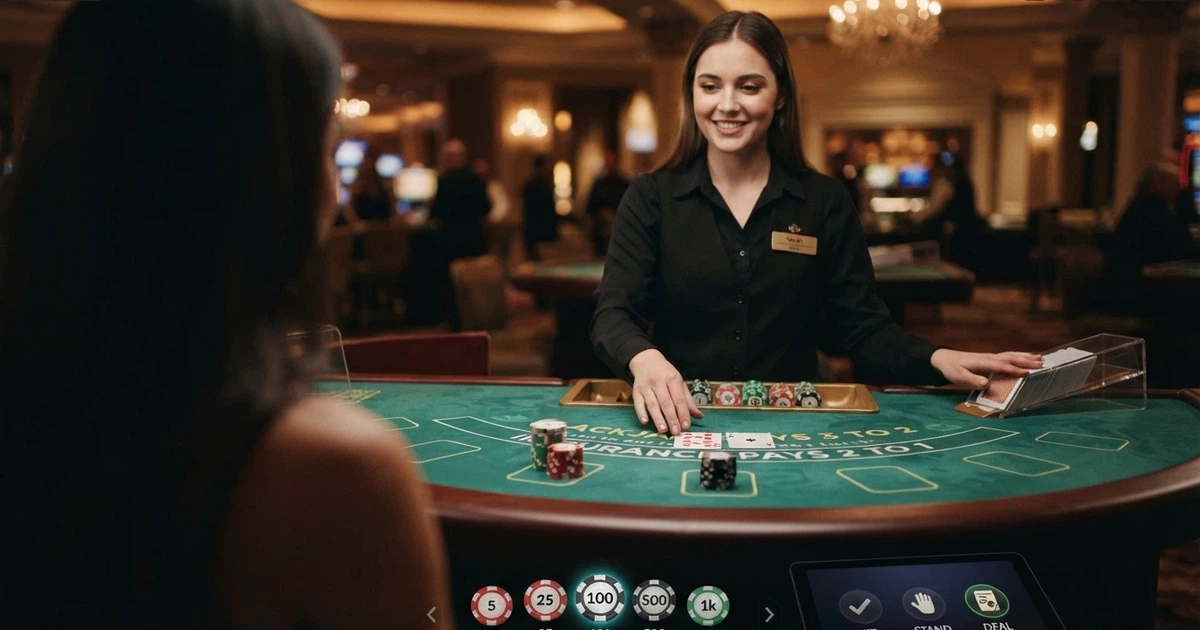
A punter searching “live blackjack online casino australia” is looking for a real dealer, real cards and a real chance to win — and the page that comes up is almost certainly offshore. No federal or state licence for online casino exists in Australia, so the product sits outside the regulated wagering system that covers a TAB or Sportsbet account. That single fact shapes every choice a player makes in 2026: which tables are available, which payment rails work, which consumer protections apply, and what “winning” actually costs over a session.
This page works through the live blackjack landscape in that frame — what a live dealer table looks like on screen, how the rules and house edge decide what the game costs, where Australian players actually go to play, what the welcome bonus really demands of them, how PayID and crypto fit into the deposit story, what Australian law does and does not prohibit, and the limits and help services that matter when the play stops being fun.
Table of Contents
- What Live Dealer Blackjack Actually Looks Like for Australian Players in 2026
- Live Blackjack vs the Software Table — Why a Real Dealer on Screen Changes the Game
- Blackjack Rules, Strategy and the House Edge Every Australian Punter Should Know
- 10 Offshore Casinos Where Australian Players Can Find Live Blackjack in 2026
- Why Your 2026 Blackjack Bonus Is Smaller Than the Welcome Page Promises
- Paying for Live Blackjack in Australia — PayID, Crypto and the Realities of Offshore Banking
- The Legal Reality — What Australian Law Actually Says About Online Blackjack
- Playing Live Blackjack Without Losing Control — Limits, Help and What BetStop Can and Cannot Do
- How We Evaluated These Live Blackjack Casinos
- Live Blackjack in Australia — Is It Worth Your Time and Money in 2026?
- Frequently Asked Questions
What Live Dealer Blackjack Actually Looks Like for Australian Players in 2026
Live dealer blackjack is a real casino table streamed to a player’s screen. A dealer stands behind a physical table, draws cards from a real shoe, and the player’s betting interface overlays the video feed. The cards are not generated by software between rounds — they are dealt, exposed on camera, and read by optical scanners that translate them into the player’s display. The pace is closer to a land-based casino than a slot machine: a hand takes roughly 30 to 45 seconds, decisions take human time, and seven seats at a standard table fill with other players betting at the same time.
What an Australian player finds is the offshore end of that product. The Interactive Gambling Act 2001 prohibits the provision of online casino games to a person in Australia, which means any site offering live dealer blackjack to a player in Australia is operating outside the Australian regulatory framework. ACMA enforces that prohibition — but the enforcement targets the operator, not the individual player. A punter in Sydney or Perth can reach an offshore site, deposit in AUD, sit at an Evolution or Pragmatic Play Live table, and play for real money without committing an offence.
The real-money stake range runs wide. RNG blackjack starts at the floor with stakes around A$0.10 and goes up to roughly A$500 per hand. Live dealer blackjack starts higher, at about A$5 per hand at standard tables, and VIP rooms stretch to A$5,000 per hand for a single wager. The same game at the same provider sits behind a wide spread of bankroll sizes — a player with A$50 to test the format and a high-stakes player with a few thousand on the table are both inside the offer.
Free-play demo mode is the third rail, and it sits almost entirely on the RNG side. Most RNG blackjack games offer a demo mode where the player runs through hands with play money before risking a bankroll. Live dealer blackjack almost never offers a demo — the dealer is on the clock, the seat costs the house real money, and there is no equivalent practice room. A new player who wants to learn the format usually spends time on RNG demo tables first, then moves to live dealer once the rules and basic strategy are second nature.
What “Live Blackjack Online Casino Australia” Actually Means
The search term bundles three ideas, and they do not line up. “Online casino” is a product the IGA prohibits from being provided to an Australian player; “live blackjack” is the specific game the player wants; “Australia” is the country the player is in. What the search returns is a comparison of offshore operators that accept Australian players, fund AUD accounts, and run Evolution or Pragmatic Play Live tables — not a list of Australian-licensed online casinos, because no such licence exists.
What a player can reasonably expect is access. The sites are reachable. Deposits work through PayID, bank transfer or cryptocurrency. Live tables load in a browser or an app. Withdrawals go back through the same rails. The gap between what the player finds and what the law describes is the gap this page closes: the experience is real, the protection is not. ACMA enforces the IGA and administers BetStop, the national self-exclusion register for licensed wagering — but BetStop binds Australian-licensed operators, not the offshore casinos the search term actually returns.
Real-Money Live Blackjack vs Free-Play Demo Mode
Real-money live blackjack is the format the search term is built around. A player deposits AUD, picks a table, sits in a seat or plays behind another punter via Bet Behind, and bets A$5 to A$5,000 per hand depending on the table. The wins and losses are real. The session length is real. The temptation to chase a loss with a bigger bet is real, and the house edge takes the same real percentage of every dollar wagered.
Demo mode is what most RNG blackjack games offer and what live dealer blackjack almost never does. The player runs through hands with play money, gets comfortable with hit/stand/double/split decisions, and learns the rhythm of the game before committing a bankroll. The mathematical rules are the same, the basic strategy is the same, and the time spent in demo mode is time the player saves at the live table — where mistakes cost real money.
A new player is usually better off learning on RNG demo, then moving to live dealer with a small bankroll. A player who already knows basic strategy and wants the social feel of a dealer and a chat box goes straight to live. A high-stakes player who wants A$1,000-per-hand action and doesn’t need practice is in the VIP room from the first session. Each mode suits a different player, and the page on the operator’s homepage usually shows the live tables first because that is where the house makes more money per hand — not because demo mode is unimportant.
Live Blackjack vs the Software Table — Why a Real Dealer on Screen Changes the Game
The live dealer format is what distinguishes this product from every other online blackjack on the market. Where RNG blackjack returns a result in a second with no human presence, live dealer blackjack streams a real casino table with a real dealer, a real shoe, and other players. The trust calculation is different, the pace is different, and the game is different enough that a player who likes one does not automatically like the other.
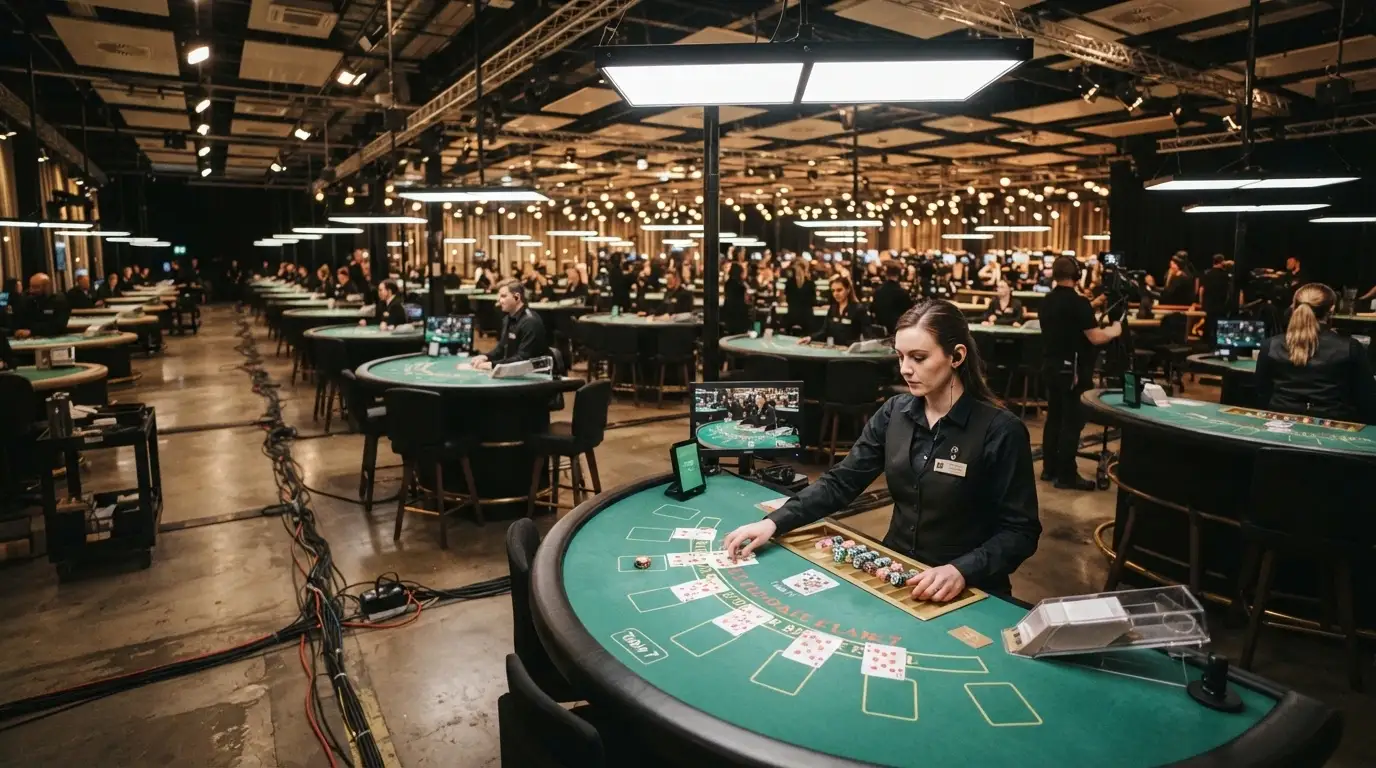
Two providers run almost the entire live dealer blackjack market that an Australian player will reach. Evolution runs 700+ live blackjack tables across 7 variants, with side bets including Perfect Pairs, 21+3 and Bet Behind. Pragmatic Play Live runs 200+ live blackjack tables across 4 variants. Together they set the floor and the ceiling of what a player finds at an offshore site — a smaller operator may carry one provider’s catalogue, a larger one carries both, and a player who has a preference for Infinite Blackjack’s unlimited seats or Lightning Blackjack’s multipliers is choosing between specific products, not generic “live blackjack”.
How Live Dealer Blackjack Works — The Studio, the Dealer and the Shoe
The studio is the engine room. Evolution and Pragmatic Play Live run dedicated broadcast studios — usually in Europe or Asia — with multiple cameras per table, professional dealers in formal attire, real card shoes, and a betting interface that overlays the player’s chip stack and bet options onto the video feed. The dealer runs the table by hand: shuffling, dealing, paying wins, collecting losses. The cards are read by optical scanners that translate the physical result into the player’s digital display, so what the player sees on screen is the same hand the dealer holds.
The tables run 24/7. A player in Australia logs in at 2 am Sydney time and finds the same blackjack lobby as a player logging in at 2 pm. The seats are limited — seven at a standard table — but the lobby is not. When all seven seats are taken, Bet Behind lets a player wager on another punter’s hand, with the same win/loss outcome as if they had been sitting in. VIP rooms run parallel to the standard tables, with higher minimums and higher maximums, often at A$5,000 per hand at the top end.
The betting interface is where the player’s decisions actually happen. The chips sit on the felt graphic, the side bets appear as separate circles, and the deal/no-deal timer counts down the seconds before the player must hit, stand, double down or split. A slow player loses the hand automatically. A fast player gets through more hands per minute, which is good for clearing bonuses and bad for the bankroll.
RNG Blackjack vs Live Dealer — Speed, Trust and the Feel of the Table
RNG blackjack uses a random number generator to produce a card result the instant the player clicks “deal”. There is no dealer, no shoe, no studio — the game is a piece of software running on a server, certified as fair by an independent testing lab. The pace is fast. A player who clicks through 200 hands in an hour at RNG blackjack will play maybe 80 hands in the same hour at a live dealer table.
The trust factor is the other half. RNG blackjack trusts the certification of the random number generator — a player cannot see the deck, but the lab’s stamp says the deal is fair. Live dealer blackjack trusts the camera — a player sees the cards dealt in front of them, the shoe is real, and the dealer’s hands are visible. A player who is suspicious of software-generated randomness often prefers live dealer for that reason alone. A player who wants to play 500 hands an hour and is comfortable with certification prefers RNG.
The feel of the table is the third axis. Live dealer blackjack has a chat box where the player can type to the dealer, banter with other seats, and feel like they are at a casino. RNG blackjack is a solo experience against a screen. Neither is better — they are different products. Those who choose live dealer are often prioritising the social atmosphere, whereas RNG players typically value speed and efficiency.
The Live Blackjack Variants Australian Players Actually See
The variants are where the live dealer product gets interesting — and where a few of them carry a catch the marketing page does not flag.
| Variant | Provider | RTP | House Edge |
|---|---|---|---|
| Classic Blackjack | Evolution | 99.5% | 0.5% |
| Speed Blackjack | Evolution | 99.5% | 0.5% |
| VIP Blackjack | Evolution | 99.5% | 0.5% |
| Infinite Blackjack | Evolution | 99.47% | 0.53% |
| Lightning Blackjack | Evolution | 99.56% | 0.44% |
| Free Bet Blackjack | Evolution | 98.45% | 1.55% |
| Power Blackjack | Evolution | 98.80% | 1.20% |
Classic, Speed and VIP Blackjack share the same RTP of 99.5% and a house edge of 0.5%. The difference between them is seat availability and dealing pace — Speed Blackjack deals faster, VIP rooms accept larger bets, Classic is the standard seven-seat table. Infinite Blackjack deals the same hand to every player, so the seat limit disappears and a player who would otherwise be locked out gets a spot.
Lightning Blackjack is the variant that looks the most generous and carries the most aggressive catch. The published RTP is 99.56% and the house edge is 0.44% — slightly better than Classic on paper. But Lightning Blackjack requires a mandatory Lightning Fee equal to 100% of the main bet on every hand. After the fee is counted, Wizard of Odds calculates the effective house edge on the original bet at roughly 17.63%. The multipliers that give the game its name — payouts of 5x, 10x, 25x and beyond on winning hands — are funded by that fee, and the fee is charged whether the player wins or loses. A punter who treats Lightning Blackjack as a normal blackjack variant is paying the house a 17.63% take on every dollar. That number dwarfs the 0.5% on Classic, the 1.55% on Free Bet and the 1.20% on Power.
Free Bet Blackjack and Power Blackjack sit at the higher-cost end of the standard variants. Free Bet Blackjack pays the double-down and split costs for the player on certain hands, which sounds generous — but the rule change shifts the house edge up to 1.55%. Power Blackjack lets the player double down, hit and split on any three or four cards, which sounds flexible — and lifts the house edge to 1.20%. Both games trade a player-friendly rule for a higher cut to the house, and the published RTP carries that trade honestly.
Blackjack Rules, Strategy and the House Edge Every Australian Punter Should Know
The maths of blackjack is what decides whether a player walks away ahead or behind. The rules determine the house edge before a single card is dealt. Basic strategy cuts that edge to its minimum. Side bets blow it back up. The decision to play by strategy rather than intuition often separates successful, informed players from those just playing for thrills.
Blackjack Rules — The Basics Every Player Needs
The goal of blackjack is to beat the dealer without going over 21. Number cards count at face value, face cards count as 10, and the ace counts as either 1 or 11 — whichever helps the hand. The dealer deals two cards to each player and two to themselves, one face up and one face down. The player decides whether to hit (take another card), stand (keep the current total), double down (double the bet and take one more card) or split (if the two cards are a pair, play them as two separate hands). The dealer then plays their hand against a fixed set of rules — usually hit on 16 or less, stand on 17 or more.
Common Australian rules, as Wizard of Odds documents them, include doubling on 9 to 11 only, double after split allowed, surrender not allowed, eight decks in the shoe, only one split allowed, and the BB+1 hole-card rule (the dealer peeks for blackjack with a ten or ace up). Under those rules, the house edge with optimal play is 0.59% — small enough that a player who sticks to basic strategy is paying roughly six cents per A$10 wagered over time.
The dealer standing or hitting on soft 17 is the rule the player should check before sitting down. A dealer who stands on soft 17 (an ace counted as 11 with a total of 17) gives the house a smaller edge than a dealer who hits soft 17. Wizard of Odds puts the difference at roughly 0.22% — small in absolute terms, but real over thousands of hands.
How to Play a Hand of Blackjack Step by Step
A hand of blackjack runs through the same sequence at every table. The player places a bet within the table limits — A$5 at a standard live dealer table, A$1,000 or more at a VIP table. The dealer deals two cards to each player and two to themselves, one of the dealer’s cards face up. The player decides whether to hit, stand, double down or split based on their hand and the dealer’s upcard. Once every player has acted, the dealer reveals the hole card and plays their own hand against the fixed rules — usually hitting to 16, standing on 17.
The hand resolves in one of four ways. A player total higher than the dealer’s without exceeding 21 wins 1:1. A player total lower than the dealer’s, or over 21, loses the bet. A tied total — called a push — returns the bet to the player with no win or loss. A natural blackjack — an ace with a ten-value card on the first two cards — pays 3:2 on most tables. A A$10 bet on a natural pays A$15, not A$10; a A$100 bet pays A$150. That 3:2 payout is one of the largest positive contributors to player EV in the whole game, and the tables that pay 6:5 instead — A$12 on a A$10 natural — quietly hand the house 1.39 percentage points of extra edge.
Basic Strategy — The Optimal Way to Play Every Hand
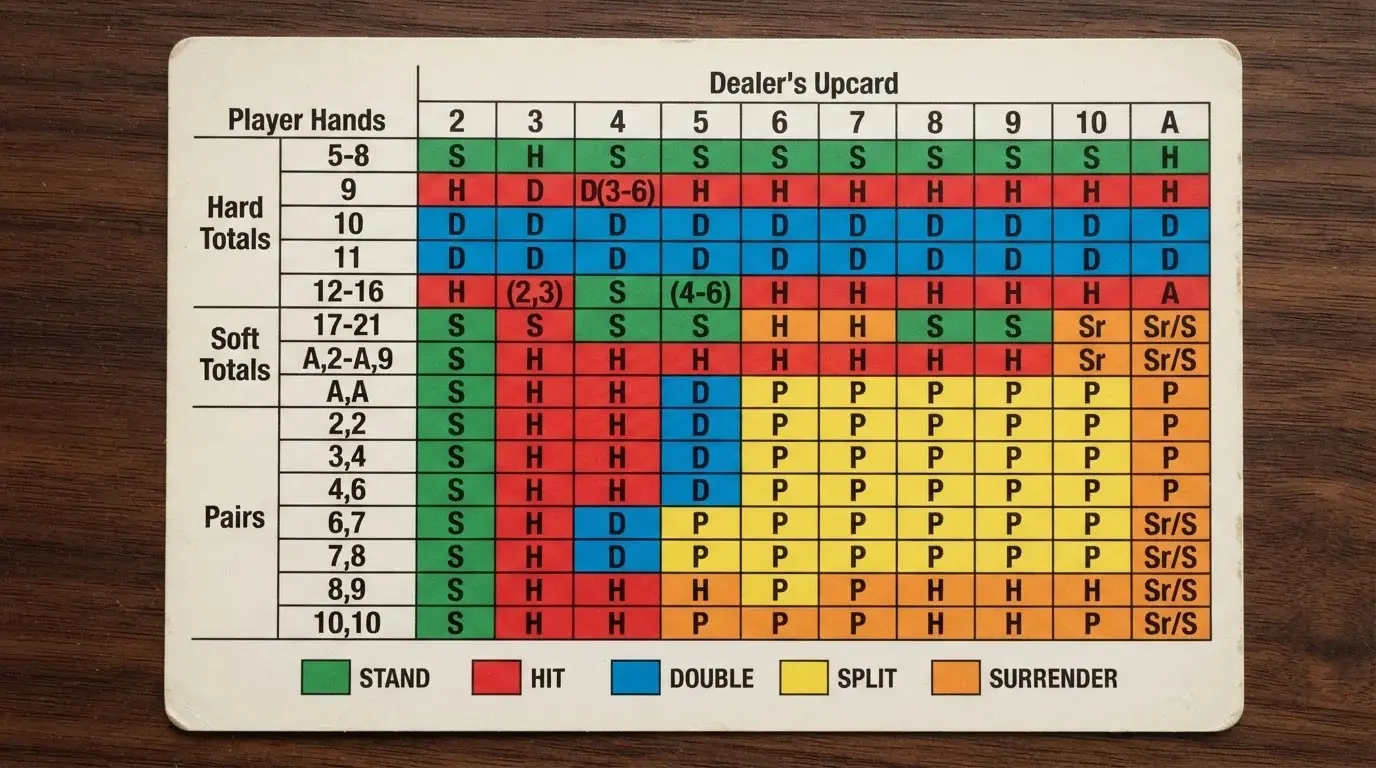
Basic strategy is the mathematically correct play for every hand against every dealer upcard. A basic strategy chart tells the player whether to hit, stand, double down or split based on the player’s total and the dealer’s face-up card. It is not a system, not a pattern, not a hunch — it is the result of running every possible hand combination through probability and picking the play that loses the least on average.
The chart reduces the house edge to its minimum. Under common Australian rules, basic strategy holds the house edge at 0.59%. A player who guesses — hits when they should stand, stands when they should hit, splits when they should hold — adds 1% to 2% to the house edge, sometimes more. Over hundreds of hands, the difference between basic strategy and intuition is the difference between losing six cents per A$10 wagered and losing twenty or thirty.
The chart is freely available, printable, and worth memorising. A player who learns it cold plays faster, makes fewer mistakes under the deal-no-deal timer, and walks away with a smaller expected loss over any session. Those who haven’t yet mastered the basic strategy chart may find the live environment overwhelming and better suited to practice mode first.
Blackjack Odds, Payouts and the House Edge Explained
The house edge is the casino’s average profit per bet, expressed as a percentage of the wager. A house edge of 0.5% means the casino keeps roughly fifty cents for every A$100 wagered across thousands of hands. The edge is built into the rules — the dealer acts last, the player must act before the dealer, and the player busts before the dealer has to. Basic strategy cannot eliminate the edge; it can only minimise it.
The payout structure is what makes the main game cheaper than the side bets. A winning hand pays 1:1. A push returns the bet. A natural blackjack pays 3:2 — A$15 on a A$10 wager. The 3:2 payout is the single biggest contributor to player EV on the table, and reducing it to 6:5 — A$12 on a A$10 wager — shifts the house edge by roughly 1.39 percentage points. Evolution’s published theoretical return for the Blackjack main game is 99.28%, which lines up with the 0.5% to 0.7% edge most rule sets produce.
Side bets change the math sharply. Evolution’s Perfect Pairs side bet — the player’s first two cards forming a pair — has a published theoretical return of 95.90%. Evolution’s 21+3 side bet — the player’s two cards plus the dealer’s upcard forming a poker hand — has a published theoretical return of 96.30%. Both are well below the 99.3%–99.5% the main game returns under optimal play, and the difference between 96% and 99% is the difference between losing A$4 per A$100 wagered and losing A$1. Side bets are a paid-for thrill, not a strategy.
Side Bets Like Perfect Pairs and 21+3 — Why They Cost You More
Perfect Pairs pays out if the player’s first two cards are a pair — mixed, coloured or perfect. A mixed pair (two red sevens of different suits) pays the smallest prize; a perfect pair (two identical cards from a freshly shuffled single-deck run) pays the most. The published RTP is 95.90%, which means the house keeps 4.10% of every dollar on the side bet — roughly eight times the 0.5% edge on the main game.
21+3 pays out if the player’s two cards plus the dealer’s upcard form a poker hand — flush, straight, three of a kind. The published RTP is 96.30%, which means the house keeps 3.70%. The bet is exciting because the player watches three cards for a poker combination, but the house edge is several times the main game’s.
Bet Behind is the third side feature on many Evolution tables. A player who cannot get a seat — or who wants to bet on multiple hands at once — wagers on another punter’s decisions. The wins and losses flow through to the Bet Behind player. The house edge on Bet Behind is the same as the main game, because the bet is on the same hand, but the player has no control over hit/stand/double/split decisions. A punter who likes to control their own hand should not rely on Bet Behind as their primary mode.
A side bet of A$5 on every hand at a live table adds A$25 to A$35 of expected loss per 100 hands compared with the main game alone. That is the same as roughly three extra hours of basic-strategy main-game play the player did not need to fund. The side bet feels small. The maths is not.
10 Offshore Casinos Where Australian Players Can Find Live Blackjack in 2026
Every operator in this comparison operates from outside Australia’s regulatory reach. None holds an Australian online casino licence, because no such licence exists.

| Operator | AU Licence Status |
|---|---|
| Skycrown | Offshore; not an Australian-licensed online casino |
| Royal Reels | Offshore; not an Australian-licensed online casino |
| Rocket Play | Offshore; not an Australian-licensed online casino |
| Stake | Offshore; not an Australian-licensed online casino |
| WinSpirit | Offshore; not an Australian-licensed online casino |
| Rainbet | Offshore; not an Australian-licensed online casino |
| Scream Casino | Offshore; not an Australian-licensed online casino |
| FairGO | Offshore; not an Australian-licensed online casino |
| Bizzo Casino | Offshore; not an Australian-licensed online casino |
| Rocket Casino | Offshore; not an Australian-licensed online casino |
The table is honest by design: the licence column is identical for every row because the licence status is the same. The differentiation between operators sits elsewhere — the game providers they carry, the bonuses they advertise, the payment rails they accept, and the consumer-protection signals a player can read from the cashier page. Treating this list as ten identical options ignores the substantial differences in underlying product and service quality.
Skycrown
Skycrown is the only operator in the featured set with confirmed Evolution and Pragmatic Play Live blackjack tables on the live casino page. That mix puts the full Evolution catalogue — 700+ tables, 7 variants, side bets including Perfect Pairs, 21+3 and Bet Behind — beside the Pragmatic Play Live catalogue — 200+ tables, 4 variants. A player who wants Lightning Blackjack, Infinite Blackjack, Free Bet Blackjack, Speed Blackjack and Power Blackjack under one roof finds them at Skycrown.
What that mix means for the live blackjack player is breadth. A punter with a small bankroll can sit at a A$5 standard table; a high roller can move to a VIP room up to A$5,000 per hand; a player who wants unlimited seats picks Infinite Blackjack. Skycrown is not a one-variant casino — it is a catalogue casino, and the catalogue is the strongest in the featured set. Those prioritising provider variety over bonus size often land on Skycrown; conversely, those who want a transparent welcome offer should look elsewhere.
Royal Reels
Royal Reels is the only operator in the featured set with a confirmed welcome bonus — 100% up to A$500 plus 50 free spins, with 30x wagering on the bonus. That is the headline number, and it is worth treating with the scepticism this page applies to every bonus figure.
The bonus terms page carries three specifications that change the maths. The default bonus expiry is 7 days from activation — short enough that a player who clears at a leisurely pace runs out of clock before they run out of turnover. The default maximum bet while wagering is 5 USD per spin or game round, which caps the size of any single wager against the playthrough requirement. No-deposit bonuses at Royal Reels carry a maximum withdrawal limit typically in the range of 50 to 100 USD, which caps what a player can cash out from a no-deposit offer regardless of how well they run.
For a blackjack player specifically, the bonus matters less than for a slots player. Blackjack often contributes a lower percentage toward wagering requirements than slots, the 5 USD max bet caps the per-hand stake during clearing, and the 7-day window limits how much volume a single bonus can absorb. Royal Reels is the operator with the most legible bonus in the featured set; it is also the operator where the bonus’s small print most clearly constrains the play.
Rocket Play
Rocket Play is an offshore casino reachable by Australian players, operating outside the Australian regulatory framework. The site’s live dealer offering was not confirmed in primary research this run, which means a player who arrives should check the live casino lobby themselves before depositing — the provider mix, the table limits and the variant availability may differ from what a competitor comparison page describes.
The same caveat applies to the bonus terms, the payment methods and the withdrawal speed. Rocket Play’s positioning in the Australian-facing offshore market puts it in the same tier as the other operators here — a place an Australian punter can reach, deposit AUD, play live blackjack and withdraw winnings, without any of the consumer protections a TAB account carries. A punter prioritising confirmed data should check the live lobby firsthand before committing any funds.
Stake
Stake is the most visible crypto-focused casino in the offshore set, and that positioning shapes what an Australian player finds. The site runs on a cryptocurrency-first cashier, accepts Bitcoin, Ethereum, Litecoin and a handful of altcoins, and settles withdrawals in crypto as a default. A punter who already holds crypto and wants fast, low-fee payouts finds Stake a natural fit; a punter who wants AUD bank deposits finds a thinner rail.
Stake’s offshore status is not in dispute — like every operator in this list, it operates outside the Australian regulatory framework, and the crypto payment methods it accepts are the same payment methods banned for licensed Australian wagering from 11 June 2024. The credit card ban and the crypto ban are themselves a signal: a site that accepts either is operating outside the Australian licensed system. Using crypto here is a clear signal that the player accepts these conditions.
WinSpirit
WinSpirit operates from offshore and accepts Australian players, though without a local licence. Research this run did not surface a confirmed provider mix, bonus structure or payment-rail detail from a primary WinSpirit page, which means the site’s actual offer may differ from what a comparison aggregator describes.
The positioning is the same as the other operators in this list: reachable from Australia, AUD accepted at the cashier, live dealer blackjack on the lobby, no Australian licence. A punter who arrives at WinSpirit should check the live casino lobby for Evolution or Pragmatic Play Live tables, the bonus page for the wagering terms, and the cashier page for the deposit and withdrawal methods before depositing. The verification cost is small and the gap between what an aggregator says and what the operator actually offers is sometimes large.
Rainbet
Rainbet is another offshore operator accessible from Australia but holding no local licence. Research did not confirm a live dealer provider mix or a bonus structure for Rainbet this run, and a punter who lands on the site should treat the live casino lobby as unverified until they check it themselves.
The site’s positioning — an offshore casino reachable from Australia, AUD on the cashier, live dealer tables on the lobby — is the same as the rest of this list. The differentiation, if there is any, sits in the details a player reads on the page after they arrive. The verification habit is the same as elsewhere: check the lobby, check the bonus terms, check the cashier.
Scream Casino
Scream Casino is an offshore brand in the Australian-facing set, operating outside the Australian regulatory framework. The live dealer offering was not confirmed in primary research this run, and a player who arrives should verify the provider mix and table availability before depositing.
The market positioning is the same as the rest of the list: an offshore casino reachable from Australia, AUD accepted, live dealer blackjack available, no Australian licence. Relying on third-party comparison pages carries inherent risks; verifying details directly at the operator’s site remains the only truly reliable approach.
FairGO
FairGO is an Australia-facing offshore casino whose name signals an Australian market focus even though its licence is not Australian. The site’s positioning is built around AUD banking, pokies and table games accessible to Australian players — and live dealer blackjack sits within that offer.
Research did not confirm a live dealer provider mix or a bonus structure for FairGO this run. The verification habit is the same as elsewhere on this list: check the lobby for Evolution or Pragmatic Play Live tables, check the bonus page for the wagering terms, check the cashier for the deposit methods that work from an Australian bank account. FairGO’s Australian-facing positioning does not change its offshore status or the absence of Australian consumer protections.
Bizzo Casino
Bizzo Casino is an offshore brand in the Australian-facing set, operating outside the Australian regulatory framework. Research did not confirm a live dealer provider mix or a bonus structure for Bizzo this run, and a player who arrives at the site should verify the lobby and the bonus page before depositing.
The site’s market positioning is the same as the rest of this list: an offshore casino reachable from Australia, AUD on the cashier, live dealer blackjack available, no Australian licence. A punter looking for guaranteed operator confirmation should treat comparisons as a jumping-off point rather than the final authority.
Rocket Casino
Rocket Casino is an offshore brand in the Australian-facing set, operating outside the Australian regulatory framework. The live dealer offering was not confirmed in primary research this run, and a punter who arrives should verify the lobby before committing a bankroll.
The positioning is the same as the rest of this list. The verification habit is the same as elsewhere on this list. The gap between what a comparison aggregator says and what the operator actually offers is sometimes large, and the only way to close it before depositing is to read the operator’s own pages.
Why Your 2026 Blackjack Bonus Is Smaller Than the Welcome Page Promises
A bonus headline figure is the marketing number, not the number a player actually receives. A welcome offer of “100% up to A$500” promises the player A$500 in bonus money on a A$500 deposit — and what it delivers is A$500 of bonus money that must be wagered 30 times, that expires in 7 days, that caps the per-spin bet at 5 USD while wagering, and that may or may not count blackjack hands toward the playthrough at full weighting. The real number is smaller than the headline, sometimes dramatically.

The expected cost of clearing Royal Reels’ welcome bonus — assuming only the bonus amount is wagered — comes from the wagering requirement applied to the bonus, the live blackjack house edge applied across the turnover, and the time window over which the player must complete the playthrough. On a A$500 bonus with 30x wagering, the required turnover is A$15,000. At an Evolution live blackjack RTP of 99.5% (house edge 0.5%), the expected loss across that turnover is A$75. That is the bonus’s real cost before the player sees a single dollar of cashable winnings — and it sits on top of whatever the player wins or loses on the bonus money itself.
The headline figure is what the marketing page leads with. The expected loss figure is what the player actually pays for the privilege of using the bonus. A punter who ignores the fact that this can cost roughly 15% of the bonus value just to clear it is ignoring the mathematical reality of the bonus terms.
Standard Welcome Bonuses and How They Work for Blackjack
A deposit-match welcome bonus matches a percentage of the player’s first deposit up to a cap. Royal Reels’ 100% up to A$500 is the standard shape: deposit A$500, receive A$500 in bonus money, wager the bonus 30 times before withdrawal. The bonus money is not cash; it is a credit that must be played through.
Blackjack contributes less toward wagering than slots at most operators, often 10% to 20% of the slots contribution. A bonus that requires A$15,000 of slot wagering may require A$75,000 to A$150,000 of blackjack wagering to clear the same playthrough. The Royal Reels 5 USD max bet while wagering caps the per-hand stake at A$5 (converted from USD at the operator’s exchange rate), which slows the clearing further — a player who would normally bet A$25 per hand is forced down to A$5 while the bonus is active. Combined with a 7-day expiry, the bonus becomes a time pressure the house edge turns against the player.
A player who wants the bonus should treat it as a paid-for session, not a gift. A$75 of expected loss on A$15,000 of turnover is the price of admission to the bonus funds; the player’s actual session result sits on top of that. Ignoring these underlying house-edge costs often leads to dissatisfaction with the final session balance.
No-Deposit Blackjack Bonuses — What They Are and Why They Are Rare
A no-deposit bonus is a small credit the operator offers without requiring a deposit — usually A$5 to A$50 of bonus money or a handful of free spins. The appeal is obvious: a chance to win real money without risking a bankroll. The catch is in the withdrawal cap. Royal Reels’ bonus terms page states that no-deposit bonuses often include maximum withdrawal limits typically in the range of 50 to 100 USD.
That cap means a player who runs a A$20 no-deposit bonus up to a A$500 balance cannot withdraw the full A$500. They can withdraw the cap — 50 to 100 USD — and the rest is forfeit. The wagering requirement on the no-deposit bonus is also typically higher than the deposit-match bonus, because the operator is giving away the credit for free.
No-deposit bonuses are rare for live blackjack specifically. The 5 USD max bet cap, the lower game weighting on table games and the cashout ceiling all conspire to make a no-deposit live blackjack offer an unattractive product for the operator. These restrictions make these offers more symbolic than substantive for serious blackjack players.
Bonus Terms That Matter — Wagering, Time Limits and Game Weighting
Three terms decide the real cost of a bonus, and the fourth caps what the player can take away.
Wagering multiplier is the number of times the bonus must be wagered before withdrawal. A 30x bonus means A$15,000 of turnover on a A$500 bonus. The higher the multiplier, the more volume the player must push through the house edge.
Time limit is the window over which the wagering must be completed. Royal Reels’ default bonus expiry is 7 days from activation, which is short — a player who plays one hour a day at 80 hands an hour clears A$24,000 of volume in seven days, but a player who plays one hour a week cannot clear a 30x bonus before it expires.
Game weighting is the percentage of each wager that counts toward playthrough. Slots usually count 100%. Blackjack often counts 10% to 20%. A bonus that requires A$15,000 of slot turnover requires A$75,000 to A$150,000 of blackjack turnover to clear the same playthrough. A punter who plays live blackjack exclusively should expect the bonus to take much longer to clear — or not clear at all within the time window.
Maximum cashout is the cap on what the player can withdraw from bonus-derived winnings. Royal Reels’ no-deposit max withdrawal of 50 to 100 USD is the shape of this term — the bonus can pay out, but only up to a cap. A deposit-match bonus usually does not carry a max cashout, but no-deposit and free-spin offers usually do.
Paying for Live Blackjack in Australia — PayID, Crypto and the Realities of Offshore Banking
The two rails Australian players actually use are PayID — the local instant bank transfer system — and cryptocurrency. They look like two different products, but they are the same transaction in different wrappers: an Australian punter moving money from an Australian bank account or wallet to an offshore casino that does not hold an Australian licence.
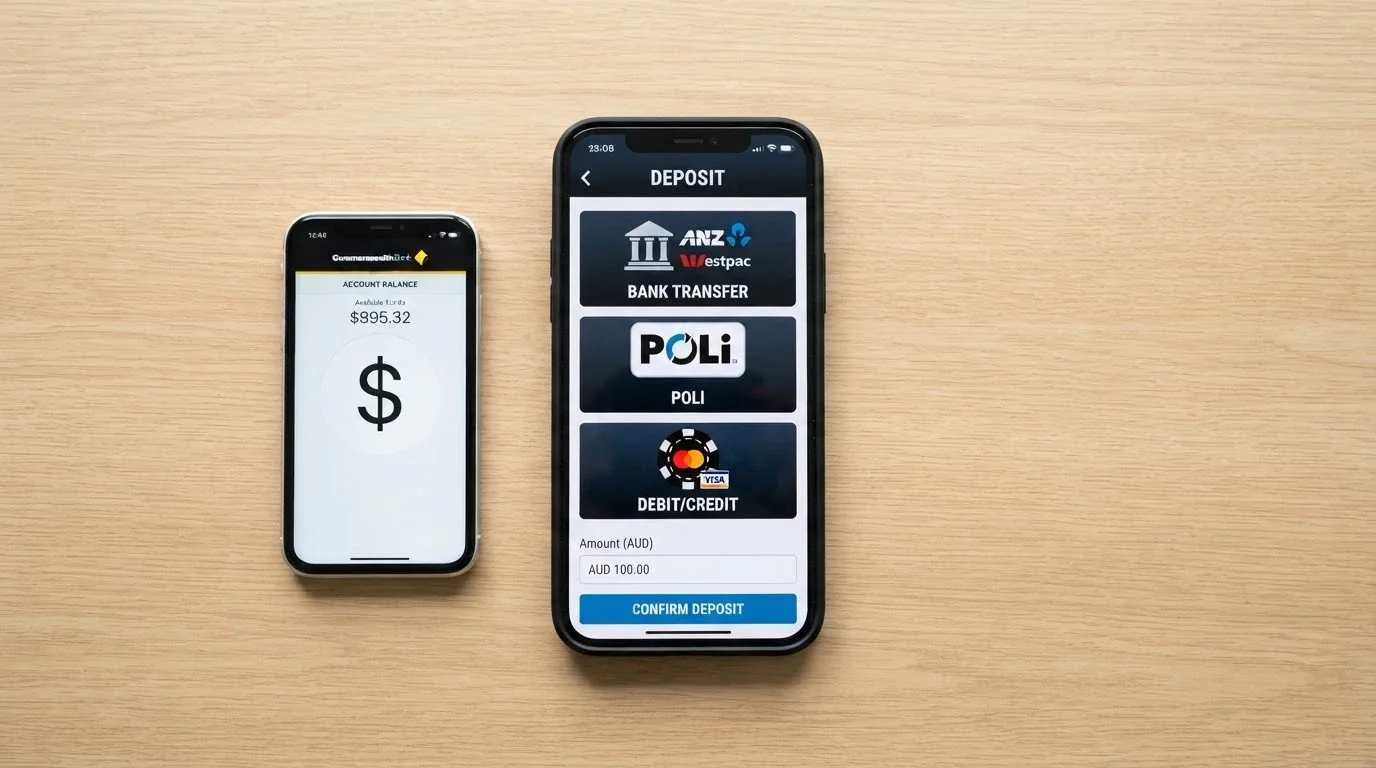
The legal context is what makes the payment method matter. From 11 June 2024, credit cards, credit-related products and digital currency/crypto are banned as payment methods for online wagering in Australia. The ban applies to licensed wagering — TABs, Sportsbet, Ladbrokes and the rest of the licensed bookmakers. An offshore casino is not a licensed wagering operator, so the ban does not bind the casino the same way. But the ban is itself a signal: a site that accepts credit cards or crypto is operating outside the Australian licensed system, and the player using it is operating outside the consumer protections that licensed wagering provides.
Non-compliance with the payment-method restrictions can attract penalties of up to A$247,500. Those penalties target the licensed operator that breaks the rules, not the offshore casino — but the offshore casino that accepts the payment is still outside the framework that would give the player recourse if something goes wrong.
PayID and Bank Transfer — The Australian Rail for Offshore Deposits
PayID is the Australian instant bank transfer system, built on the Osko rails operated by BPAY. A player links their PayID — usually a mobile number or email — to their bank account, and a transfer from the casino cashier lands in their bank in under a minute. There is no credit card, no third-party processor, no crypto exchange.
The appeal for an Australian player funding an offshore casino is speed and locality. The funds move from an Australian bank account to the casino cashier in seconds; the player does not need to convert AUD to USD or BTC; the transaction shows up on the player’s bank statement as a normal transfer. The casino receives AUD, settles the player’s account in AUD, and the player bets at A$5 to A$5,000 per hand at tables denominated in the same currency.
The withdrawal side works the same way. A player who wins at the live table requests a withdrawal, the casino processes it through PayID or a regular bank transfer, and the funds arrive in the player’s Australian bank account — usually within 24 to 48 hours for PayID and 3 to 5 business days for a regular transfer. The round trip is the same as funding any other online purchase from an Australian bank account.
The legal status is clean. PayID is a bank-to-bank transfer, not a credit product and not a digital currency. The 11 June 2024 ban on credit cards and crypto as payment methods for online wagering does not capture PayID. A player who funds an offshore casino via PayID is using the rail the Australian banking system already provides.
Crypto Blackjack — Bitcoin, Ethereum and Why the Ban Matters
Cryptocurrency is the second rail, and it is the rail most of the offshore crypto-focused casinos build around. Bitcoin, Ethereum and Litecoin are the three most commonly accepted; some operators add Tether, Dogecoin or Bitcoin Cash. A player who already holds crypto can deposit from their wallet, bet at crypto-denominated tables, and withdraw back to the same wallet — often within minutes, often without a third-party processor.
The privacy and speed advantages are real. A crypto deposit does not appear on a bank statement as a casino transaction; the player’s bank does not see the casino name. A crypto withdrawal can clear in minutes, where a PayID withdrawal takes 24 to 48 hours. For a high-volume player or a player who wants their gambling transactions off their bank statement, crypto is the natural choice.
The legal status is the other half. From 11 June 2024, digital currency and crypto are banned as payment methods for online wagering in Australia. The ban applies to licensed wagering operators; an offshore casino is not a licensed wagering operator, so the ban does not bind it directly. But the ban is a clear signal: the Australian regulatory framework treats crypto wagering as outside the licensed system, and a player using crypto at an offshore casino is operating in that outside space.
The crypto premium offshore operators offer is real. Joe Fortune advertises a 150% crypto welcome match versus the usual 100% for bank transfers and credit cards — a benchmark showing the premium the offshore market pays to attract crypto deposits. That premium is the market pricing the difference between a PayID deposit and a crypto deposit: the crypto path costs the operator less in processing fees, and the operator passes some of that saving back to the player as a larger bonus. A punter who values the bonus premium is voting with their wallet for the rail that the Australian framework treats as outside the licensed system.
The Legal Reality — What Australian Law Actually Says About Online Blackjack
The legal framework around online blackjack in Australia is narrower than most players assume and more lenient than most players fear. The Interactive Gambling Act 2001 prohibits the provision of certain online gambling products to a person physically in Australia. The player is not the target of the prohibition. The offshore casino that reaches the player is. The practical result is that Australian players can reach offshore casinos, deposit AUD, play live dealer blackjack, and withdraw winnings — without committing an offence themselves.
The Interactive Gambling Act 2001 — What It Prohibits and What It Doesn’t
The IGA prohibits the provision of online casino games — including live dealer blackjack, online pokies, and table games — to a person in Australia. It also prohibits unlicensed online wagering, in-play betting, and credit betting. The prohibitions target the provider, not the player: an individual who plays at an offshore casino is not committing an offence under the IGA.
What remains licensable is narrower than most players expect. Pre-event online wagering on races and sport is licensable through state and territory wagering operators. Lotteries and keno are licensable. Online casino games — including live dealer blackjack, slots, and table games — are not licensable at the federal or state level. There is no Australian online casino licence to obtain, and no operator in this comparison holds one.
The financial side is also covered. Gambling winnings are generally not assessable income in Australia under section 6-5 of the ITAA 1997, and gambling losses are generally not deductible under section 8-1 unless the person is carrying on a business of betting or gambling. A punter who wins A$5,000 at a live dealer table does not owe tax on it; a punter who loses A$5,000 cannot claim it as a deduction. The tax framework treats casual gambling as a personal activity, not a profession.
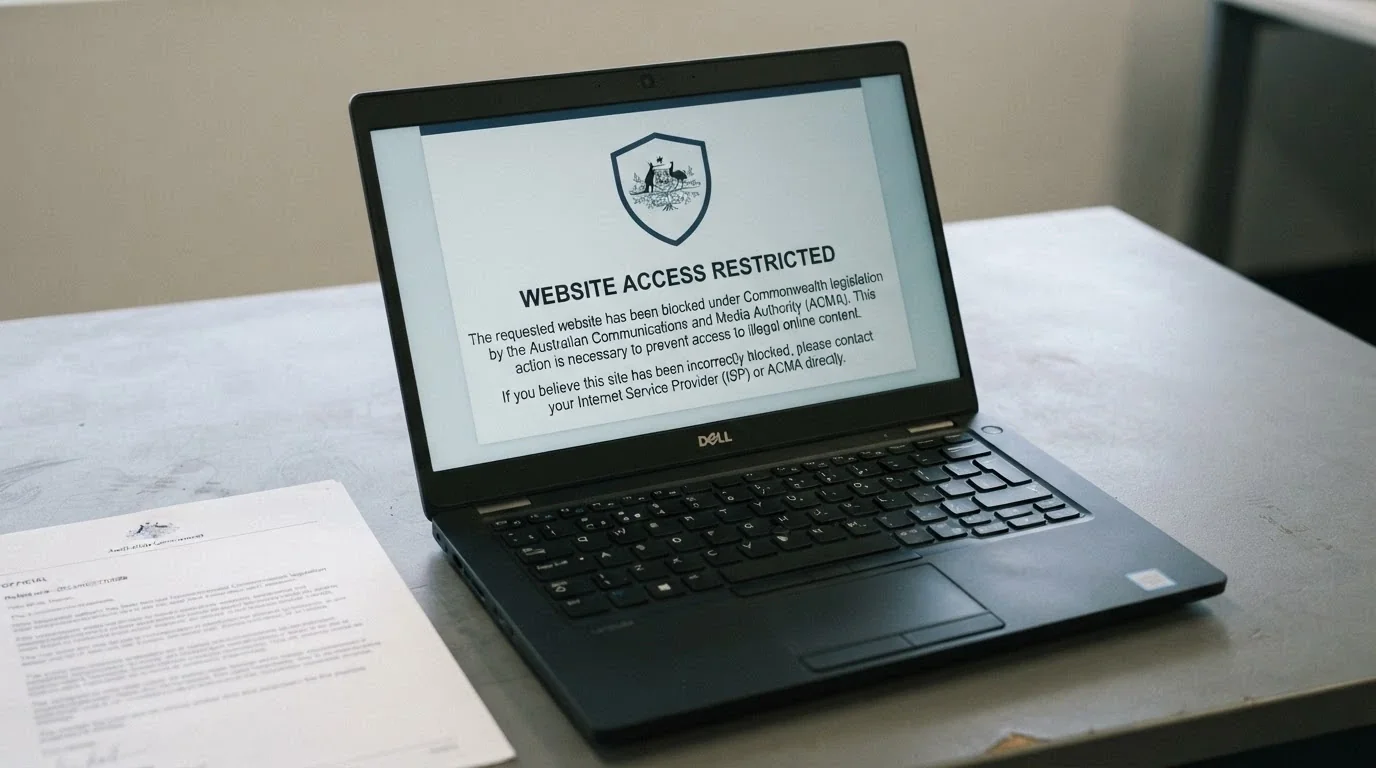
The enforcement side targets operators. ACMA enforces the IGA, and since November 2019, ACMA has had 1,564 illegal gambling and affiliate websites blocked by Australian ISPs. More than 225 illegal services have withdrawn from the Australian market since enforcement was strengthened in 2017. The enforcement is real and active. New offshore operators keep appearing to replace the ones that leave.
Licensed Wagering vs Offshore Casinos — Two Different Worlds
The practical difference between a TAB account and an offshore casino account is the practical difference between two regulatory systems. A state-licensed wagering operator offers pre-event wagering on races and sport, lotteries, and keno. It does not offer live dealer blackjack. It accepts PayID deposits and AUD bank transfers. It does not accept credit cards or crypto — both are banned as payment methods for licensed wagering from 11 June 2024. It connects to BetStop, so a self-excluded player cannot open an account or place a bet.
An offshore online casino offers live dealer blackjack, online pokies, table games, and sports betting. It accepts PayID, bank transfer and often crypto. It is not connected to BetStop — a player who has self-excluded through BetStop can still open an offshore account. It holds a licence from Curaçao, Malta, Anjouan or another offshore jurisdiction, not from an Australian state or territory. The consumer protection gap is real: no Australian complaint pathway, no local regulatory recourse, no local dispute resolution, no guarantee that the operator will pay out a winning bet.
The payment-method signal is the most reliable read. A licensed Australian wagering operator does not accept credit cards or crypto — both are banned. An offshore casino that accepts either is operating outside the Australian licensed system. A player who deposits AUD via PayID to a TAB is inside the framework. A player who deposits BTC to an offshore casino is outside it.
ACMA Enforcement — Blocks, Fines and the 1,564 Sites Already Taken Down
ACMA enforcement has been active and growing. Since November 2019, ACMA has had 1,564 illegal gambling and affiliate websites blocked by Australian ISPs — a number that has climbed steadily as ACMA has added new operators to the blocklist. More than 225 illegal services have withdrawn from the Australian market since enforcement was strengthened in 2017, either voluntarily after ACMA contact or under formal notice.
The payment-method penalty is the other enforcement lever. Non-compliance with Australia’s payment-method restrictions for online wagering can attract penalties of up to A$247,500. The penalties target licensed wagering operators that breach the credit card or crypto ban — and the size of the penalty signals how seriously the framework treats the payment-method rules.
The 2027 reforms add a third layer. From 1 January 2027, wagering advertising is restricted to no more than three wagering ads per hour between 6:00 am and 8:30 pm. Wagering advertising is banned during live sport coverage, applying from 15 minutes before a live sporting event until 5 minutes after it ends. Direct marketing of inducements is banned for 14 days after a customer signs up with a wagering company, and for three months after a person deregisters from BetStop. The reforms target licensed wagering operators, not offshore casinos — but they signal the direction of the regulatory framework and the limits the Australian system is willing to let licensed operators push.
Playing Live Blackjack Without Losing Control — Limits, Help and What BetStop Can and Cannot Do
The tools that help a player control their gambling sit on two sides. BetStop and the licensed wagering operators carry one set of tools, and they apply to one part of the market. The other part of the market — offshore casinos — carries its own tools, and they require the player to ask each operator separately.
BetStop, Deposit Limits and the Tools That Actually Work
BetStop, the National Self-Exclusion Register, has recorded 67,480 registrations since launch, with 41,290 exclusions still active as at 31 July 2026. The register is run by ACMA and binds every Australian-licensed wagering service — TABs, Sportsbet, Ladbrokes and the rest of the licensed bookmakers. A player who registers with BetStop cannot open a new account with any licensed operator and cannot place a bet with any existing account during the exclusion period.
The age and exclusion data tells a story. 78% of BetStop registrants were under 40 at the time of registration, and 38% chose a lifetime exclusion. The under-40 concentration reflects the demographic most exposed to online wagering marketing and the demographic most likely to seek self-exclusion early. The lifetime-exclusion share reflects how strongly registrants feel about the need to step away — a six-month exclusion is a break; a lifetime exclusion is a decision.
The BetStop limit is the gap in the framework. BetStop binds Australian-licensed wagering services only; an offshore casino is not connected to BetStop and can continue accepting a self-excluded person. A player who registers with BetStop and then opens an offshore casino account has not stopped gambling — they have stopped gambling with the operators BetStop covers and moved their play to the operators BetStop does not. The self-exclusion still has value inside the licensed market. It does not extend to the offshore market the player is most likely to reach through a live blackjack search.
Deposit limits and session limits are the proactive tools that work across both markets. Most offshore casinos offer a deposit limit — daily, weekly or monthly — that the player can set in their account settings. Most offer a session-time reminder or a session limit that logs the player out after a set period. The tools require the player to opt in; an operator does not set a deposit limit for a player who has not asked for one. A player who wants the tools to work needs to set them before they need them, not after.
Bankroll and loss-limit habits are the third layer, and they work regardless of where the player plays. A punter who decides to play A$200 tonight and stop when it is gone has set a session limit at the table that no operator tool can enforce. A punter who decides to stop after A$300 of winnings has set a take-profit limit that protects a good night from turning into a bad one. The habits sit with the player, not with the operator.
Where to Get Help — Helplines, Counselling and the Numbers That Matter
The free, confidential help services in Australia are reachable 24 hours a day.
- National Gambling Helpline — 1800 858 858. Free, confidential, available 24 hours a day, 7 days a week. The first call for any Australian punter who feels their gambling has stopped being fun.
- Gambling Help Online — gamblinghelponline.org.au. Online counselling, self-test tools, and support pathways. Available to anyone in Australia, including players in regional areas without easy access to face-to-face services.
- BetStop — National Self-Exclusion Register. Binds licensed Australian wagering services. A single registration blocks the player from every licensed bookmaker in the country.
- Gambling Help Online counselling. Free professional counselling via chat, email or video. Self-referral, no need to go through a GP.
The prevalence numbers explain why the services exist. About 2.1% of Australian adults experience problem gambling, equivalent to roughly 430,000 people. High-risk gambling in Australia was 1.8% in 2022. The numbers sit behind every block of responsible-gambling text on every Australian-facing casino page — and they are the reason the helpline is free, 24/7, and never asks for a credit card.
Reaching out early is the cheapest move a player can make. A punter who calls the helpline after a single bad session spends an hour on the phone and walks away with a plan. A punter who waits until the bank account is empty and the relationship is strained spends months on the phone and walks away with a longer plan. The earlier the call, the smaller the recovery.
How We Evaluated These Live Blackjack Casinos
The evaluation behind this page rests on four sources and one honest limitation.
The official sources consulted are ACMA enforcement data, the Interactive Gambling Act 2001 framework, and the Australian Institute of Health and Welfare for gambling-harm prevalence. ACMA’s blocklist and enforcement notices are the public record of which offshore operators have been blocked and which have withdrawn from the Australian market. The IGA is the statute the enforcement rests on. The AIHW prevalence data is the source for the 2.1% problem-gambling figure and the 1.8% high-risk gambling figure. Each is a primary or near-primary source; each carries the authority of an Australian government agency.
The operator checks were conducted against the ACMA whitelist and the IGA framework. The result: no operator in the featured set holds an Australian online casino licence, because no such licence exists. Every operator is offshore; every operator operates outside the Australian regulatory framework; every operator carries the consumer-protection gap that implies.
The evaluation criteria for the operator ranking are live blackjack availability, game provider quality, bonus terms transparency, and payment methods accessible to Australian players. A site with Evolution or Pragmatic Play Live on the live casino page scores higher than a site without confirmed providers. A site with a published wagering multiple and bonus terms scores higher than a site without. A site that accepts PayID scores higher than a site that requires crypto.
The limitation is honest. The operators are offshore, and the operator data is sourced from public-facing casino pages and independent review sources — Casino.band for the Evolution and Pragmatic Play Live provider mix, Wizard of Odds for the Australian rules and Lightning Blackjack analysis, Blackjack Review for the house-edge and payout analysis. The pages cited are not the operators’ own pages; the bonus terms, where confirmed, come from the operators’ own bonus terms pages. A player who wants the most current picture should verify the live casino lobby and the bonus terms at the operator itself before depositing.
Live Blackjack in Australia — Is It Worth Your Time and Money in 2026?
The figures on this page point in two directions, and the player who reads them carefully reaches a different conclusion depending on what they want.
Live dealer blackjack is the closest thing to a casino floor without leaving home. The dealer is real, the cards are real, the pace is real. Under optimal play with common Australian rules, the house edge sits at 0.59% — six cents per A$10 wagered over time, smaller than almost any other casino game a player will find. Lightning Blackjack is the variant to avoid: the 100% mandatory fee pushes the effective house edge to roughly 17.63%, which makes a “good RTP” headline read as a marketing artefact rather than a real number. Classic, Speed, VIP and Infinite Blackjack all sit at 0.5% to 0.53% and are the games a player who cares about edge should sit at.
The bonus math points the other way. A welcome bonus of 100% up to A$500 with 30x wagering carries an expected cost of A$75 in house-edge loss across A$15,000 of turnover — before the player sees a single dollar of cashable winnings. The 7-day expiry and the 5 USD max bet while wagering shrink the playable window further. The 3:2 vs 6:5 payout difference shifts the house edge by roughly 1.39 percentage points, which means a table that pays 6:5 on a natural blackjack is charging the player roughly three times the standard edge.
The offshore reality is the third direction. No Australian online casino licence exists, so the consumer protections that cover a TAB account do not cover an offshore casino account. BetStop binds licensed wagering services only — an offshore casino can continue accepting a self-excluded person. The credit card and crypto ban signals which operators are inside the licensed system and which are outside it.
The decision every Australian player should make before depositing is the simplest one: whether the live dealer experience is worth playing outside the framework that would protect them if something went wrong. For a punter who knows what offshore means, who sets a deposit limit before they need it, who plays Classic or Speed Blackjack at a 3:2 table, and who treats any welcome bonus as a paid-for session rather than a gift — the answer is yes, with eyes open. For a punter who has registered with BetStop, who is chasing losses, or who is drawn to Lightning Blackjack by the multipliers — the answer is no, and the helpline is 1800 858 858.
Frequently Asked Questions
Does live blackjack have better odds than online pokies?
Yes — substantially. Optimal live blackjack play returns 99.3%–99.5% to the player depending on the table and the rules. Online pokies typically return 92%–96%, and the RTP is fixed by the game’s design rather than by player decisions. The gap of 4 to 7 percentage points means a A$100 wager loses A$0.50 to A$0.70 at blackjack over time, against A$4 to A$8 at pokies.
What payout should I look for when choosing a live blackjack table?
A 3:2 payout on a natural blackjack. The 3:2 structure is one of the largest positive contributors to player EV in the game, and reducing it to 6:5 shifts the house edge by roughly 1.39 percentage points. A punter who sees a 6:5 table should walk to the next one — the rule change costs more than the player’s basic strategy can recover.
How do wagering requirements affect blackjack bonuses for Australian players?
Three ways. First, the wagering multiplier — 30x is standard — multiplies the bonus into a turnover requirement the player must clear. Second, blackjack often contributes 10%–20% toward wagering, compared with 100% for slots, which multiplies the effective turnover further. Third, the time limit and the per-spin bet cap compress the clearing into a shorter window with smaller bets, which slows the volume and raises the real cost of the bonus. A welcome bonus is a paid-for session, not a gift.
Is Lightning Blackjack worth playing compared with classic live blackjack?
No, not on the maths. The published RTP of 99.56% looks competitive with Classic Blackjack’s 99.5%, but Lightning Blackjack charges a mandatory Lightning Fee equal to 100% of the main bet on every hand. After the fee, Wizard of Odds calculates the effective house edge on the original bet at roughly 17.63% — more than thirty times the Classic Blackjack edge. The multipliers are real; the price of the multipliers is real too.
Is live dealer blackjack online legal for players in Australia?
The Interactive Gambling Act 2001 prohibits the provision of online casino games to a person in Australia, but it does not criminalise the individual player. ACMA enforces the prohibition against offshore operators — 1,564 sites blocked since November 2019, more than 225 services withdrawn since 2017. An Australian punter who plays at an offshore casino is not committing an offence, but is also operating outside the consumer protections that licensed wagering provides.
What is the best type of live blackjack table for beginners in Australia?
Classic Blackjack at a standard seven-seat table with a low minimum bet. The 99.5% RTP gives the smallest house edge among the standard variants, the seven-seat format is the version every basic strategy chart is written for, and the low minimum means a beginner can play 50 to 100 hands at A$5 per hand for A$250 to A$500 — enough volume to learn the chart without risking a large bankroll. A punter who wants to practise first should spend time on RNG blackjack demo mode before moving to the live table, because live dealer blackjack almost never offers a demo.