
Low deposit online casino Australia: where A$10 is the real floor, and what the ten offshore brands actually accept
The “A$1 deposit casino” headline is doing work it cannot back up. There is no online casino licensed in Australia — the Interactive Gambling Act 2001 outlaws the product — so every brand taking Australian dollars is offshore, and the offshore market’s real floor is A$10 for fiat play, A$0.10 for crypto. The numbers lower than that are search results artifacts: a Bitcoin minimum at one crypto-only operator, or a claim attached to a payment method that does not actually clear in Australian dollars. This page ranks ten brands by what they actually accept, what the bonus terms cost a player, and what protections a player keeps or loses once the deposit is in.
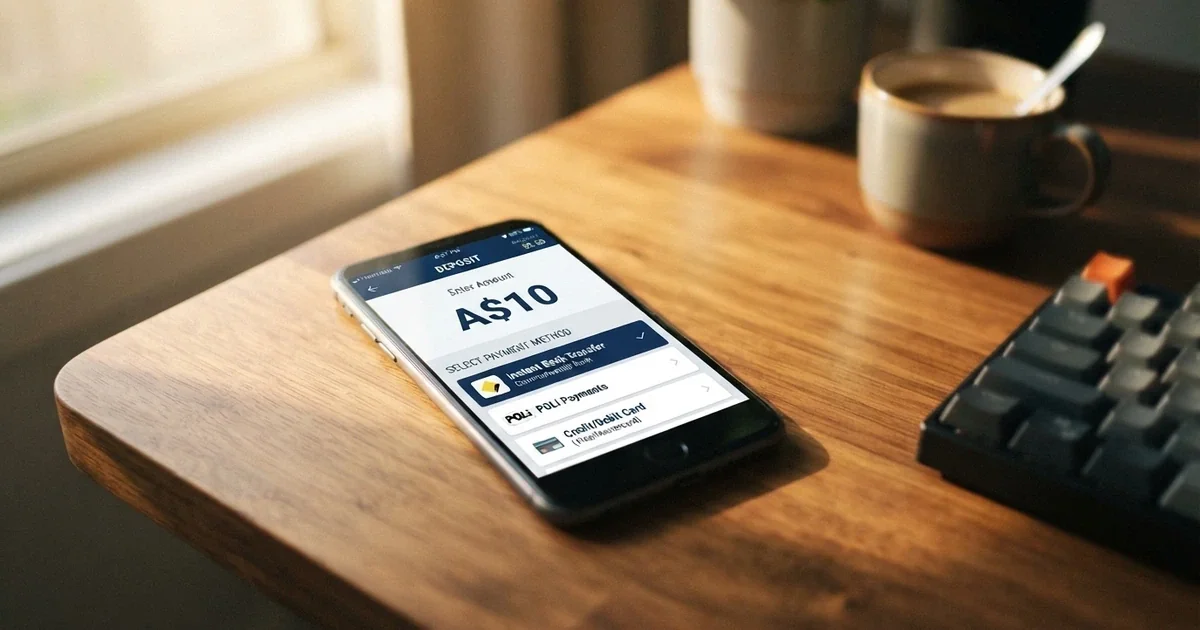
Verified against ACMA registers and operator bonus-terms pages as of 22 November 2026.
Table of Contents
- The real low-deposit floor in Australia is A$10, not A$1
- The ten offshore operators, ranked by their real minimum deposit
- Online casino is illegal in Australia — every operator here is offshore
- PayID, Neosurf and cards: the deposit floors by method
- Crypto reaches below A$10 — at a cost the licensed market bans
- Why your low-deposit welcome bonus is smaller than it looks
- What a A$10 bonus really costs: the arithmetic
- What you can actually play on a A$10 deposit
- BetStop, limits and help — the safety net offshore casinos don’t connect to
- How we picked and checked these operators
- The checks to make before you fund an offshore account
- Frequently asked questions
The real low-deposit floor in Australia is A$10, not A$1
Every “best low deposit casino” list for Australia leads with a figure below A$10. The figure is rarely honest. A$1 deposits are a crypto edge case at one operator; A$5 fiat deposits do not exist on any Australian-facing brand that research has been able to verify; A$10 is the practical floor for PayID, Neosurf and most card deposits, and clears the threshold for the welcome bonus at most of the ten brands below.
What “low deposit” and “low minimum deposit” mean
A minimum deposit is the smallest amount an operator will accept to fund an account. “Low” in the Australian market means different things at different thresholds:
- A$1 — a crypto-only floor at one brand, not a fiat product.
- A$5 — the lowest fiat play minimum surveyed (Fair Go Casino), still rare.
- A$10 — the practical floor for most methods at most operators, and the amount that clears the welcome bonus at half the brands in this ranking.
Search queries for “low minimum deposit casino” often return sites that advertise A$1 or A$5; the operator pages confirm A$10 as the actual entry. The gap between the two is the focus here.
The A$1 and A$5 headlines are not real fiat products
A$5 fiat deposits are extremely rare for Australian players; Fair Go Casino is the only brand surveyed that accepts them, and even there the bonus-eligible minimum is higher. Neosurf vouchers sold in Australia start at A$10 (the A$5 voucher is EU-only), and card processors generally impose a A$10–A$20 floor. PayID and Osko bank transfers rarely go below A$10. The A$1 headline belongs to one operator’s Bitcoin minimum and to nothing else. As one industry reviewer put it directly, there is no honest A$5 fiat-deposit casino available to Australian players in 2026 outside of limited exceptions — the figure is a search results artifact, not a product.
The genuine lowest deposit is approximately A$0.10 BTC-equivalent at Stake, with BC.Game at roughly A$1 USDT and Bitcasino.io near zero — all crypto-only. For anyone paying in Australian dollars through a bank or a prepaid voucher, A$10 is the floor that actually opens an account.
Real-money play at low stakes
A$10 is enough bankroll for low-stakes pokies at 1–2 cents per line across several sessions. It is not enough to clear a 40x wagering requirement on a A$100 match bonus in a single sitting — the section on what a bonus really costs works through that arithmetic. The point of the A$10 floor is access, not abundance: a player can fund an account, play a few rounds, see whether the catalogue suits, and withdraw the balance — subject to the withdrawal minimum, which is almost always higher than A$10.
The Australian low-stakes market in context
Australians spend approximately A$25 billion a year on legal gambling, and 11% gambled online in the six months to mid-2022, up from 8% in 2020. Online participation keeps rising even though the product is banned — a structural oddity that defines this market. There is no federal deposit, loss or stake ceiling for online gambling in Australia, because there is no federal online casino to cap. Australia caps the payment method, not the deposit: credit cards and crypto are banned as licensed-wagering payment since 11 June 2024, with penalties up to A$247,500 for operators that fail to enforce it. The deposit ceiling the page would otherwise describe does not exist, and offshore casinos operate outside all of it.
The ten offshore operators, ranked by their real minimum deposit
The ranking below is ordered by verified minimum deposit, lowest first. Every brand is Curaçao-licensed and unlicensed in Australia. Where research could not verify a minimum or a welcome offer, the cell is marked n/a rather than guessed.

| Operator | AU licence status | Minimum deposit | Welcome offer | Wagering |
|---|---|---|---|---|
| Stake | Curaçao (unlicensed in AU) | ~A$0.10 BTC-equivalent | Deposit match + promotions (varies by tier) | Varies |
| Fair Go Casino | Curaçao (unlicensed in AU) | A$5 play / A$20 bonus | 100% up to A$200 per deposit; up to A$1,000 across 5 deposits | 30x (deposit + bonus) |
| Bizzo Casino | Curaçao (unlicensed in AU) | A$10 | Match bonus + free spins | 40x |
| Royal Reels | Curaçao (unlicensed in AU) | A$30 (deposit bonus) | 100% up to A$500, plus A$10 no-deposit bonus | 30–40x |
| RocketPlay | Curaçao (unlicensed in AU) | A$10 play / A$30 bonus | 100% up to A$1,000 + 100 free spins on Aztec Magic (BGaming) | 40x |
| Skycrown | Curaçao (unlicensed in AU) | A$20 play / A$30 first bonus | 450% up to A$8,000 + 400 free spins across 4 deposits | 40x |
| WinSpirit | Curaçao (unlicensed in AU) | A$20 | 200% match + 25 free spins | 40x |
| Rainbet | Curaçao (unlicensed in AU) | $30 USD (~A$46) | 100% + 20 free spins on Sweet Bonanza (Pragmatic Play) | 40x |
| Rocket Casino | Curaçao (unlicensed in AU) | A$15 | Match bonus + 20 free spins no-deposit | 45x (50x on deposits over A$100) |
| Scream Casino | Curaçao (unlicensed in AU) | n/a | n/a | n/a |
The spread runs from about A$0.10 to roughly A$46, and the wagering column sits between 30x and 50x. Eight of the fifteen AU-facing brands surveyed enforce a higher bonus-eligible minimum than the play minimum — the single largest gap between what an operator advertises and what a player actually has to fund to claim the bonus. The operator write-ups below walk that gap through for each brand.
Stake: crypto-only, and the lowest minimum of the ten (about A$0.10)
Stake is the only sub-A$1 real-money entry in this ranking, and the only way to reach it is Bitcoin. The minimum sits around A$0.10 BTC-equivalent — the genuine lowest in the Australian-facing market. The trade is straightforward: a player who already holds crypto pays cents, and a player who does not pays the network fee twice (buying BTC, sending BTC) before the deposit even arrives. Stake is Curaçao-licensed and unlicensed in Australia, and the welcome structure is a deposit match plus promotions that vary by tier — Stake does not publish a single fixed welcome bonus the way the other nine brands do. For a player with a wallet already open, Stake is the cheapest entry on the page. For everyone else, the crypto floor is theoretical.
Fair Go Casino: A$5 to play, and the lowest wagering of the ten (30x)
Fair Go runs the lowest fiat play minimum of any brand surveyed — A$5 gets a player into the lobby, A$20 unlocks the welcome bonus. The bonus stretches across five deposits: 100% up to A$200 per deposit, total up to A$1,000. Wagering is 30x on the deposit plus the bonus, with a A$10 max bet and only pokies and keno contributing 100%. The 30x wagering, with no max-bet rule on pokies, makes Fair Go’s bonus the fairest terms surveyed for an Australian-facing brand. The catalogue is RealTime Gaming only — narrower than the Pragmatic-Play-heavy competition — but for a player who wants the lowest possible entry and the lightest possible playthrough, Fair Go is the cleanest answer. Curaçao-licensed, unlicensed in Australia, not connected to BetStop.
Bizzo Casino: A$10 in, with a 40x bonus that expires 31 December 2026
Bizzo sits at the A$10 entry point — the most common fiat floor on this page — and offers a 40x wagering match plus free spins. The bonus is valid until 31 December 2026, which is the kind of date that turns a welcome offer into a use-it-or-lose-it: a player who funds the account in mid-December has two weeks to clear the playthrough before the bonus expires. The match varies and is not published as a single headline figure, so the welcome is best treated as a flexible package rather than a fixed 100%. This is an offshore operator, not licensed in Australia.
Royal Reels: a real A$10 no-deposit bonus, but A$30 to unlock the match
Royal Reels is the only brand in this ranking that publishes a genuine no-deposit bonus — A$10 credited on sign-up, before any deposit. It is also the brand with the most asymmetric bonus structure: the no-deposit A$10 is free money with 30–40x wagering, but the 100% deposit match up to A$500 requires A$30 to unlock, not A$10. A player funding A$10 gets the no-deposit bonus only; a player funding A$30 gets both. The lesson is the one eight of fifteen brands enforce: the bonus-eligible minimum is usually higher than the play minimum, and a low-deposit player who ignores the gap walks away with the smaller half of the offer. This brand operates offshore and lacks any Australian licence.
RocketPlay: 100 free spins on Aztec Magic on a five-day clock
RocketPlay pairs a 100% match up to A$1,000 with 100 free spins on Aztec Magic (BGaming), but the bonus lives on a five-day clock. The minimum is A$10 to play and A$30 for the bonus; the wagering is 40x, the max bet during wagering is A$7.50, and the max cashout from the welcome bonus is A$5,000. Five days to clear a 40x wagering requirement is short — a player running five-second spins at A$1 a spin would need to clear A$40,000 of turnover in 120 hours, which is more than 300 spins an hour, every hour, for five straight days. The free spins on Aztec Magic are the real value; the match is the wall behind them.
Skycrown: the largest welcome package of the ten, from a A$20 entry
Skycrown advertises 450% up to A$8,000 plus 400 free spins across four deposits — the largest welcome package in the ranking. The free spins distribute as 125 on Wolf Treasure, 75 on Coin Volcano, 50 on 15 Dragon Pearls and 150 on Mighty Wild: Panther Grand Diamond Edition, all on a 40x wagering requirement with a A$5,000 per-bonus max cashout. The entry sits at A$20 to play, with the bonus tiers running A$30 for the first and second deposits, A$40 for the third, and A$50 for the fourth. Standard validity is 14 days; high-roller validity is 5 days. The headline percentage is the highest of any brand on the page, but the percentage applies to a deposit four times the size of the lowest entry, and the wagering is 40x on the cumulative bonus. Skycrown’s package is the largest in raw terms and the heaviest in playthrough terms; the player who can fund A$30 four times and clear 40x inside 14 days is the player this bonus rewards.
WinSpirit: a 200% match for a A$20 deposit
WinSpirit sits between Skycrown’s 450% headline and the standard 100% match: 200% on a A$20 minimum, plus 25 free spins, with 40x wagering. The percentage is the second-highest in the ranking, the floor is the second-highest of the standard-entry brands, and the structure is single-deposit rather than Skycrown’s four-step ladder. The free-spin component is small (25), the match is generous for the deposit size, and 40x is the standard cost. A player who values a single, clean bonus over a four-stage climb will find this the more usable of the two.
Rainbet: priced in USD, so its $30 minimum lands near A$46
Rainbet is the only brand in the ranking priced in USD, and the $30 minimum lands at roughly A$46 at current exchange rates — the highest entry on the page by a margin. The welcome is 100% plus 20 free spins on Sweet Bonanza (Pragmatic Play) per deposit, for three deposits total (60 free spins). The wagering is 40x on deposit plus bonus, the max bet during wagering is 2% of the deposit, and slots with RTP above 97.4% are excluded while the bonus is active — a clause that removes the highest-returning games from play for the duration of the bonus. Rainbet is a workable brand for a player who funds in USD or already holds a balance there; it is not a low-deposit brand in the sense the rest of this ranking is built around.
Rocket Casino: 20 no-deposit spins, then a 45x wagering wall
Rocket Casino opens with 20 free spins credited on registration and verification — genuinely deposit-free — and a A$15 minimum for the deposit bonus. The wagering is the highest on the page at 45x, rising to 50x on deposits over A$100. The no-deposit max cashout is A$150; the no-deposit spins are a small, capped taste of the platform. A player who funds A$15 to claim the deposit bonus is then clearing 45x — a steeper wall than the 30x at Fair Go or the 40x standard. Rocket is the brand for a player who values the free-spins-on-signup moment more than the long playthrough.
Scream Casino: a brand with no stated AU minimum or offer terms
Scream Casino is the only brand in the ranking whose reviewed pages leave both the minimum deposit and the welcome offer unstated. The licence is Curaçao, the operation is offshore and unlicensed in Australia, and no specific welcome bonus was verified for an Australian-facing player. A reader who arrives at Scream after reading this page will have to verify the floor themselves before funding — which is itself the editorial point. The other nine brands publish a minimum and a bonus; Scream does not, and that absence is information a low-deposit player should weigh.
Online casino is illegal in Australia — every operator here is offshore
Every brand in the table above is offshore. That is not a side note; it is the structural fact of this market, and the affiliate listicles at the top of the search results leave it out.
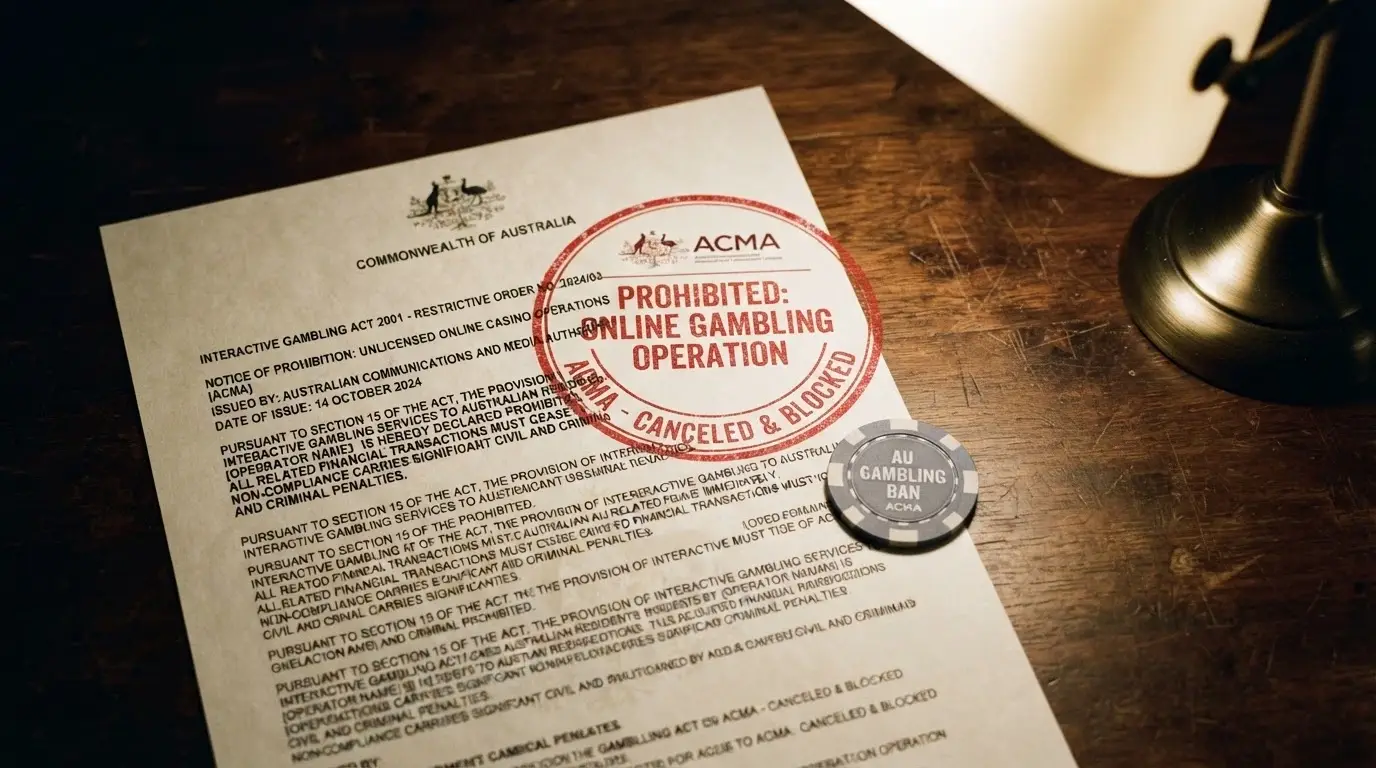
The Interactive Gambling Act: no online casino licence exists in Australia
The Interactive Gambling Act 2001 makes it an offence to provide online casino games, online pokies and in-play sports betting to a person physically in Australia. There is no licence for online casino anywhere in the country — federally, in any state, in any territory. The Act targets the provider, not the player: an Australian who plays at an offshore casino is not prosecuted. The minimum gambling age is 18 for every commercial gambling product. The licensed Australian market covers pre-event sports and race wagering, lotteries and keno through state and territory operators; the Northern Territory Racing and Wagering Commission is the de facto national licensor for online wagering.
ACMA’s enforcement and the 2026 reform
The Australian Communications and Media Authority (ACMA) enforces the prohibition, investigates complaints, issues formal warnings, and directs Australian ISPs to block illegal sites. Since the first blocking request in November 2019, ACMA has had 1,564 illegal gambling and affiliate websites blocked and more than 225 services withdrawn from the Australian market. The Interactive Gambling Amendment Act 2017 gave ACMA its enforcement and blocking powers; before that, offshore operators could exploit loopholes the 2017 amendments closed.
The Interactive Gambling Amendment (Gambling Reform) Bill 2026 passed Parliament on 19 August 2026 and commences on 1 January 2027. From that date: a wagering advertising opt-out register (AdStop), bans on live-sport wagering advertising in the 15 minutes before and 5 minutes after an event, bans on athletes, celebrities and influencers promoting wagering, a cap of three wagering ads per hour between 6am and 8:30pm, inducement prohibitions of 14 days after sign-up and three months after a BetStop deregistration, a ban on online keno “pocket pokies” and foreign-matched lotteries, and — most relevant to this page — express authority for banks and payment providers to block transactions to illegal gambling operators. The reform is enacted but not yet binding at the time of writing; the rules take effect on 1 January 2027.
What a Curaçao or MGA licence gives an Australian player
Short answer: none of the Australian protections. An offshore casino holds a Curaçao or MGA licence, which means a player has access to that regulator’s complaints process and not Australia’s. There is no Australian consumer-protection body that can recover funds from an offshore operator; ACMA cannot compel a Curaçao-licensed brand to pay out. BetStop does not reach offshore casinos — the register binds approximately 150 Australian-licensed wagering providers and no one else. An offshore site can be blocked in Australia with a balance still sitting on it; that has happened to more than 1,500 brands already. A credit-card or crypto deposit request is itself a tell: the licensed Australian market has banned both since 11 June 2024, and an operator that asks for either is sitting outside Australian rules by definition.
PayID, Neosurf and cards: the deposit floors by method
The deposit floor depends on the payment method as much as on the operator. The table below maps the three most common Australian deposit routes against their verified floors.
| Payment method | Minimum deposit floor | Why the floor is set there |
|---|---|---|
| PayID / Osko | A$10–A$30 | Bank-side NPP minimums and operator risk thresholds; SpinFred’s PayID floor is A$20 with instant crediting |
| Neosurf voucher | A$10 | Vouchers start at A$10 in Australia (A$5 is EU-only); sold at newsagents across Australian cities |
| Bank card (Visa / Mastercard) | A$10–A$20 | Card-processor floors and offshore-operator risk policy; few Australian-facing brands still accept cards at all |
PayID and Osko: instant bank transfers at A$10–A$30
PayID and Osko run on the New Payments Platform, which means deposits clear instantly from an Australian bank account to the casino wallet. The floor at most operators sits between A$10 and A$30; SpinFred’s PayID minimum is A$20. The lower end of the range — A$10 — is the practical sweet spot for a low-deposit player, and PayID carries no card fees and no FX conversion when the casino holds the balance in Australian dollars. The upper end is set by the operator’s risk policy rather than by the bank.
Neosurf, cards and the A$10 voucher floor
Neosurf prepaid vouchers are the most anonymous fiat route in this market: cash at a newsagent, a 16-digit code, a deposit credited without a bank account appearing in the transaction. Vouchers sold in Australia start at A$10, and the A$5 voucher is an EU-only product. Cards, where accepted, sit at A$10–A$20 floors set by the card processor; very few Australian-facing offshore brands still accept Visa or Mastercard, and those that do tend to charge a processing fee on top. For a player who wants to keep the deposit off a bank statement, Neosurf is the cleaner of the two.
The withdrawal floor is higher than the deposit floor
The asymmetry between the deposit minimum and the withdrawal minimum is the single most reliable trap in the low-deposit segment. The deposit floor sits at A$5–A$10; the withdrawal floor sits at A$25–A$50, sometimes A$50–A$100. A player who funds an account with A$10 and wins A$20 cannot withdraw the A$20 — the operator will not process a withdrawal below its minimum, and the balance sits in the account until it either grows past the floor or is lost in further play. This is the mechanical reason a low-deposit player should treat the first deposit as the smallest amount the operator will let them fund, and the wagering requirement as the real price of any bonus claimed against it.
Crypto reaches below A$10 — at a cost the licensed market bans
Crypto is the only honest sub-A$10 deposit route in this market. It is also the route the licensed Australian market has explicitly banned.
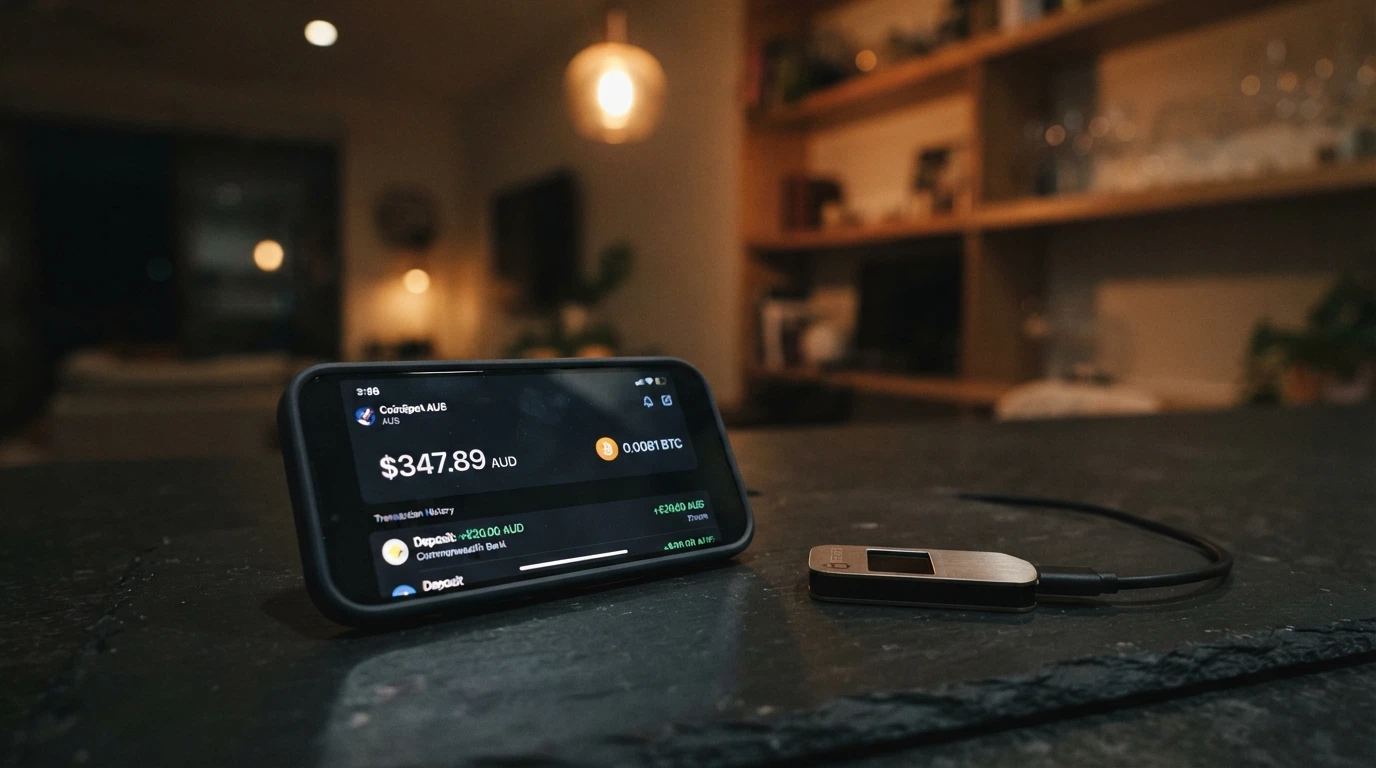
Crypto is the only honest sub-A$10 route
The verified floors at crypto-first operators are: approximately A$0.10 BTC-equivalent at Stake, roughly A$1 USDT at BC.Game, and near zero at Bitcasino.io. None of these operators takes PayID or Neosurf; all require a crypto wallet. The trade is that the deposit floor is cents rather than dollars, but the player pays the network fee on the way in and the network fee on the way out. Bitcoin network fees fluctuated between $0.80 and $3.20 in a single week of testing at offshore casinos — a meaningful overhead for a player depositing A$10. For a deposit in the hundreds, the fee is a rounding error; for a A$10 deposit, it can be 10–30% of the amount being sent.
Anonymity versus KYC, and why crypto is a tell
Credit cards and crypto are banned as payment methods for licensed online wagering in Australia since 11 June 2024, with penalties up to A$247,500 for operators that fail to enforce the ban. The rule applies to licensed operators only — offshore brands are not bound by it — but it does mean that a payment-method ask is itself information. An Australian-facing site that requests a credit card or a crypto deposit is, by definition, not operating under Australian rules; the deposit method is a tell about where the operator sits. KYC (know-your-customer) checks still apply at most offshore brands for withdrawals; crypto buys anonymity on the way in, not on the way out.
Why your low-deposit welcome bonus is smaller than it looks
The welcome bonus is the largest single number on each operator’s marketing page, and the one a low-deposit player is most likely to misread. A 100% match up to A$1,000 is not A$1,000 of free money; it is A$1,000 of bonus balance that has to be wagered 40x before any of it converts to withdrawable cash. The arithmetic in the section on what a bonus really costs shows what that means in practice.

How the deposit-match bonuses actually stack
The ten brands cluster around three match shapes:
- 100% matches: RocketPlay (up to A$1,000 + 100 free spins on Aztec Magic), Rainbet (up to A$700 USD + 20 free spins on Sweet Bonanza), Royal Reels (up to A$500 + A$10 no-deposit). Standard entry, standard wagering (40x), standard free-spin bundle.
- 200–450% matches: WinSpirit (200% + 25 free spins) and Skycrown (450% up to A$8,000 + 400 free spins across four deposits). Higher headline percentage, heavier playthrough, longer climb.
- The no-deposit alternative: Royal Reels and Rocket Casino both offer free spins or a small cash bonus on sign-up, without a deposit. Genuinely free, heavily capped, and the wagering is the steepest on the page (45x at Rocket, 30–40x at Royal Reels).
The percentage is the headline; the playthrough is the price.
The bonus-eligible minimum is often higher than the play minimum
Eight of fifteen AU-facing brands surveyed enforce a higher minimum for welcome-bonus eligibility than for general play. The Royal Reels structure is the clearest example: A$10 for the no-deposit bonus, A$30 for the 100% match up to A$500. Fair Go runs A$5 for play and A$20 for the bonus. RocketPlay runs A$10 to enter the lobby and A$30 for the match + free spins. Skycrown’s tiers run A$20 (play) / A$30 / A$40 / A$50 / A$100 (high roller) across the four deposits. A low-deposit player who funds the play minimum and assumes the bonus is attached will discover, on attempting to claim it, that the bonus-eligible minimum is the one that counts.
Wagering terms decide what a low-deposit bonus is worth
The wagering multiplier is the headline cost; the surrounding terms are the floor. A 40x wagering requirement on a A$200 bonus at A$1 a spin means 8,000 spins of turnover before the bonus converts — and most operators set a 5-day or 14-day clock on it. RocketPlay runs 40x with a 5-day validity, a A$7.50 max bet and a A$5,000 max cashout. Skycrown runs 40x with a 14-day standard validity (5 days for high roller) and a A$5,000 per-bonus max cashout. Fair Go runs 30x on deposit plus bonus with a A$10 max bet and no maximum cashout — the fairest terms surveyed, with the lightest playthrough and no cap on the winnings the bonus can produce. Rocket Casino runs 45x, rising to 50x on deposits over A$100. The wagering multiplier decides how much of the bonus a player keeps; the validity window decides whether they have time to clear it; the max cashout decides what they can walk away with if they do.
What a A$10 bonus really costs: the arithmetic
Take RocketPlay’s offer as the worked example: a 100% match up to A$1,000 plus 100 free spins on Aztec Magic, minimum deposit A$30, 40x wagering, 5-day validity, max cashout A$5,000, max bet during wagering A$7.50. A player depositing the A$30 minimum and taking the maximum match of A$1,000 in bonus funds faces required turnover of A$40,000 (the A$30 deposit plus the A$1,000 bonus, multiplied by 40). At A$1 a spin, that is 40,000 spins; at five seconds per spin, that is 200,000 seconds of play, or roughly 55.6 hours of continuous spinning across five days.
The expected loss is a separate calculation. Aztec Magic runs at approximately 96.96% RTP, so the house edge is 3.04%. Expected loss = required turnover × (1 − RTP) = A$40,000 × 3.04% = A$1,216. That is the statistical cost of clearing the bonus on the stated terms, assuming only the bonus amount is wagered. It is an estimate across many spins, not a guaranteed outcome for any single player — but it is the order of magnitude the A$30 deposit sits against. The A$30 deposit does not survive the playthrough on average; the bonus is paid for in expected turnover, and the turnover is paid for in expected loss.
A player depositing A$100 instead of A$30 — still well below the A$1,000 bonus cap — would face a smaller absolute turnover (A$100 deposit + A$100 bonus × 40 = A$8,000) but the same percentage house edge, so expected loss scales down roughly proportionally. The arithmetic is the same at every deposit size: wagering requirement × (1 − RTP) is the formula, and 40x at ~97% RTP is the standard shape of a low-deposit welcome bonus in this market.
What you can actually play on a A$10 deposit
“Pokies” is the Australian word for slot machines — and the word shows up across every operator page, every review, every bonus term. A$10 funds an hour or two of low-stakes pokies at most brands, and the welcome bonuses attached to A$10 deposits tend to name specific titles.

Pokies: the Australian word for slots, and what plays on a low deposit
Aztec Magic (BGaming) runs at approximately 96.96% RTP per the provider’s published figure, which means a 3.04% house edge over the long run. Sweet Bonanza (Pragmatic Play) sits near 96.48% RTP, a 3.52% house edge. Both titles are attached to welcome offers in this ranking — Aztec Magic to RocketPlay’s 100 free spins, Sweet Bonanza to Rainbet’s 20 free spins per deposit. Both are playable at A$0.20–A$1 a spin, which puts a A$10 deposit at 10–50 spins of headroom before the balance runs dry.
The titles named across the welcome offers
Skycrown’s 400 free spins distribute across four BGaming and Booongo titles — Wolf Treasure, Coin Volcano, 15 Dragon Pearls, and Mighty Wild: Panther Grand Diamond Edition. RTPs for these titles were not verified in this round of research and are written qualitatively: they are popular, they are high-volatility, and a player claiming the full Skycrown bonus will spend most of their wagering on these four games. Fair Go’s catalogue is RealTime Gaming pokies only — a narrower provider footprint than the multi-studio brands above — but the 100% pokie contribution to wagering means every spin counts toward clearing the bonus, which is the practical reason Fair Go’s 30x terms clear faster than the 40x standard.
BetStop, limits and help — the safety net offshore casinos don’t connect to
Every offshore casino in this ranking sits outside the Australian self-exclusion register. That is the single most important responsible-gambling fact on the page.
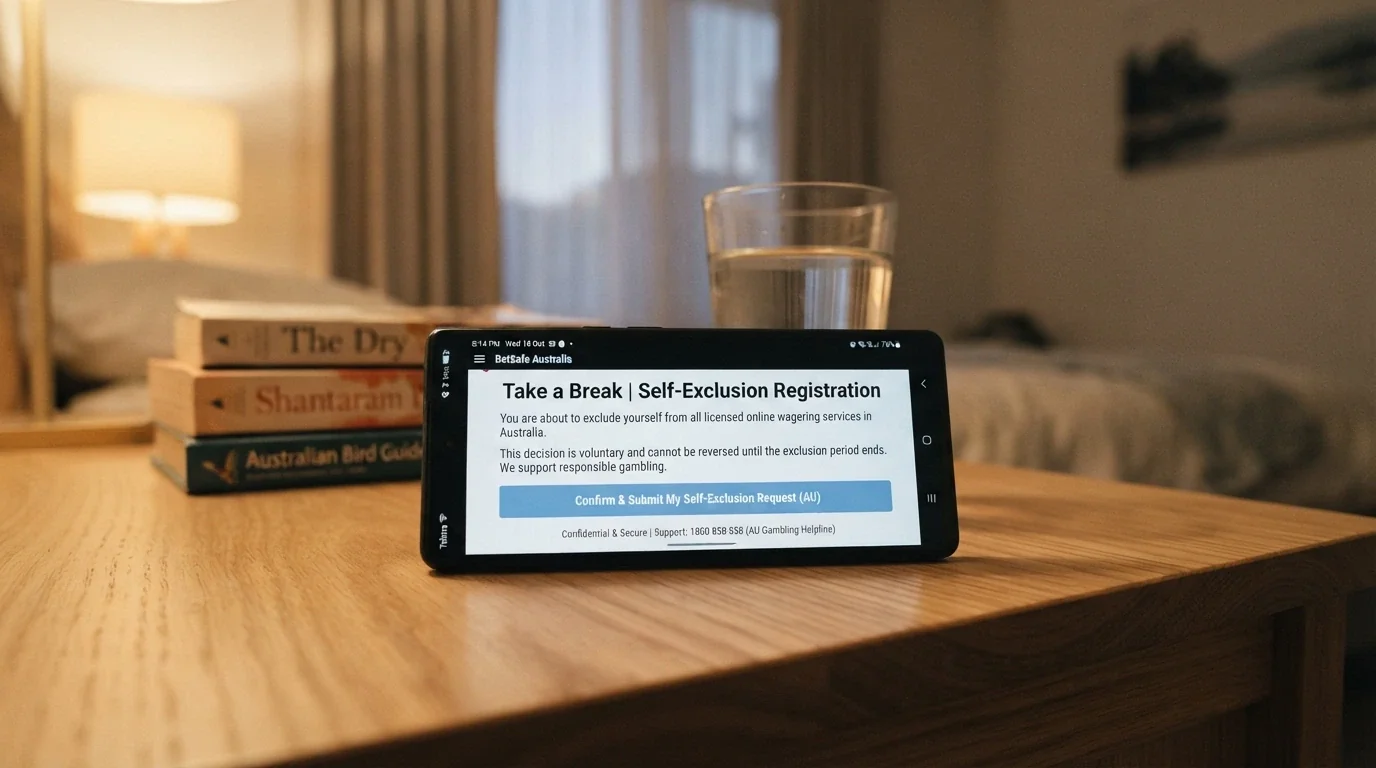
BetStop: one register that stops the licensed market, not the offshore one
BetStop — the National Self-Exclusion Register — launched on 21 August 2023 and as of Q3 FY 2025–2026 had 59,830 registrations, with 37,247 active exclusions. 78% of registrants were under 40 at the time of registration, and 38% chose a lifetime exclusion. A single registration excludes a person from every Australian-licensed online and phone wagering service, for a minimum of three months and up to a lifetime. ACMA-commissioned research from November 2025 found that 77% of registrants experienced better overall quality of life after self-excluding, 79% reported improved mental health, and 69% reported better personal relationships. The figure is real; the register is real; the coverage stops at the licensed market. Offshore casinos are not connected to BetStop, and a self-excluded Australian can open an account at any of the ten brands above without the register raising a flag.
Deposit and session limits: what licensed venues offer and offshore doesn’t
There is no federal deposit, loss or stake ceiling for online gambling in Australia — the product those ceilings would govern is banned outright. Australia caps the payment method, not the deposit. Licensed wagering operators offer customer-set deposit limits, time-outs, take-a-breaks and activity statements, varying between state and territory jurisdictions. Offshore casinos sit outside all of it. Some offshore brands publish a “responsible gambling” page with deposit-limit and self-exclusion tools; the tools are operator-side, voluntary, and reversible by the operator at any time. They are not BetStop, and they are not the Australian regulatory framework.
Help and the harm numbers behind low-stakes play
The National Gambling Helpline is 1800 858 858 — free, confidential, staffed 24/7, with online chat and counselling through Gambling Help Online at gamblinghelponline.org.au. The Roy Morgan Gambling Harm Index from March 2026 estimates 15.1% of Australian adults — approximately 3.32 million people — are experiencing some form of gambling harm, 13.0% (2,857,000) from their own gambling and 5.4% (1,177,000) from another person’s gambling. Approximately 2.1% of adults — roughly 430,000 people — experience problem gambling, with the AIHW putting high-risk gambling at 1.8% in 2022. Higher-risk gambling in Australia increased from 3.7% to 4.7% between 2015 and 2022, and gamblers at the highest risk levels affect on average six other people. The numbers are not a reason to avoid low-stakes play; they are the reason the safety-net sections of this page exist. If the budget for this page is A$10, the helpline is free and the harm prevalence is high enough that a player who finds themselves depositing more than planned should call it.
How we picked and checked these operators
The ten operators above were selected against the Australian licensing position first, the operator’s published bonus terms second, and the comparison-review landscape third. The licensing position is the structural fact: there is no Australian online-casino licence, and every brand listed is therefore checked against the prohibition rather than against an Australian register. ACMA’s enforcement record — 1,564 blocked sites since November 2019 — is the benchmark for what “offshore” means in this market. The bonus-terms pages are the source for every minimum deposit, every wagering multiple, every free-spin count and every validity window quoted on the page; the terms vary between operators and the page reports them as published. Comparison reviews from the affiliate landscape were used to verify the spread of minimums and to identify brands that research’s own passes missed, but no review page was treated as authoritative on a number the operator’s own terms page contradicts.
The checks to make before you fund an offshore account
A player who has read this far and is still considering a deposit should run four checks before funding an account at any of the ten brands above:
- Check the bonus-eligible minimum, not the play minimum. The play minimum is the amount that opens the lobby; the bonus-eligible minimum is the amount that attaches the welcome offer. Eight of fifteen brands separate them, and a A$10 deposit at a brand with a A$30 bonus minimum funds the lobby without funding the bonus.
- Check the withdrawal floor before the deposit. A A$10 deposit at a brand with a A$50 withdrawal floor is, in practice, a one-way transaction until the balance grows past the floor. If the floor is above the budget the player is willing to lose, the brand is the wrong brand.
- Read the wagering terms, the validity window and the max cashout together. A 40x wagering requirement, a 5-day validity window and a A$5,000 max cashout is a single package, and the three numbers decide whether the bonus is worth claiming at all. The section on what a bonus really costs works through the arithmetic on RocketPlay’s terms.
- Know that BetStop will not cover the offshore account. The Australian self-exclusion register binds licensed wagering providers; the ten brands above are not among them. A player who has self-excluded through BetStop and then opens an offshore account has not breached BetStop’s terms, but has also not received BetStop’s protection.
The four checks do not make the offshore market safe; nothing does, because the product is banned in Australia by design. They do make a low-deposit player harder to mislead.
Frequently asked questions
Do the A$1 and A$5 offers actually exist, or is A$10 the real entry point?
A$1 deposits are a genuine floor at one crypto-only operator (Stake, around A$0.10 BTC-equivalent). A$5 fiat deposits do not exist at any Australian-facing brand research has verified: Neosurf vouchers start at A$10 in Australia, card deposits sit at A$10–A$20, and PayID/Osko floors sit at A$10–A$30. The “A$5 deposit casino” headline is a search results artifact rather than a real product. Fair Go Casino runs the lowest fiat play minimum of any brand in this ranking at A$5, but the bonus-eligible minimum is A$20.
Which payment method costs the least for a small deposit?
For a fiat deposit, PayID/Osko is cheapest when the operator supports it: no card-processing fee, no FX conversion, and a floor at A$10–A$20. Neosurf is the cleanest anonymous fiat route at A$10 per voucher, with the trade-off that the voucher has to be bought at a newsagent. Crypto is cheapest in absolute terms — cents rather than dollars — but the network fee is a meaningful overhead on a A$10 deposit, fluctuating between A$1 and A$5 across a typical week of Bitcoin mempool activity.
Why can I deposit A$10 but not withdraw it again?
The minimum withdrawal at most offshore casinos sits at A$25–A$50, sometimes A$50–A$100, while the minimum deposit sits at A$5–A$10. A player who deposits A$10 and ends the session with A$20 cannot withdraw the A$20 — the operator will not process a withdrawal below its minimum, and the balance sits in the account until it grows past the floor or is lost in further play. The asymmetry is structural rather than accidental; it is the price a low-deposit player pays for funding an account at the floor.
Am I breaking the law by playing from Australia?
No. The Interactive Gambling Act 2001 targets the provider, not the player — an Australian who plays at an offshore casino is not prosecuted. The operator is the party the Act makes it an offence to provide online casino games to. The licensed Australian market covers pre-event sports and race wagering, lotteries and keno; online casino and online pokies are not licensed anywhere in the country, and every brand in this ranking operates offshore.
Will BetStop self-exclusion reach the offshore sites?
No. BetStop binds approximately 150 Australian-licensed wagering providers and no one else. The ten brands in this ranking are Curaçao-licensed and unlicensed in Australia; none is connected to the register. A self-excluded Australian can open an account at any of them without BetStop raising a flag. The 59,830 registrations and 37,247 active exclusions on BetStop apply to the licensed market only.
Do I need to deposit more than the minimum to claim the welcome bonus?
Often, yes. Eight of fifteen AU-facing brands surveyed enforce a higher bonus-eligible minimum than the play minimum. Royal Reels is the clearest example: A$10 funds the no-deposit bonus only; A$30 unlocks the 100% match up to A$500. Fair Go runs A$5 for play and A$20 for the bonus. Skycrown runs A$20 to play and A$30 / A$40 / A$50 / A$100 across the four deposit tiers. The play minimum opens the lobby; the bonus minimum opens the bonus.
What can I do if an offshore casino refuses to pay out?
The short answer is: file a complaint with the Curaçao or MGA regulator that issued the licence, and accept that Australian authorities cannot recover funds from an offshore operator. ACMA does not have jurisdiction over Curaçao-licensed brands, BetStop does not reach them, and there is no Australian complaints body that can compel a payout. The licensed Australian market is the only market where a player has a domestic regulator; the offshore market is the only market where a player does not. The structural reason every brand on this page is offshore — the Interactive Gambling Act 2001 — is the same structural reason no Australian regulator can help when an offshore brand refuses to pay.